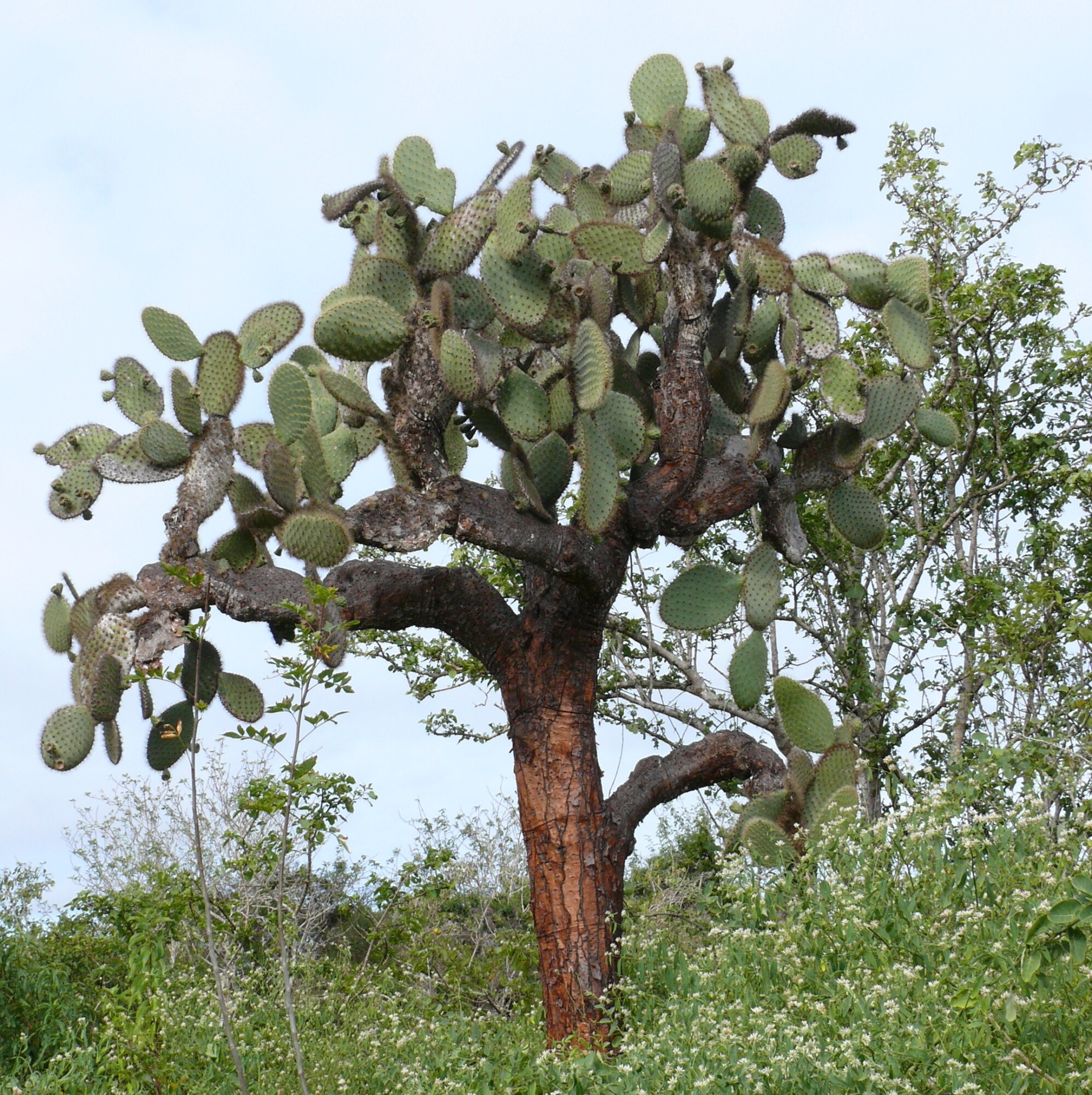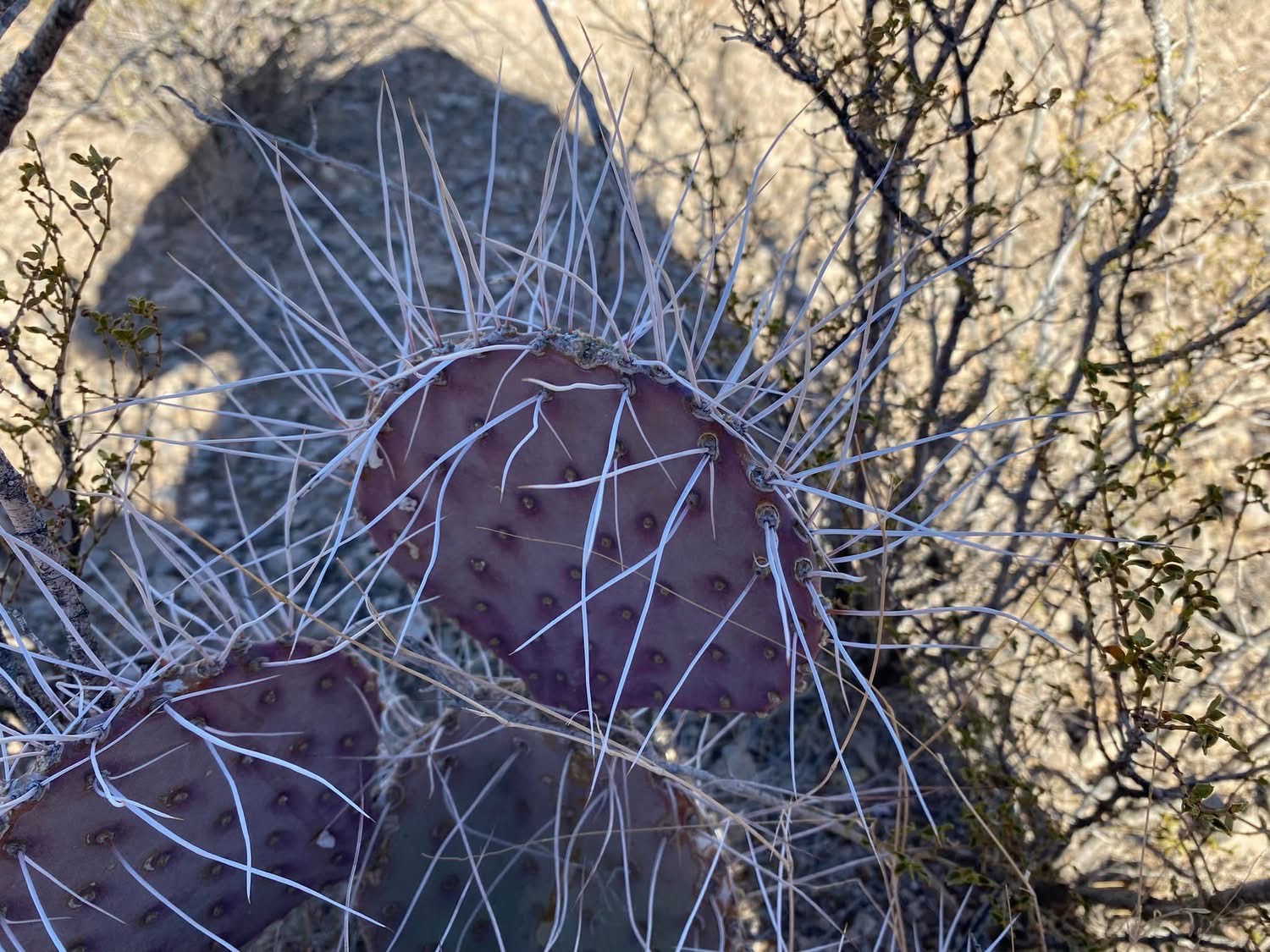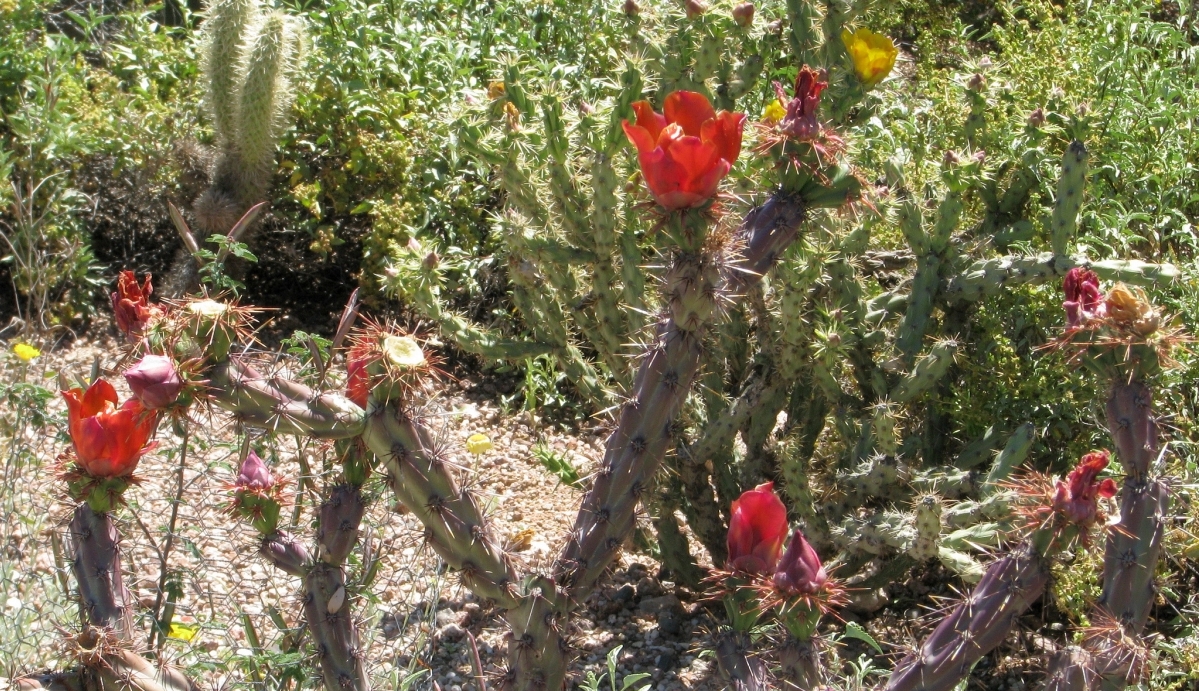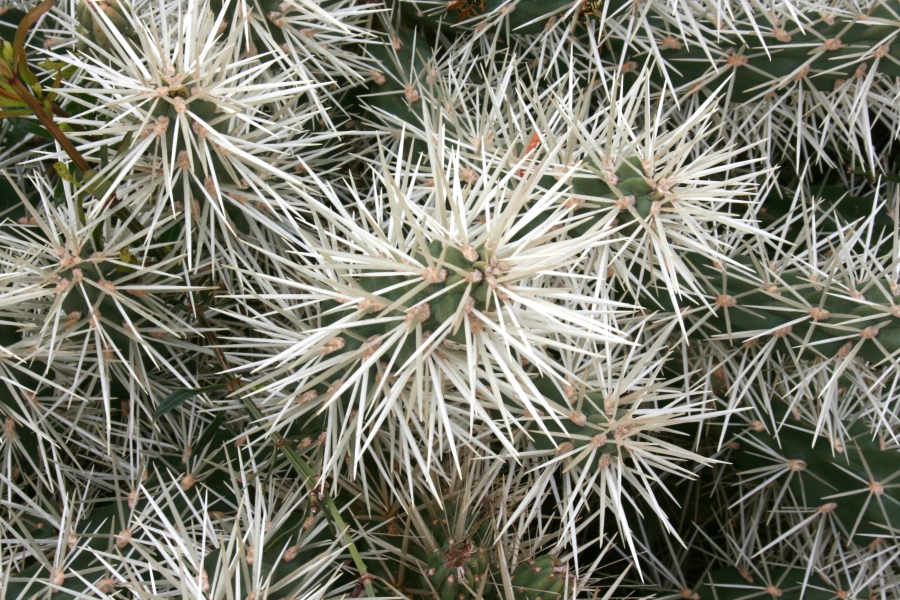
(photograph = Cylindropuntia tunicata, Frank Vincentz)
Introduction
Cylindropuntia tunicata—thistle cholla or sheep cholla—is a low, bristling cholla built for defense. From a distance, plants read as pale, thorny mounds; up close, each spine wears a papery tunic that frays with age, giving stems a ghosted look. With the lightest touch, joints detach, hitch a ride on wool, fur, or clothing, and root where they fall. Along bajadas and stony benches, scattered cushions trace years of wind, water, and animal traffic.
The Details
Identification. Segments are short, narrow cylinders in tight chains. Areoles are close-set, heavy with glochids and several long spines. As tunics weather from pale-yellow/white to tan, they peel in ribbons, so even old stems look freshly armored. Bases turn woody, while outer growth stays pale and quick to break.
Flowers and fruit. In late spring to summer, small, greenish-white to creamy blossoms open near the tips. Fruits are dry, low, and spiny at maturity; they persist briefly, then weather away, leaving a litter of loose armament.
Range and habitat. In the Chihuahuan Desert, C. tunicata runs from West Texas and southern New Mexico into northern and central Mexico, favoring sun-baked, fast-draining ground—caliche aprons, gypsum flats, gravelly fans, and thin soils over rock. Beyond North America, disjunct populations occur in South America—documented in Chile and Ecuador, with local reports from Argentina. Within a single valley, one terrace may hold dense patches while the next is empty; microhabitat—slope, texture, and exposure—sets the rules.
Dispersal and spread. At a nudge, joints break cleanly and cling by their sheathed spines. After rain, sheet flow pushes them into pebbly wind shadows, where they snag and root. On open range, sheep and goats carry joints until they shed—the origin of “sheep cholla.”
Field notes. In cool morning light, lizards hunt among the mounds, weaving through slots larger animals avoid. Small birds use outer twigs as thorny perches. For people, the rules are simple: give it space, watch your footing, and scan the ground before you kneel.
Variation and look-alikes. From afar, C. tunicata can resemble other pale, sheathed chollas, but the trio—short, narrow joints; conspicuous, shredding tunics; easy-detaching segments—is distinctive. C. bigelovii is taller and denser, with thicker joints and a uniform halo; C. imbricata builds a woody framework with larger magenta flowers and fleshier fruit; C. leptocaulis is wiry, with threadlike stems and bright red fruits that persist.
In the end, Cylindropuntia tunicata is a strategy spread across ground—bristle, break, ride, and root—quietly effective, and, for the unwary, unforgettable.
Related Reading: Cylindropuntia imbricata