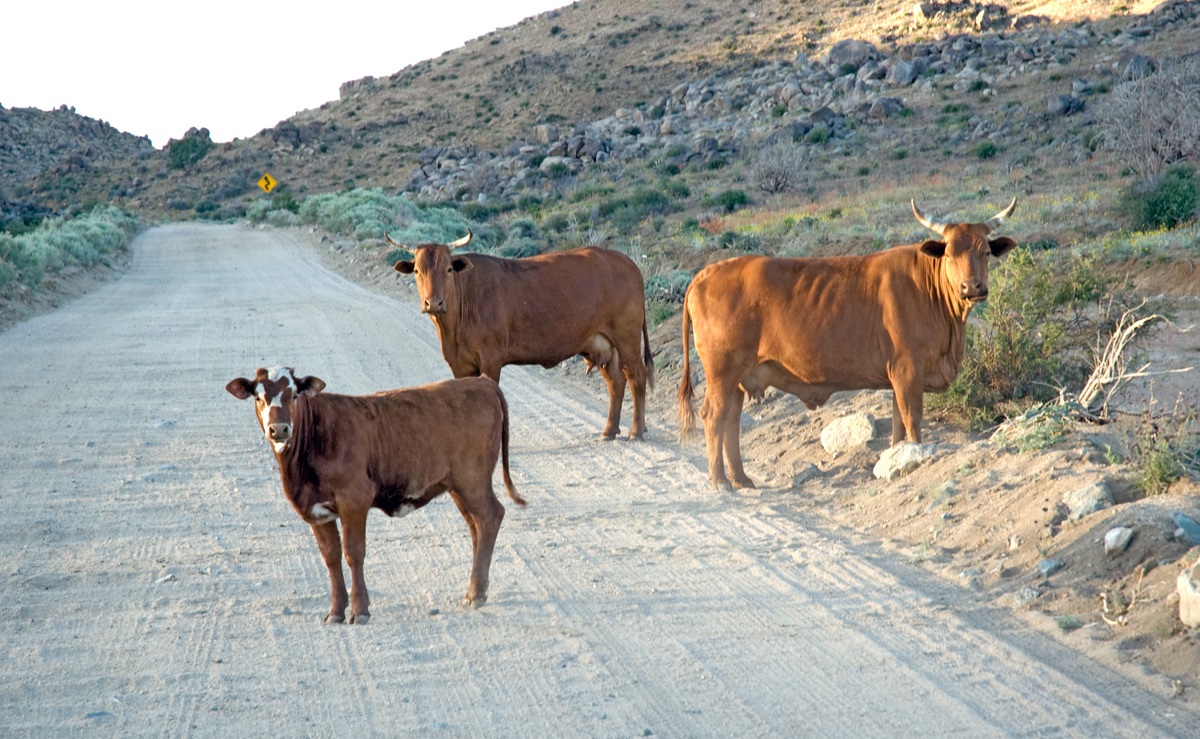
(Photograph = Grazing Cattle, Anthony Citrano)
Introduction
Disturbance in cactus country comes from many sources—livestock grazing, wild herbivores, human activity, and general land degradation. In many cases, disturbance reduces cactus growth, survival, and the number of seedlings that make it to adulthood.
The Details
Cattle, sheep, goats, deer, rabbits, and javelina all use cactus habitats. Their effects depend on how many animals are present, how long they stay, and whether the range is dry or recovering from drought. The same pasture can tolerate light use in a wet year, then decline under the same use in a dry year.
There are several ways grazing and traffic can disturb cacti and cactus-growing areas:
-
Animal droppings — Concentrated dung and urine create “hot spots” that can push grasses and forbs to outcompete cactus seedlings.
-
Mechanical damage (stepping on plants) — Trampling snaps pads, crushes seedlings, and breaks spines that protect growing points.
-
Browsing — Goats and deer will bite pads, flowers, and fruits; repeated bites weaken plants and reduce flowering.
-
Formation of animal trails — Repeated use funnels water and feet along the same lines, exposing roots and channeling runoff.
-
Soil compaction — Hoof action packs the surface, reducing water infiltration and the tiny soil pockets seedlings need to root.
-
Induction of soil erosion — Bare, compacted stretches shed water; fine soil washes away, leaving gravel and exposed roots.
Not all effects are equal across species or life stages. Seedlings and small plants are most vulnerable to trampling and browsing. Taller columnar cacti may lose flowers and fruits to browsing, which cuts into reproduction. Clump-forming species can survive pad loss better than single-stem species because undamaged stems keep growing.
Timing and intensity matter. Heavy use during drought leaves little cover and can set back recovery for years. Short, light use followed by rest, especially when soils are moist and plants are growing, does less harm. Damage also concentrates near water tanks, gates, salt blocks, and shady loafing areas where animals linger.
Interestingly, one study of a Mexican Mammillaria found that limited, well-timed grazing increased cactus density on stony ground. The authors proposed that light grazing reduced competing shrubs and grasses enough to open new safe sites for seedlings. The effect did not depend on nurse plants and did not involve deep soils; it was specific to rocky ground with low competition.
Practical notes for land stewards and visitors
-
Keep salt and mineral blocks, feeders, and water troughs away from dense cactus patches.
-
Rotate use and allow rest periods after dry spells so plants and soils can recover.
-
Maintain some shrub and grass cover to hold soil and shade seedlings.
-
On foot or on vehicles, avoid narrow washes and cryptobiotic crusts where a few passes do the most damage.
-
In parks and shared lands, simple signage and seasonal closures around sensitive patches help seedlings survive.
Bottom line
Light, brief use with recovery time can be tolerated in many cactus habitats, especially on rocky sites. Continuous heavy use—particularly in drought—leads to broken plants, compacted soils, and fewer seedlings. Small adjustments in timing and concentration make a large difference in how well cactus communities persist.