(Photographer Unknown)
Introduction
Aloe ferox is a tall, single-stemmed aloe from South Africa with a dense rosette of stiff, toothed leaves and a skirt of old, dried leaves along the trunk. In season, branched stalks carry many upright racemes packed with tubular flowers—typically orange to red, occasionally yellow. The plant is adapted to bright sun, rocky slopes, and long dry spells.
The Details
Identification
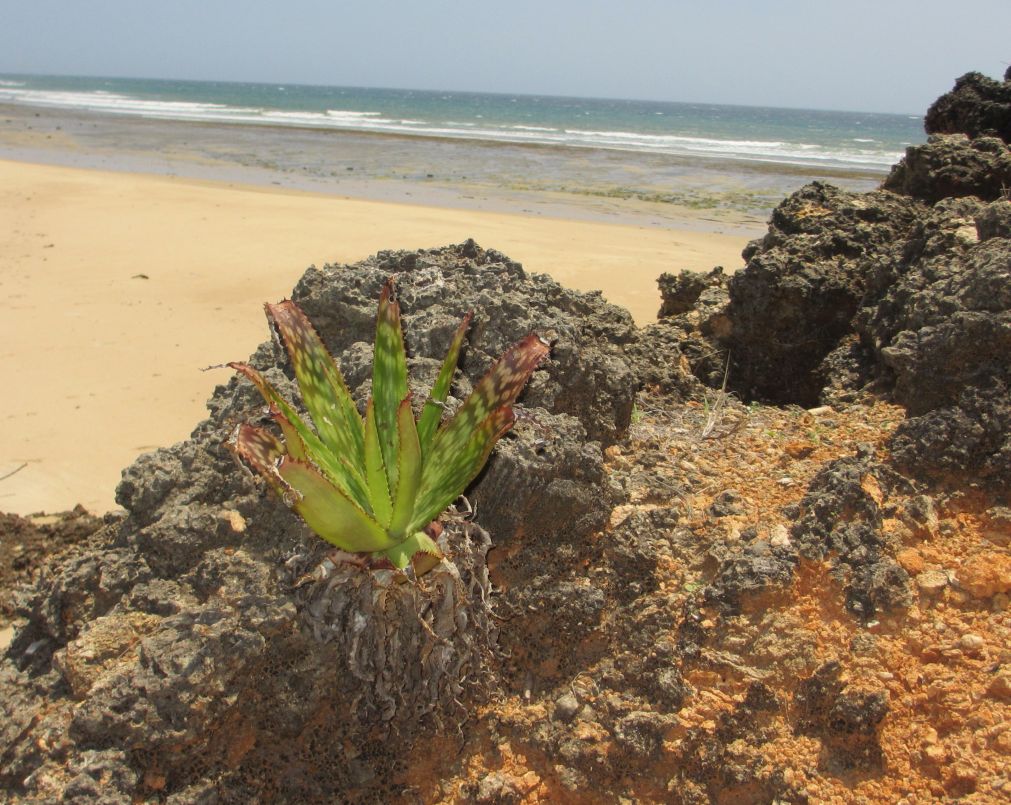
Leaves are thick, lance-shaped, and armed with sturdy marginal teeth; scattered surface prickles may occur on both sides, especially on juvenile leaves. Mature plants form a clear trunk topped by one large rosette. Dead leaves often persist as a protective “skirt,” shading the stem and discouraging browsing.
Flowering and fruit
Flowering usually occurs in the cooler, drier months, with tall, well-branched inflorescences rising above the rosette. Flowers open in dense, upright clusters and produce ample nectar. After pollination, capsules develop and release many small, wind-dispersed seeds.
Habitat and range
On rocky hillsides, open scrub, and grassy slopes, A. ferox handles full sun, periodic drought, and occasional cold snaps. Plants are common in parts of the Eastern and Western Cape and extend into interior uplands where soils drain quickly.
Ecology
Bright, tubular flowers attract birds and day-active insects, which move pollen between widely spaced plants. The persistent leaf skirt creates shade at the stem base, traps litter, and moderates temperature and moisture near feeder roots—small advantages in exposed sites.
Notes for gardens
Give full sun, sharp drainage, and space for a trunked plant. Water deeply but infrequently during active growth, letting the soil dry between soakings. In frost-prone areas, provide a warm, protected exposure and avoid winter-wet, heavy soils. Remove only obviously loose, dead leaves; a modest skirt helps protect the stem in hot, dry weather.
Additional Reading: The Genus Aloe