Introduction
Aloe davyana is a small aloe of summer-rainfall grasslands and open savanna, where heat, seasonal drought, and frequent fire structure the landscape. It tucks its narrow leaves among grasses and low shrubs, endures long dry spells, and responds quickly when moisture returns. Its ecology reflects life at ground level—close to shifting light, episodic rain, and the grazers and pollinators that move through these systems.
The Details
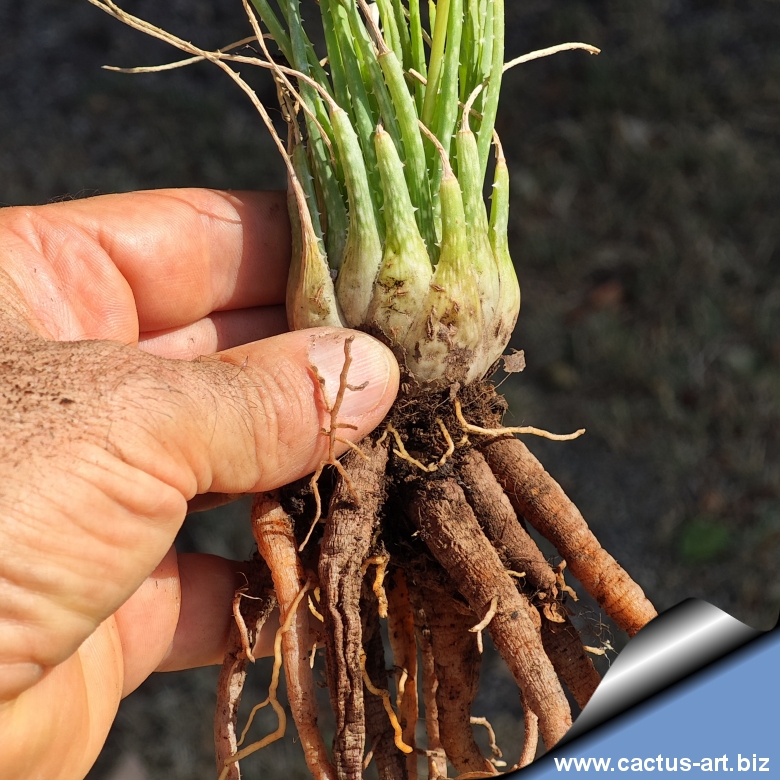
This species occupies well-drained soils on gentle slopes, rocky hillocks, and open flats, often where grasses do not form a continuous thatch. Exposure and drainage matter: plants thrive where water runs off quickly after a storm, yet see enough sun to warm the soil at dawn. Leaf rosettes sit low, reducing wind stress and helping the crown survive cool, dry winters and hot, desiccating summers.
Fire is a recurring filter. Like other grass aloes, Aloe davyana usually places its growth point near or just below the litter layer, so flames pass over quickly. After a burn, increased light and a flush of mineral nutrients can spur rapid leaf extension and synchronized flowering. Even without fire, flowering is typically cued by soil moisture pulses. Individuals that flower together gain pollination advantages in landscapes where resources—and pollinators—are patchy.
The flowers are tubular and nectar-rich, advertising to sunbirds at mid-day and to a suite of bees and other insects in calmer morning hours. Birds transfer pollen across longer distances, stitching together scattered subpopulations; insects handle short-range movement within a clump. Dry, three-valved capsules follow, releasing papery, wind-borne seeds that sift into shallow cracks or the bases of bunchgrasses. Establishment is best where competition is temporarily low—after trampling, a light fire, or seasonal die-back of grasses.
A note on Aloe greatheadii var. davyana: many authors subsume Aloe davyana under Aloe greatheadii as the variety davyana. In the field, plants that fit var. davyana tend to be smaller and more grassland-adapted, with narrower, often lightly maculate leaves, shorter peduncles, and flowering that follows the first summer storms. By contrast, typical var. greatheadii is usually more robust, with broader leaves, taller inflorescences, and a preference for slightly deeper, savanna soils. Where their ranges approach one another, fire regime, soil texture, and grazing pressure appear to sort the forms, and occasional intermediates can occur.
Additional Reading: Bee-collected, Stored Pollen of Aloe