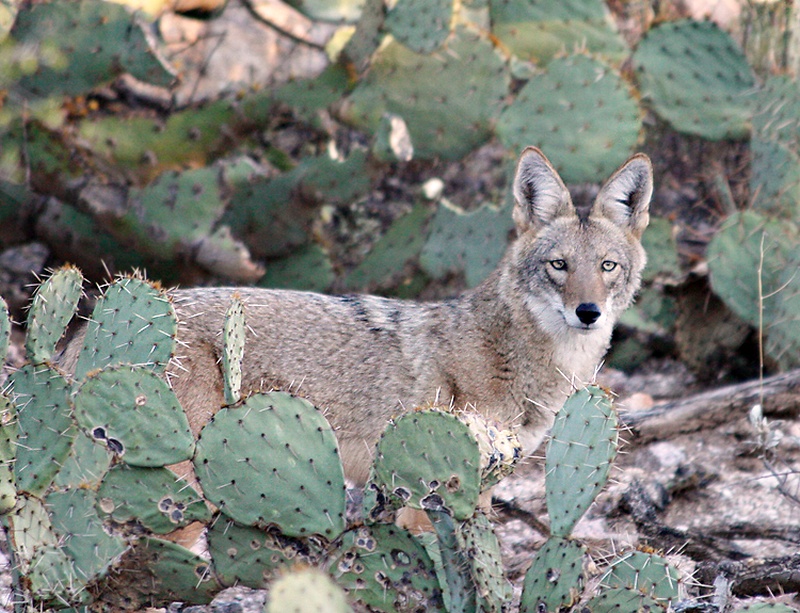
(Photograph = Coyote with Opuntia, Searchnetmedia.com)
Introduction
Coyotes are adaptable, widely distributed canids. Once considered strictly western, they now range across much of the Midwest and East. What do they eat?
The Details
Coyotes eat what is available—beetles, rabbits, and fruit. Yes, coyotes eat Opuntia fruit. Multiple diet studies show fruit can be a major food. In the Rolling Plains of Texas, fruits from several native plants (including Opuntia) made up a large share of the annual diet, with Opuntia fruit contributing noticeably and peaking seasonally when pads and tunas are ripe.
As seed movers, coyotes can matter for prickly pears. In a southern California study, seeds of coastal prickly pear (Opuntia littoralis) that passed through coyotes germinated more often than fresh seeds taken directly from fruits—roughly one in ten scat-recovered seeds sprouted in trials, versus essentially none of the fresh seeds. Even within scats, seeds embedded in “seedy” droppings germinated more often than those in fur-heavy droppings.
Results vary by plant. Some species’ seeds are harmed by gut passage, and overall germination can decline for certain fruits. For prickly pears, though, the big ecological effect may be movement. Coyotes spread many seeds to new microsites; most will sit in the soil seed bank and wait for a cool, moist spring to sprout. A few that germinate right away during late summer fruiting may fail, but the rest gain a better chance by being carried away from the parent plant.
Additional Reading: Opuntia Fruit and Coyotes-Intro
Additional Reading: Opuntia Fruit and Coyotes-Redux