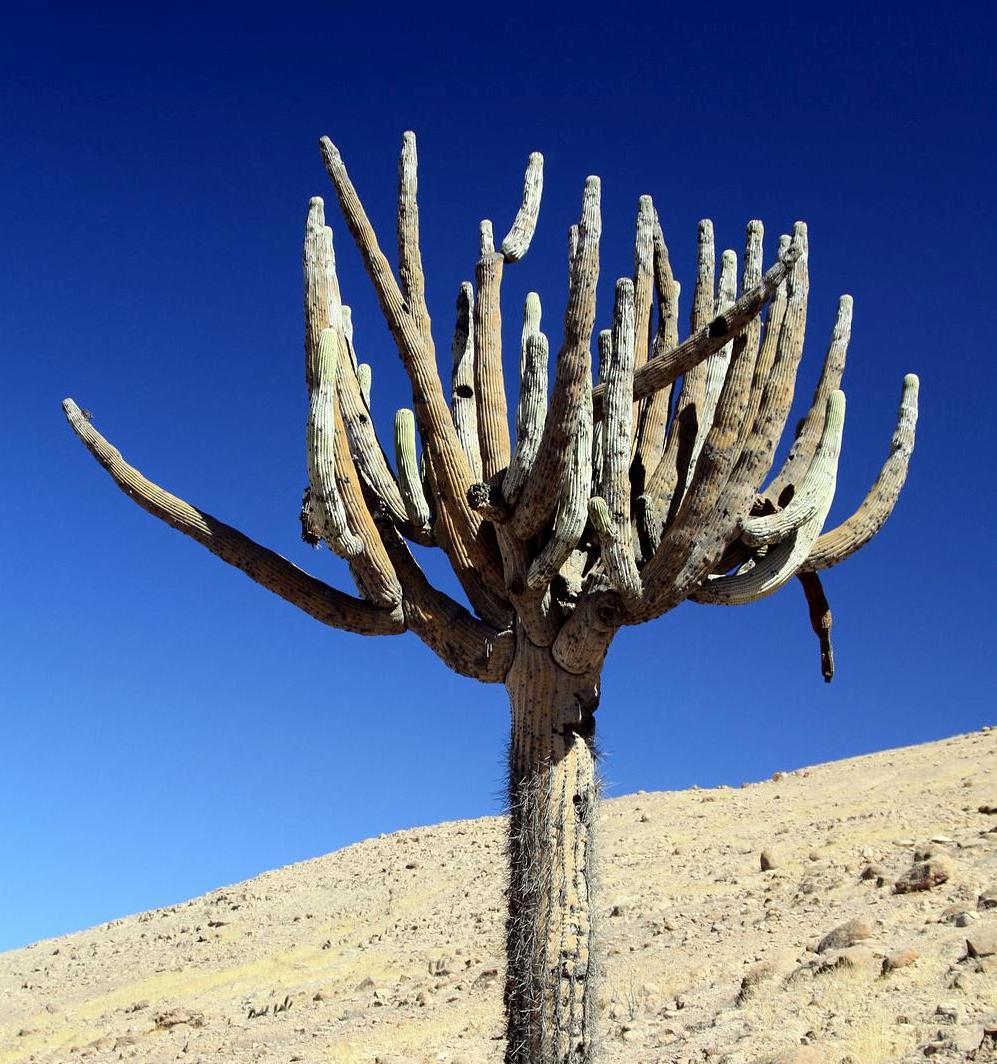
(Photograph = Coryphantha sulcata, John Weiser)
Introduction
Coryphantha sulcata is a small to medium, globose cactus from south-central Texas and adjacent northeastern Mexico. Plants are solitary when young and may form low clumps with age. The species name refers to the deep groove (sulcus) on each tubercle—a hallmark of the genus. Flowers are showy for the plant’s size, typically pale yellow to yellow, sometimes with a warmer throat.
The Details
Habit and spines
On rocky or sandy sites, plants grow as rounded heads with pronounced, nipple-like tubercles arranged in spirals. Each tubercle has a groove running from the areole toward the axil. Radial spines are numerous and pale; one or more darker centrals may develop, occasionally a bit thicker or slightly hooked. Spine density often increases in full sun and on drought-stressed plants.
Flowers, fruits, and seeds
In late spring into summer, especially after warm rains, plants produce large, diurnal flowers that can nearly cover the crown. Fruits begin green and fleshy, then dry as seeds mature. Small mammals and birds help move the fruits and seeds; in the field, seedlings often establish in the shade of grasses or low shrubs where temperatures and moisture swing less widely.
Range and habitat
C. sulcata occurs in south and central Texas and into northeastern Mexico, in open grasslands, thornscrub, and on rocky limestone benches or sandy flats. With excellent drainage, plants tolerate intense heat and periodic drought. They handle light freezes, but extended cold with wet soils can be damaging.
Similar species
Where ranges overlap, Coryphantha macromeris can be confused with C. sulcata. C. macromeris often has more elongated stems and magenta flowers, while C. sulcata tends to remain more globose with yellow to pale-yellow blooms. Escobaria species also have tubercles, but they lack the continuous groove from areole to axil that characterizes Coryphantha.
Cultivation notes
For pots or rock gardens, use a gritty, fast-draining mix and a shallow container. Water sparingly during warm growth, allowing the mix to dry between soakings, and keep nearly dry in winter. Provide strong light with some protection from the most intense afternoon sun in very hot climates. Propagate by seed or by carefully removing offsets once they root on their own.
Field notes
In bright exposures, crowns stay compact and heavily spined; in slightly sheltered microsites, plants may grow a bit taller and offset more freely. After summer storms, fresh growth and occasional second flushes of bloom are possible, but long dry spells often pause growth until the next favorable rain.
Additional Reading: Coryphantha sulcata