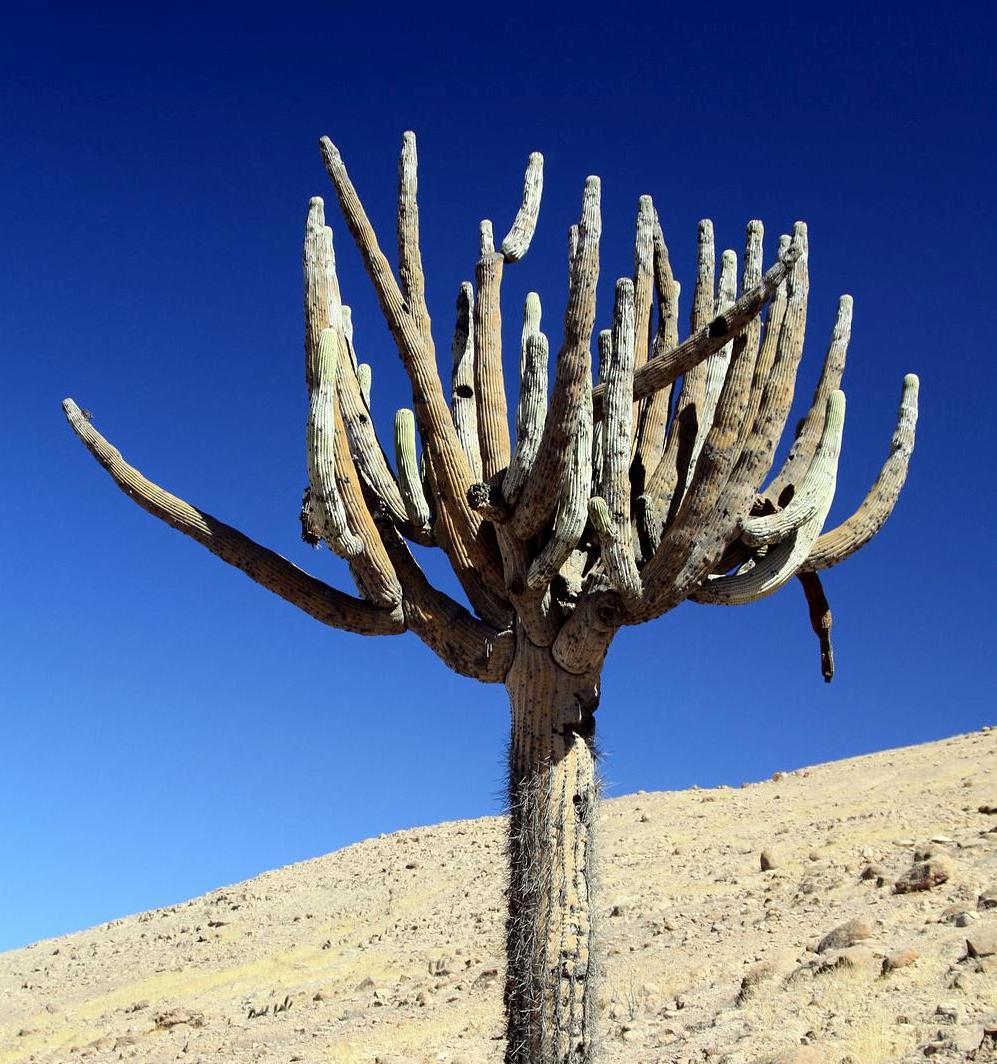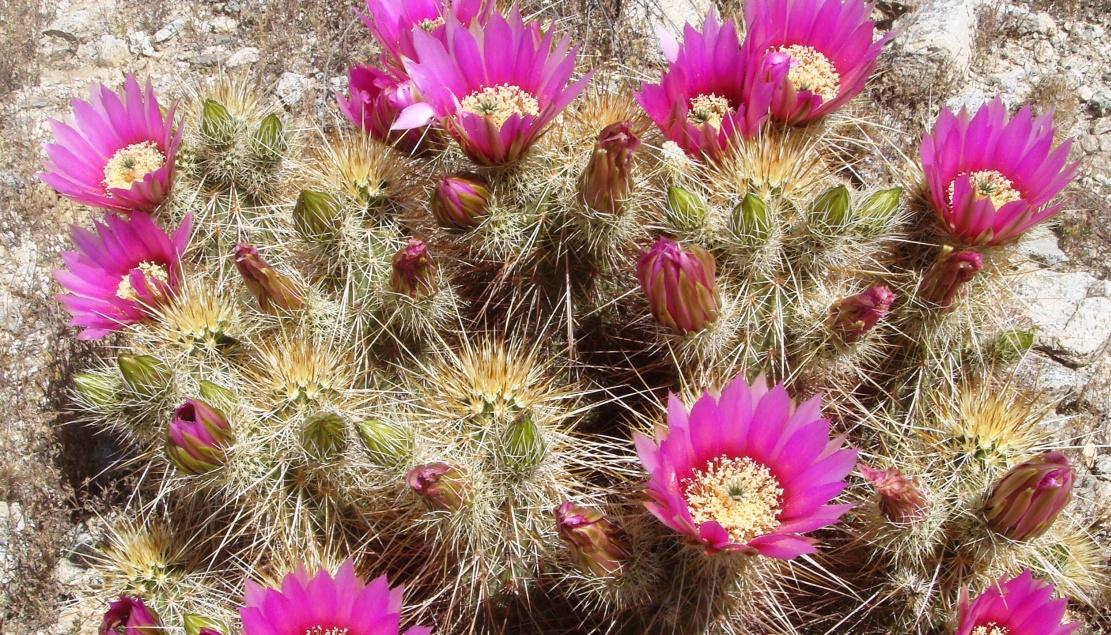
(Photograph = Echinocereus engelmannii, Miwasatoshi)
Introduction
Often called Engelmann’s hedgehog cactus, Echinocereus engelmannii forms low, clumping mounds on rocky slopes, fans, and desert pavements. In spring, after winter and early-spring moisture, it produces large, magenta to purple flowers that are hard to miss against pale gravel and creosote scrub.
The Details
-
Form & spines. Plants usually grow as clusters of upright stems, each a few centimeters thick and up to several decimeters tall. Ribs are well defined, with many pale radials and a few stronger central spines that darken with age. Clumps expand slowly by new offsets from the base.
-
Flowers & fruit. In March–May, depending on elevation, stems bear showy, funnel-shaped blossoms with many narrow tepals, bright yellow stamens, and a green, multi-lobed stigma. Fruits ripen red, the pulp is white to pinkish, and the spines on the ovary reduce as the fruit matures.
-
Range & habitat. This species is widespread in the Mojave and Sonoran deserts—from southeastern California and southern Nevada into western and central Arizona and extreme southwestern Utah, with occurrences in northwestern Mexico. It favors well-drained, open sites among creosote, bursage, Joshua tree, and other desert shrubs.
-
Ecology. Flowers open in daylight and are visited primarily by native bees; bloom can be synchronous across stands after good cool-season rains. Fruits are taken by birds and small mammals, which help move seeds to microsites with shade or litter.
-
Similar species. From the red-flowered claret-cup group (E. coccineus/triglochidiatus), it differs immediately by its magenta to purple flowers and broader, open cups. Compared with E. fasciculatus, stems are typically shorter and clusters denser; flowers of fasciculatus are often larger with longer, bristlier spines on the tube.
Additional Reading: Echinocereus Online Journal