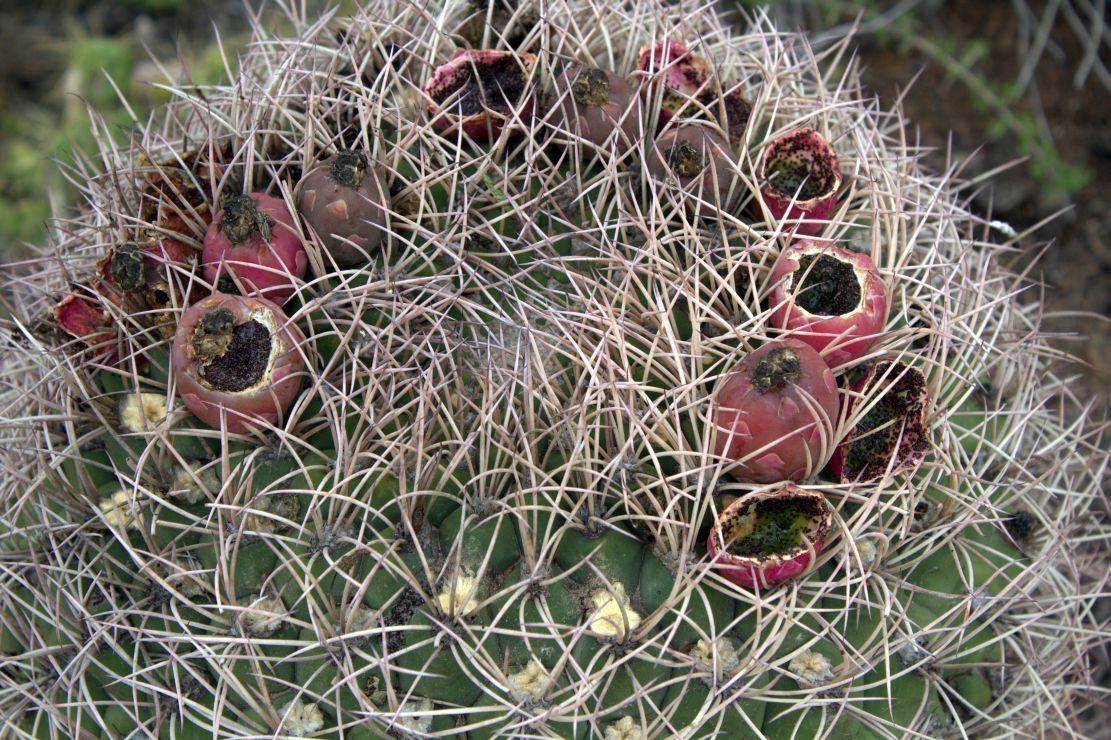
(Photograph = Gymnocalycium saglionis)
Introduction
Argentina holds the heart of Gymnocalycium diversity, and its patchwork of sierras, basins, and foothills neatly explains why. From dry Chaco and Monte scrub to the grass-and-rock mosaics of the Sierras Pampeanas, plants occupy shallow, mineral soils that drain fast. In the northwest and center—Catamarca, La Rioja, San Juan, Córdoba, and San Luis—endemism is high; many species track a single mountain block, valley, or band of bedrock. Along warm slopes and ridgelines, plants settle into crevices, use stones as heat sinks, and withstand summer cloudbursts followed by long dry spells. Across this span, elevation ranges from low scrub to more than 2,000 m, and form shifts with exposure and wind. With locality in hand, the genus’s biogeography starts to make sense: close neighbors can look related, while distant populations on different rocks often do not.
The Details
Taxonomically, Gymnocalycium is coherent and recognizable. Buds are “naked,” lacking wool and bristles; stems are globose to short-cylindrical; ribs typically show a slight chin beneath each areole; spination is modest to sturdy but seldom shaggy. Within Argentina, lineages align broadly with geography and substrate: central sierras favor compact bodies with dense ribs and short, appressed spines; northwestern foothills support stouter plants with heavier armature; southeastern outcrops carry lower, often flatter forms. Color and spine length vary with age, drought, and exposure, so stable characters matter most—rib profile, degree of the chin under areoles, areole spacing, seed-coat sculpture, floral-tube scales, and fruit color. Traditional subgenera reflect these deeper traits, especially seed and flower morphology, more than day-to-day stature.
For sound identification, start with provenance, then weigh characters that persist across seasons. On a single ridge, wind abrasion or grazing can compress spination and size, while sheltered pockets produce fuller forms; treat such shifts as ecological, not taxonomic. In collections, label origin precisely, compare like with like, and resist stretching names across the map. Flowers and seeds outrank momentary body color or spine length. In short, let the landscape frame your expectations, and let durable characters carry the decision.
Additional Reading: Gymnocalycium book




What a great site !!! Thank you and keep it up !
Coleman