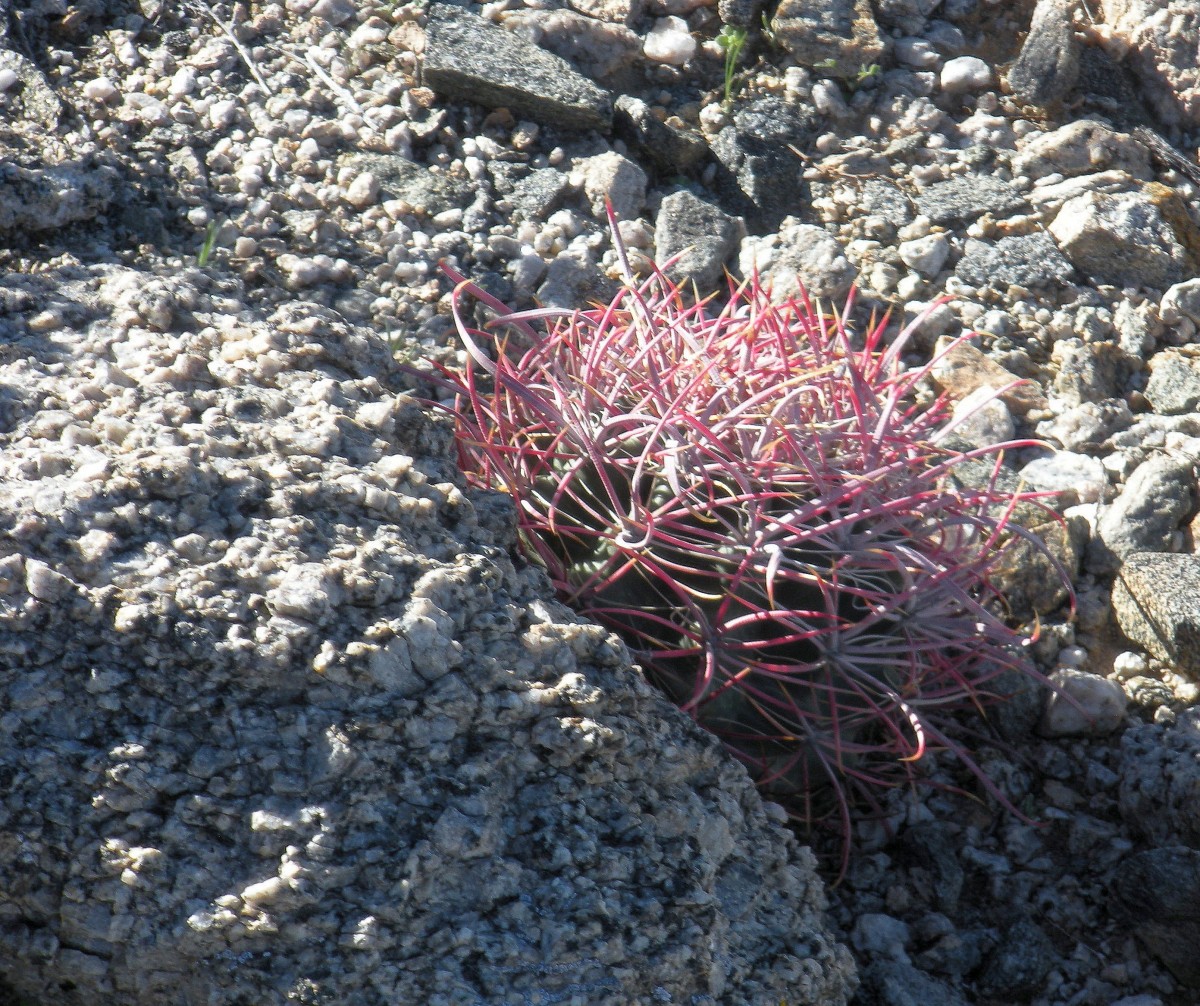
(Photograph = Echinocactus polycephalus var. xeranthemoides, Nancy Hussey)
Introduction
Sometimes desert seedlings start life under a shrub. The shrub provides protection from too-hot sun, drying wind, and even cold temperatures. These shrubs are nurse plants. But what about nurse rocks?
The Details
Some cacti grow in sandy soils—Opuntia polyacantha var. erinacea near Kingman, Arizona, for example—but many xeric (very dry-habitat) cacti and succulents are found mainly in rocky soils.
Moisture is held under rocks—the last rains might have been weeks ago, but a large surface rock can still trap a bit of moisture beneath it. Shallow, laterally spreading roots can collect that water. In fact, most cacti have shallow root systems—tailor-made for exploiting moisture under surface rocks.
The crevices between rocks also provide protected zones for tiny seedlings. They may germinate in small gaps where drying wind is reduced, shade is available during the hottest hours, and daytime heat stored by rocks can buffer freezing nights.
Even in harsh deserts, there are microclimates—spots slightly cooler than full sun and with other advantages. These tiny oases matter for tender seedlings. A mature cactus can take all the desert can throw at it, but seedlings need help. Nurse rocks can provide that help.
Additional Reading: Nurse Plants


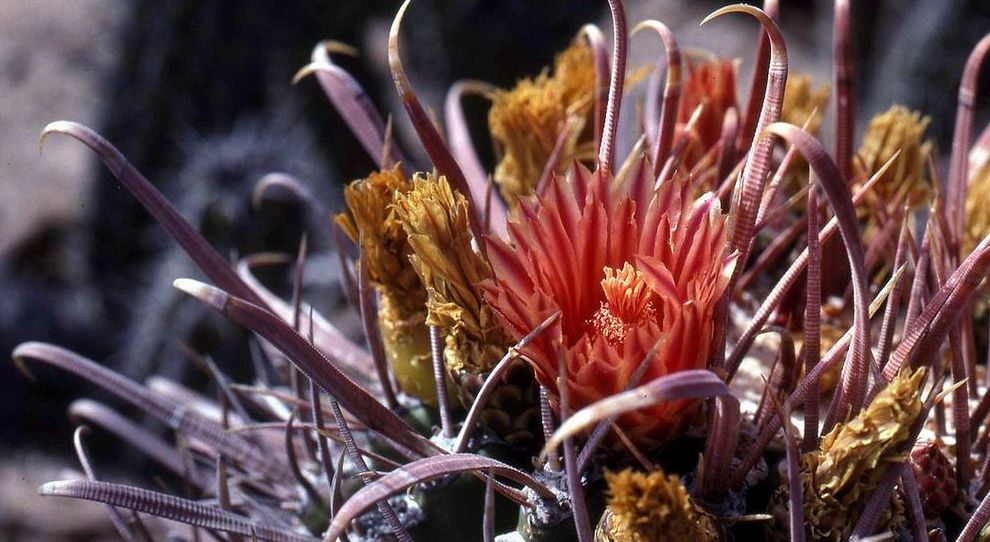
(Photograph = Echnocactus polycephalus xeranthemoides)

A pro grower told me that if there is any moisture in the air, the rock having been heated by the sun all day and being warmer than the night air, will condense some of the moisture out of the air and direct it down to plant roots. Ain’t nature amazing?