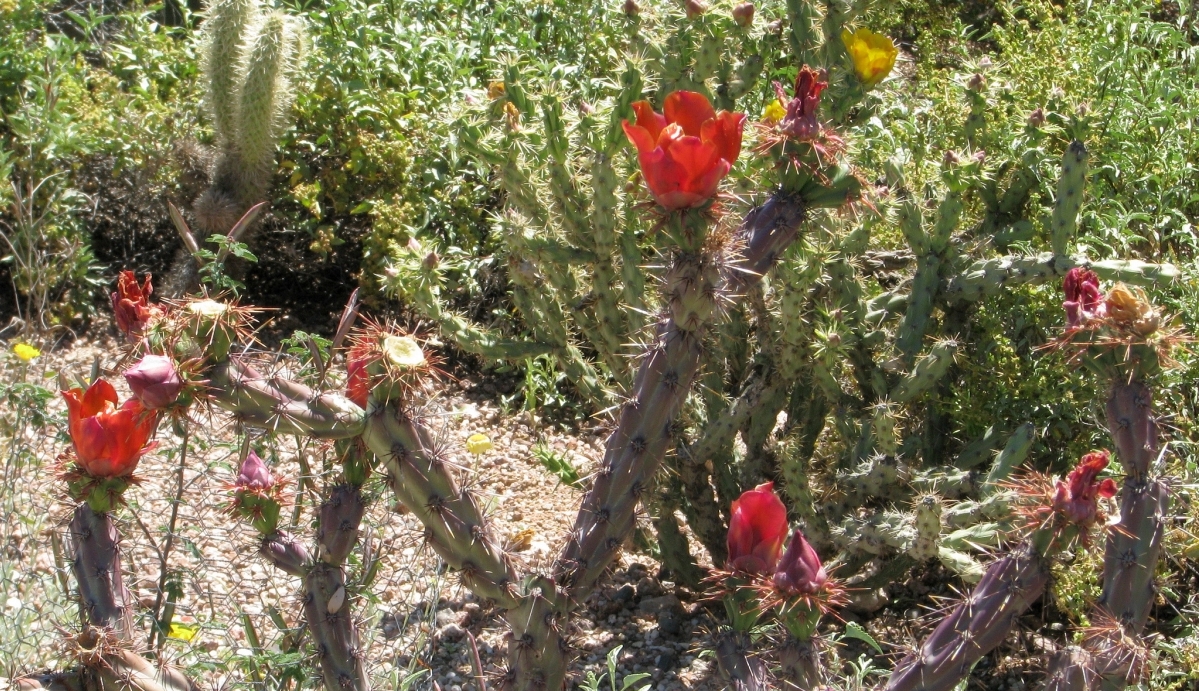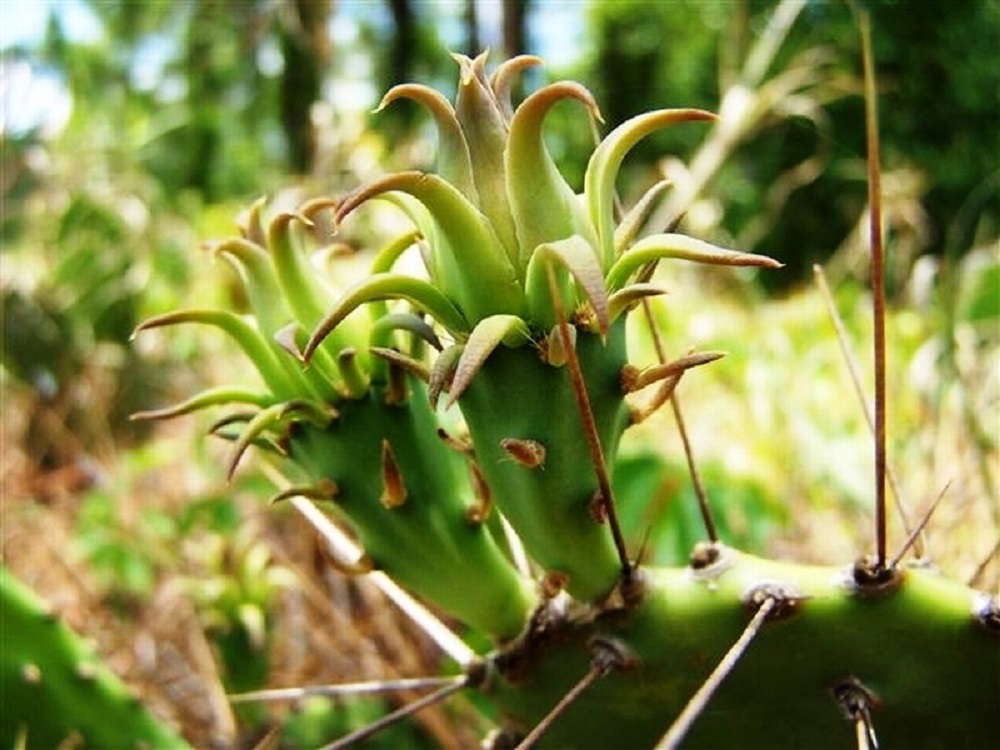
(Photograph = Opuntia ammophila flower bud, Danny Green)
Introduction
Opuntia ammophila is a low, clumping prickly-pear of deep, sandy habitats. It favors Florida’s inland scrub and coastal dunes, where wind, heat, and drought are routine. Pads root where they touch loose sand, so colonies expand in shallow arcs. Flowers are showy and typically yellow, and fleshy fruits ripen from green to reddish purple. As with many sandy-site opuntias, spines are variable—some joints are nearly spineless, others bear a few sturdy, pale spines.
The Details
Habitat and range
In well-drained quartz sands—on scrub ridges, open pinelands, and foredunes—this species handles intense sun and quick-drying soils. After summer storms, new joints and flower buds push quickly; during dry spells, pads thicken and growth slows.
Form and pads
Plants form low cushions or loose mats. Pads are obovate to elliptic, medium to blue-green, and often slightly thicker than nearby look-alikes. Joints detach easily, then root at the nodes when partially buried by shifting sand.
Areoles, glochids, and spines
Areoles carry small, tan glochids. Spines, when present, are few per areole and usually straight and pale. New growth may appear nearly spineless, then harden with age.
Flowers and fruit
Spring to early summer blooms open by day. Petals are bright yellow, sometimes with a faint warm throat; anthers shed abundant pollen that attracts generalist bees. Fruits are juicy, seedy, and attractive to birds and small mammals, which move seeds to favorable microsites such as the lee of grass tussocks or beneath shrubs.
Similar species
In Florida sands, O. ammophila can be confused with other humifuse prickly pears. Compared with common look-alikes, it tends to favor deeper, shifting sands, shows fewer spines per areole, and grows in looser, spreading clumps. Pad thickness, spine count, and flower timing help separate it from neighbors when evaluated together.
Notes for gardens
In cultivation, provide sharp drainage and full sun. Water deeply but infrequently, allowing the mix to dry between soakings. For clean growth, handle with forceps and keep the areoles clear of debris; glochids irritate skin even on “spineless-looking” joints. A warm, bright site and poor, sandy soil bring out the compact, drought-ready form typical of this species.
Additional Reading: Florida Semaphore Cactus