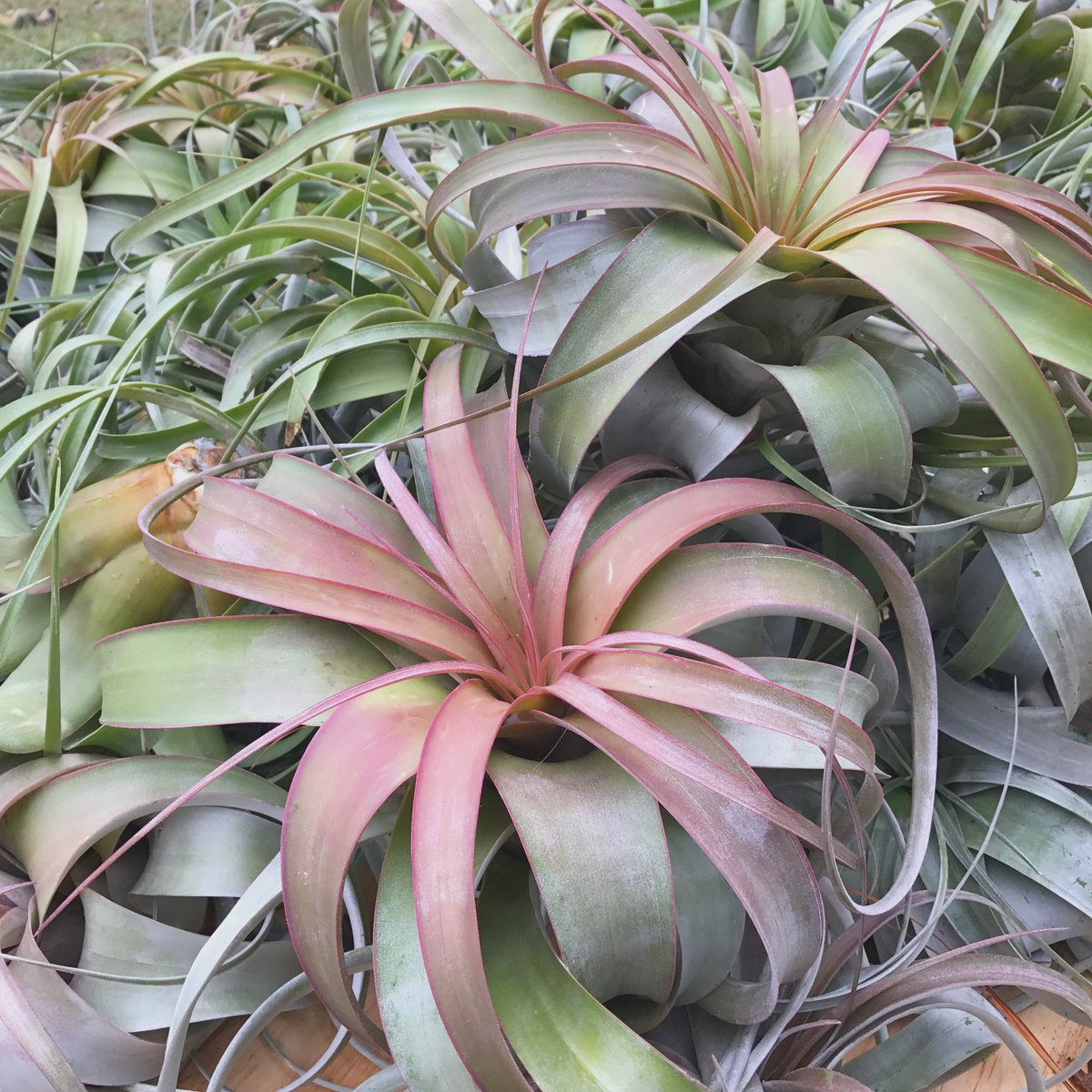
(photograph = Tillandsia xerographica)
Introduction
Tillandsias are epiphytes (and sometimes lithophytes) that live on trees, shrubs, or rocks. They absorb moisture from rain and fog and take nutrients from dust and trapped debris. Though not typical succulents, many tolerate long dry spells. T. xerographica is one of the most distinctive species—large, silver-gray, and slow-growing—adapted to warm, semi-arid habitats in Mesoamerica.
The Details
T. xerographica forms a broad, dense rosette of silvery, recurved leaves covered in fine scales that help capture moisture. Mature plants produce a tall, long-lasting inflorescence with colorful bracts and tubular flowers; after blooming, the rosette gradually declines while producing a few offsets. In nature, it perches on the upper branches of older, rough-barked trees (and occasionally on rocks) in bright, airy exposures.
Care, indoors:
-
Watering: Soak the plant in room-temperature water for 2–4 hours every week or two, then set it upside down on a towel until completely dry. In winter, extend the interval to every 2–3 weeks. Light misting between soaks is fine—do it early in the day so the plant dries before evening.
-
Light & air: Give bright light with a few hours of gentle morning sun (an east window works well) and good air movement.
-
General: Avoid standing water in the crown overnight. Use rain, distilled, or low-mineral water if your tap water is hard.
Additional Reading: Tillandsia xerographica


