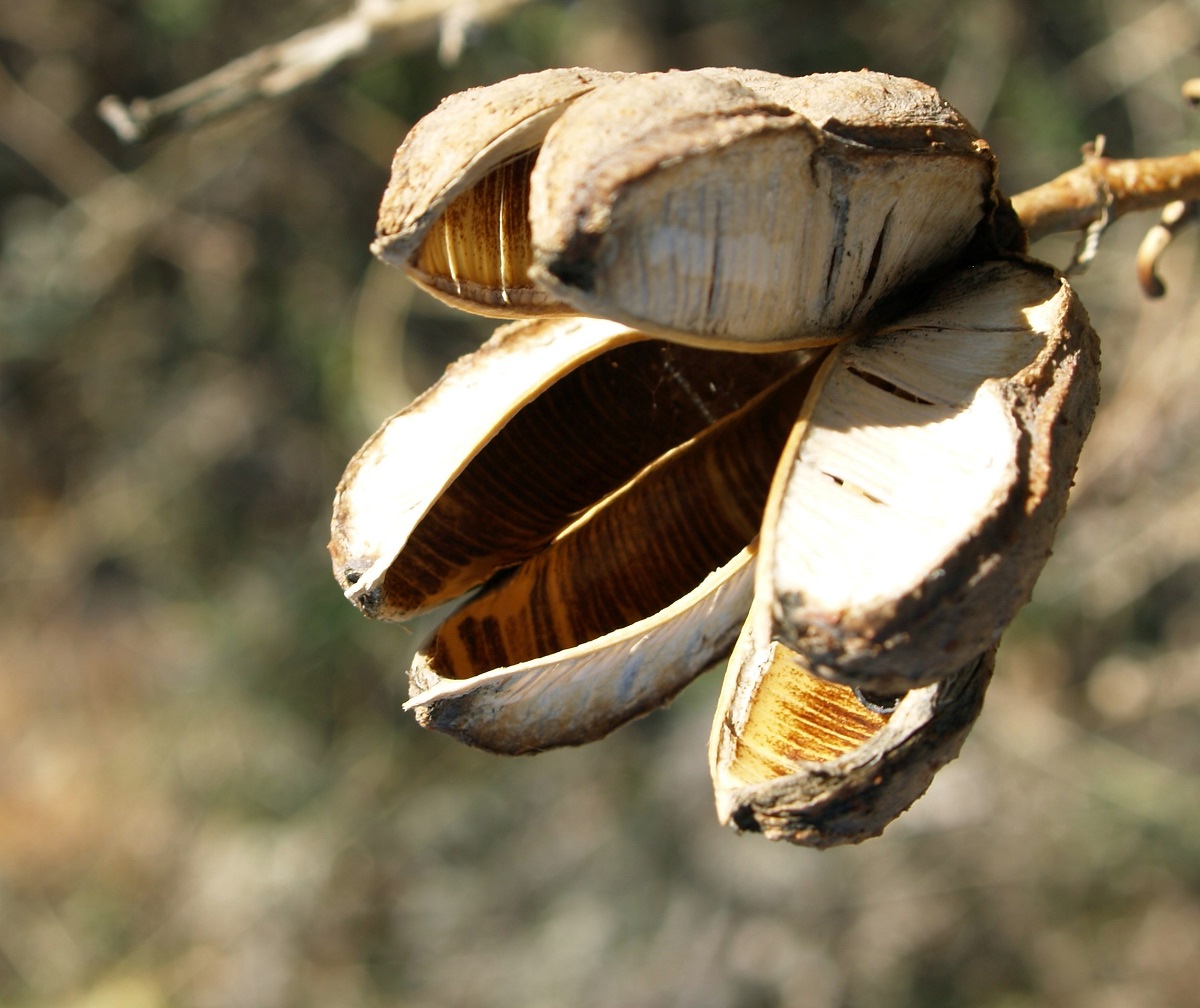
(Photograph = Yucca seed pod, Aiden Grey)
Introduction
Yucca plants and yucca moths rely on each other. The moth deliberately pollinates the flowers, and in return its larvae eat a small share of the developing seeds. If either partner is missing, the cycle breaks: the yucca sets few seeds, and the moth has nowhere to raise its young.
The Details
How the partnership works
At night, a female moth gathers sticky pollen into a ball, flies to another yucca flower, and stuffs that pollen onto the stigma—true, deliberate pollination. She then lays a few eggs inside the ovary. When the seeds begin to form, her larvae feed on some of them and the rest mature and disperse. Both partners benefit.
Flower signals and timing
Yucca flowers are typically pale and strongly scented, which helps night-flying moths find them. Because individual plants do not flower every year, successful seed set depends on good overlap between blooming and moth activity. A cool snap, drought, or mismatched timing can reduce pollination across whole stands.
Checks and balances
Yucca plants can abort heavily loaded fruits, which limits how many larvae survive and keeps the relationship from tipping too far toward the moth. Likewise, moths usually lay only a few eggs per flower; too many eggs would mean too few seeds—and fewer yuccas in the long run.
What you can observe
On warm evenings during bloom, watch for small white or gray moths moving flower to flower. If fruits develop later, slice a mature one open after it dries; you will often find some seeds partly eaten and the rest intact—evidence of the trade that keeps yuccas reproducing year after year.
Additional Reading: Yuccas and the Yucca-moth Symbiosis