(Picture = Aloe flowers)
Introduction
Aloes are mostly native to southern and eastern Africa, with many in Madagascar. They grow in arid and semi-arid habitats—savannas, rocky hills, and desert edges. Sizes range from a few inches to tree-forming species. Most are evergreen, though a few drop leaves during long dry spells. Many are frost tender, yet some tolerate surprising cold at high elevations. As a group, they conserve water with waxy, rosetted leaves and, in most species, night-time gas exchange (CAM): stomata open at night to take in CO₂, then close by day to reduce water loss.
The Details
Range and habitats
Across Africa and Madagascar, aloes occur from sea level to well over 2,000 m. Where they grow depends on moisture, temperature, and exposure to fire. On open slopes and plains, sun and wind are intense; in canyons and among boulders, shade and cooler air help seedlings establish.
Leaves and water economy
Aloe leaves are thick, store water, and are often coated with a waxy “bloom” that slows evaporation. Margins may have small teeth that deter browsing. In a tight rosette, older leaves can shield the center from heat and midday sun. With CAM photosynthesis, plants take up carbon at night and use it by day, which is a major reason many aloes survive months of drought.
Flowers and pollinators
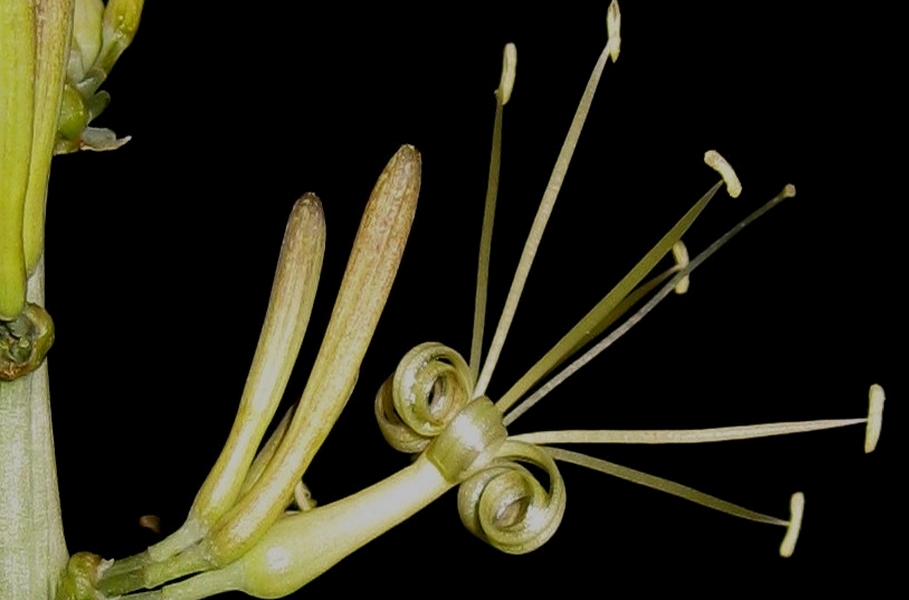
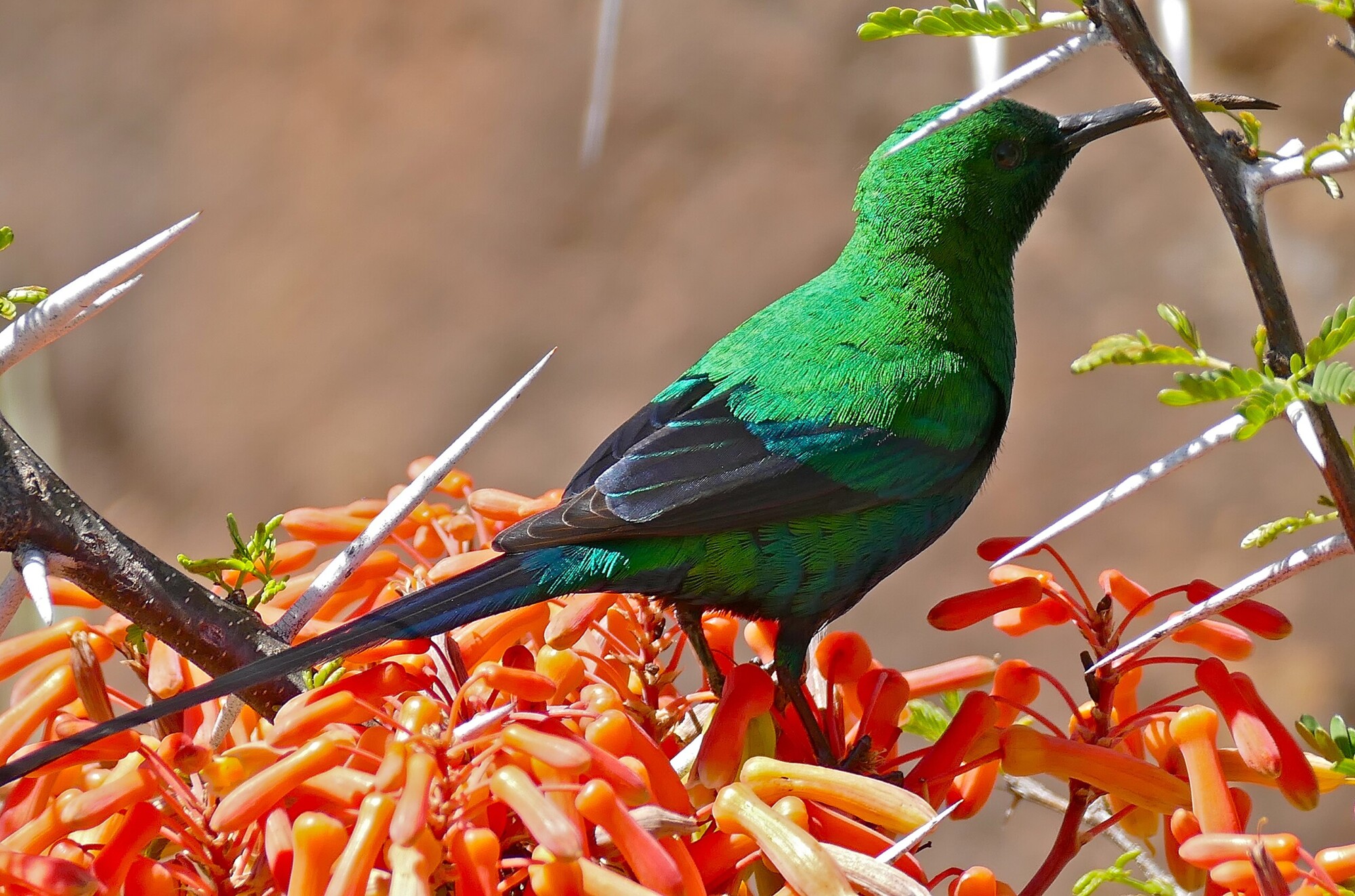
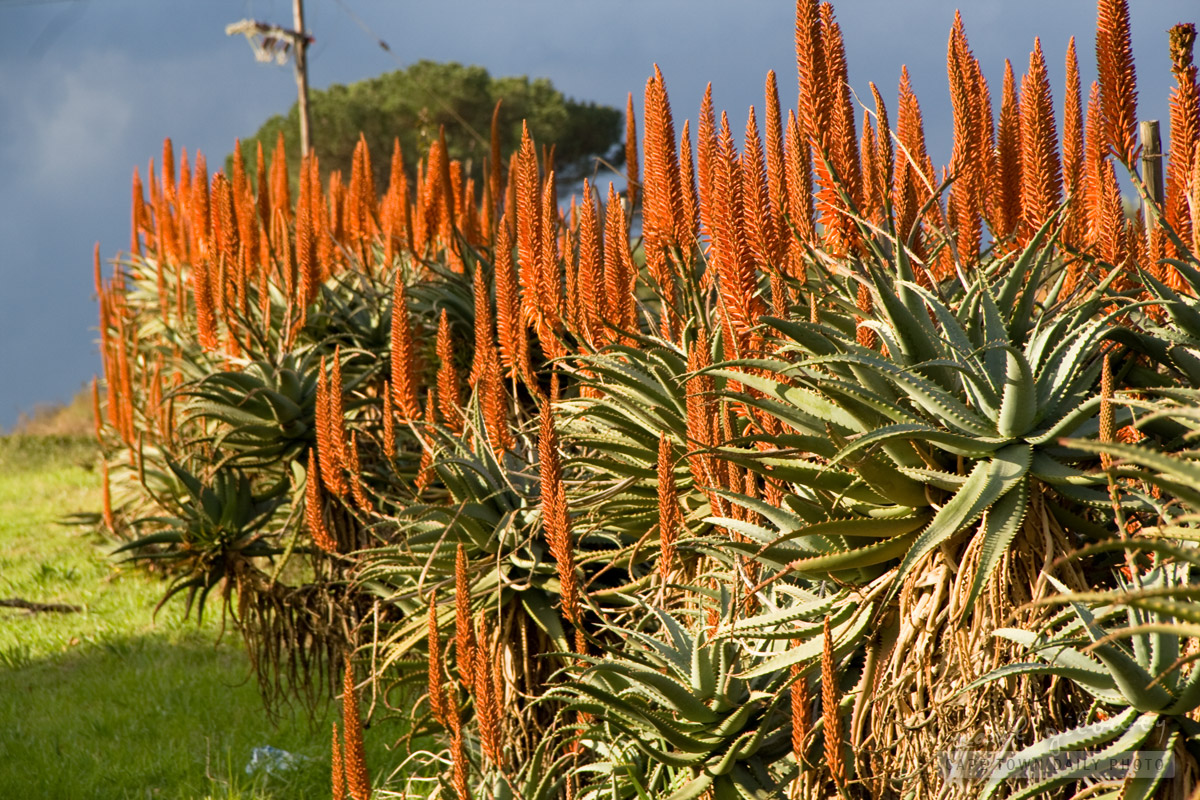
Most aloes send up stalks with many tubular flowers. The nectar is abundant and attracts birds (such as sunbirds), bees, and other insects. In some regions, taller aloes flower above surrounding shrubs, which makes them visible to flying pollinators. After pollination, dry capsules split to release light, often winged seeds that ride breezes into cracks and pockets of soil.
Growth and regeneration
Some species remain as single rosettes; others offset and form clumps. Tree aloes build a woody trunk and can live for decades. After fire, many grass- or shrub-sized aloes resprout from protected buds near the base; heavily burned plants may die if the growth point is exposed. In dry years, plants may skip flowering and focus on survival.
Soils and site
Aloes root in a wide range of substrates: alkaline limestone, acidic sandstone, coarse gravel, loam, or deep sand. A few are generalists; others are tied to specific soils. For establishment, seedlings often use “nurse” sites—under shrubs, beside rocks, or within grass clumps—where shade and trapped moisture improve survival.
People, wildlife, and conservation
Aloe flowers feed pollinators during dry seasons, and in some areas herbivores browse leaves or flower stalks. Around towns and villages, collection, land clearing, and altered fire regimes can reduce populations. In gardens, plants thrive with sun, fast-draining soil, and infrequent but deep watering. From a conservation standpoint, keeping native shrubs and rocky microsites intact supports natural regeneration.
Additional Reading: African Aloe Ecology