(Photograph = Agave scabra, Amante Darmanin)
Introduction
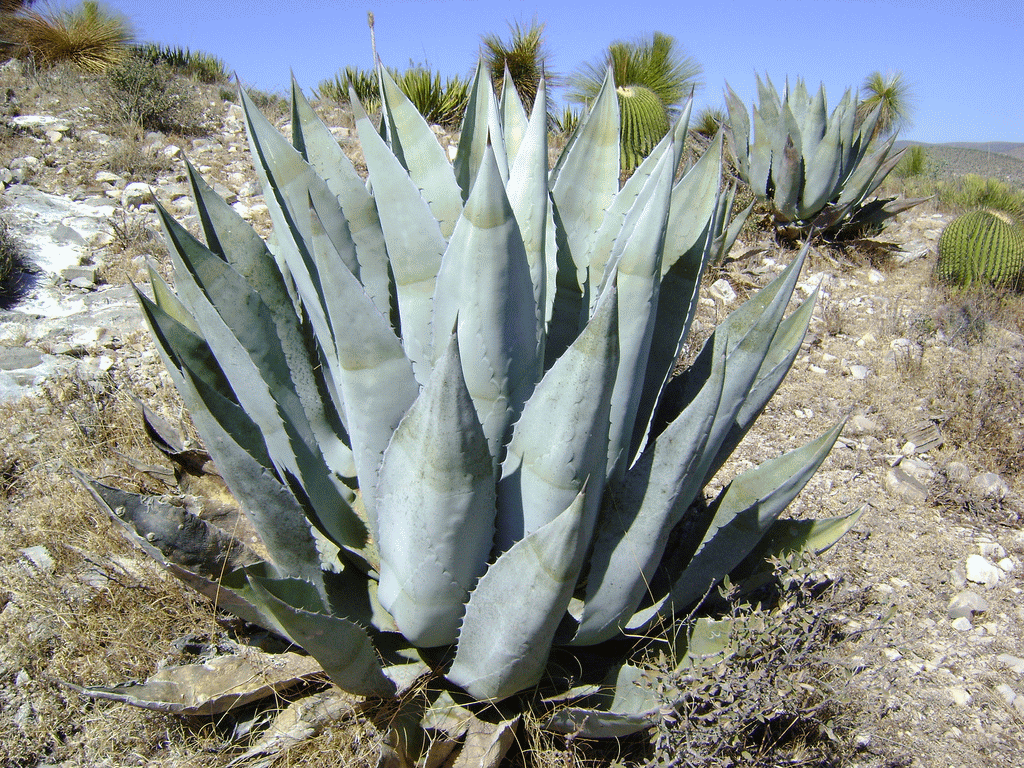
Agave scabra is the tough, gray-green agave many Texans and northern Mexicans know on sight—broad, rough-textured leaves armed with saw-toothed margins and a stout terminal spine. In older books you’ll see it as Agave scabra; in many recent treatments it’s folded into Agave asperrima, which fits the plant’s sandpaper feel and rugged posture. It’s a child of limestone and sun: a large, slow-growing rosette that shrugs off heat, wind, and long gaps between rains. When mature, it spends its stored water on a towering bloom stalk, then—like most agaves—dies, leaving offsets to carry the line. In gardens, the appeal is simple: clean architecture, ironclad drought tolerance, and a look that reads “Chihuahuan Desert” even from across the street.
The Details
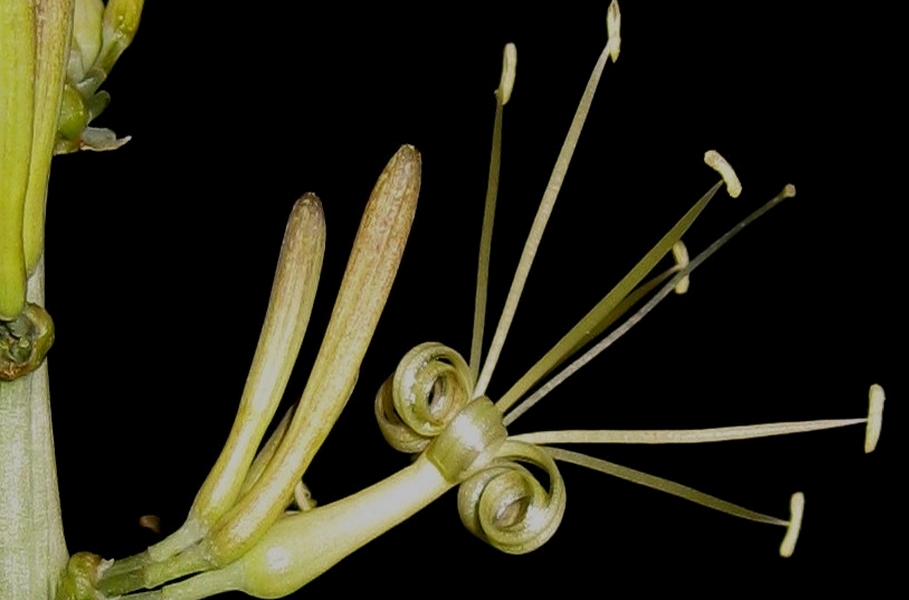
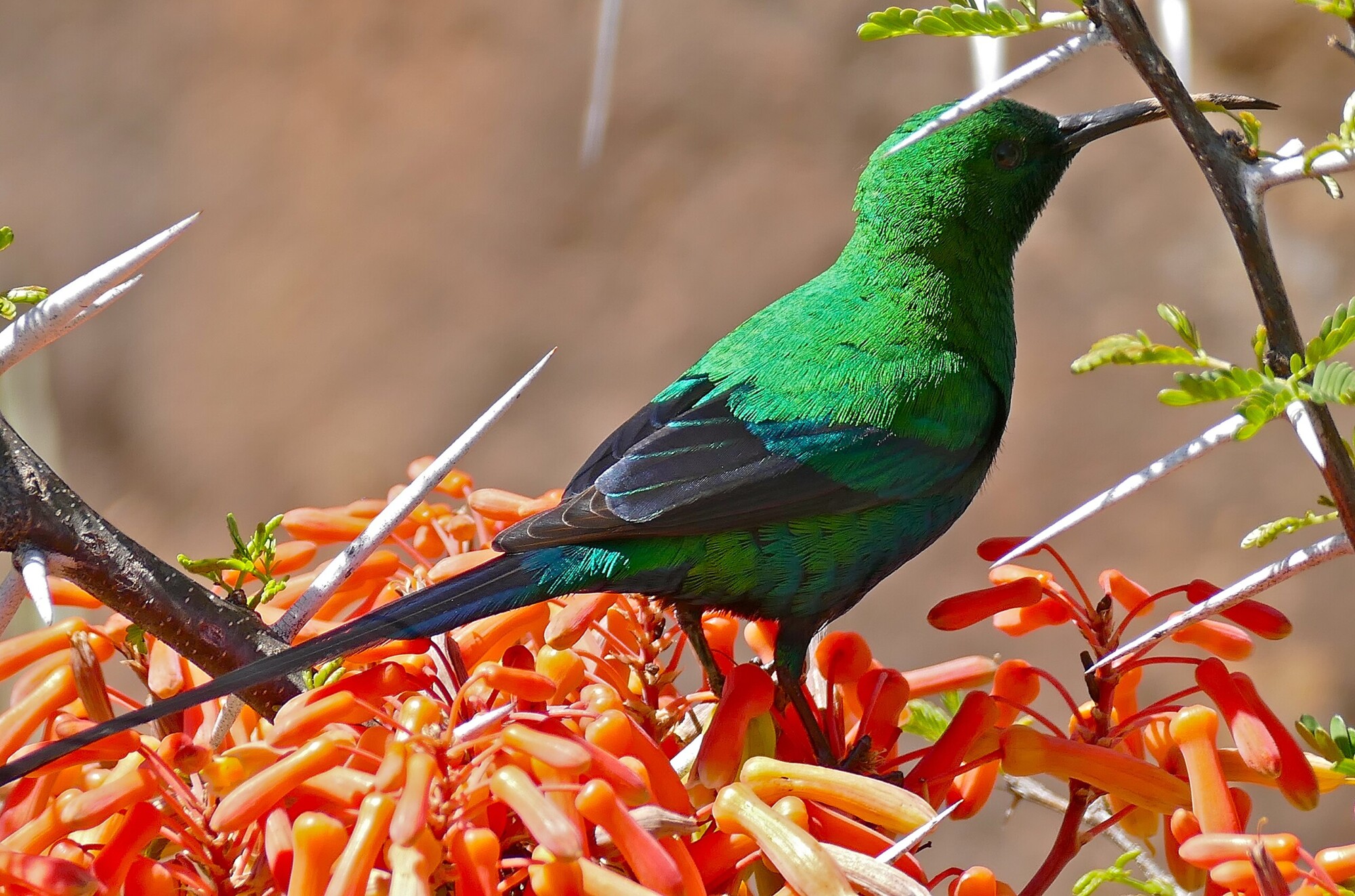
Wild plants range across the Chihuahuan region—from far West Texas into Coahuila, Chihuahua, and Durango—most often on rocky slopes, alluvial fans, and thin, calcareous soils. The rosette typically sits knee- to waist-high and can spread five to seven feet across with age. Leaves are thick, rigid, and unmistakably scabrous, glaucous to gray-green, with strong, recurved teeth and a dark, sturdy spine. Old leaf impressions (“bud-prints”) can ghost across new leaves as the plant expands. Given years of good seasons, a straight, branched stalk rockets up—often well beyond fifteen feet—with tiers of yellow-green flowers that draw night-flying pollinators, especially bats, and day visitors such as native bees and hummingbirds. Fruits mature into dry capsules packed with glossy black seeds.
In cultivation, think sun and stone. A lean, mineral mix, sharp drainage, and a raised or sloped site keep the crown high and dry. Water in pulses during warm weather, then let the soil go bone-dry; winter should be bright, cold, and mostly dry. Well-established plants take brief dips into the teens, Fahrenheit, if kept dry. Most failures trace to heavy soils, planters with small or blocked drain holes, or cool-weather watering that invites rot at the crown. Space matters: those teeth are real. Keep it out of foot traffic and several feet from paths or doorways. Container culture works if the pot is wide and the mix is gritty; feed sparingly, if at all.
Identification is helped by touch as much as sight—the leaf faces feel like very fine sandpaper. Compared with A. americana, this plant is stockier, the leaves stiffer and rougher, the teeth heavier, the color more gray than blue. Compared with A. lechuguilla, it’s far larger, broader-bladed, and less fountain-shaped. After flowering, expect pups at the base; move them on only when they’ve formed their own roots, and always with gloves, long sleeves, and a healthy respect for the spines. Done right, A. scabra (often treated as A. asperrima) becomes the anchor of a dry garden—low-maintenance, storm-proof, and exactly the kind of desert geometry that looks better with age.
Additional Reading: Agave for Tequila and Biofuels