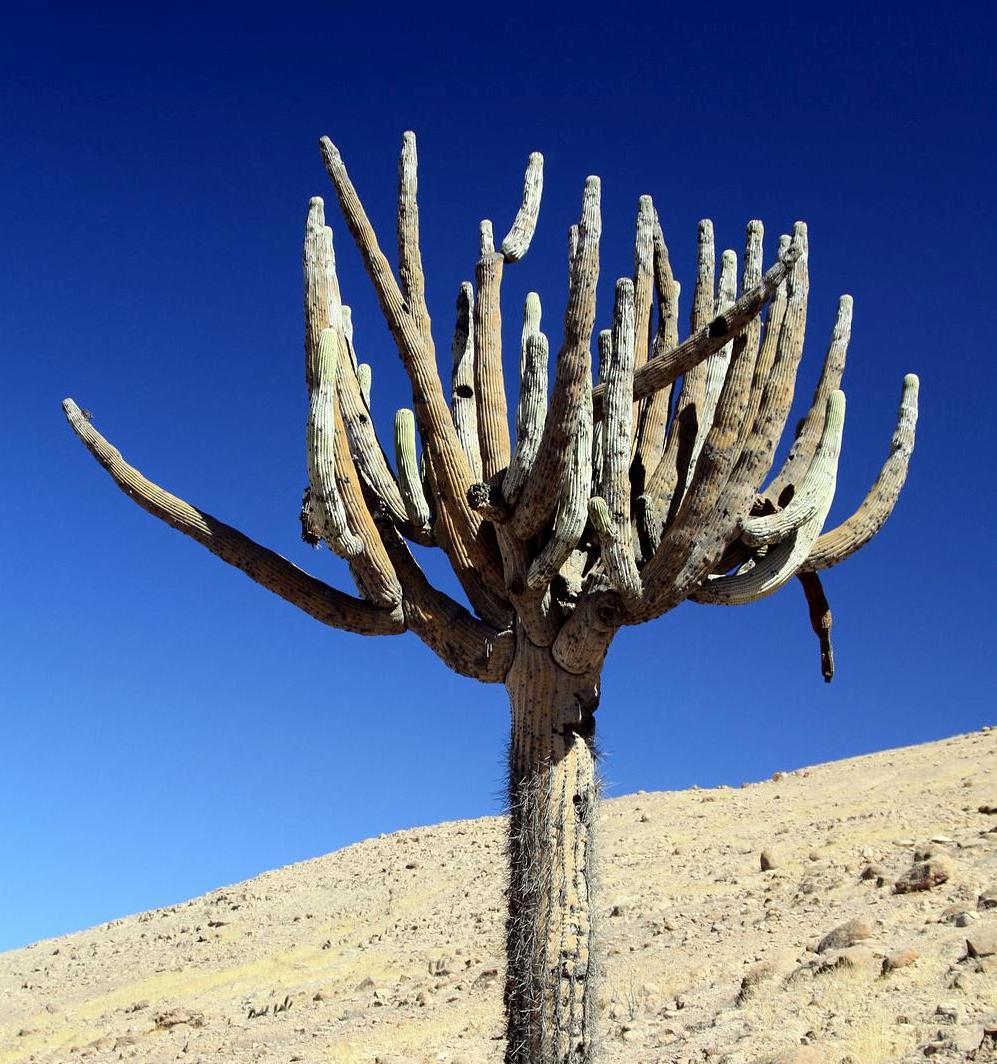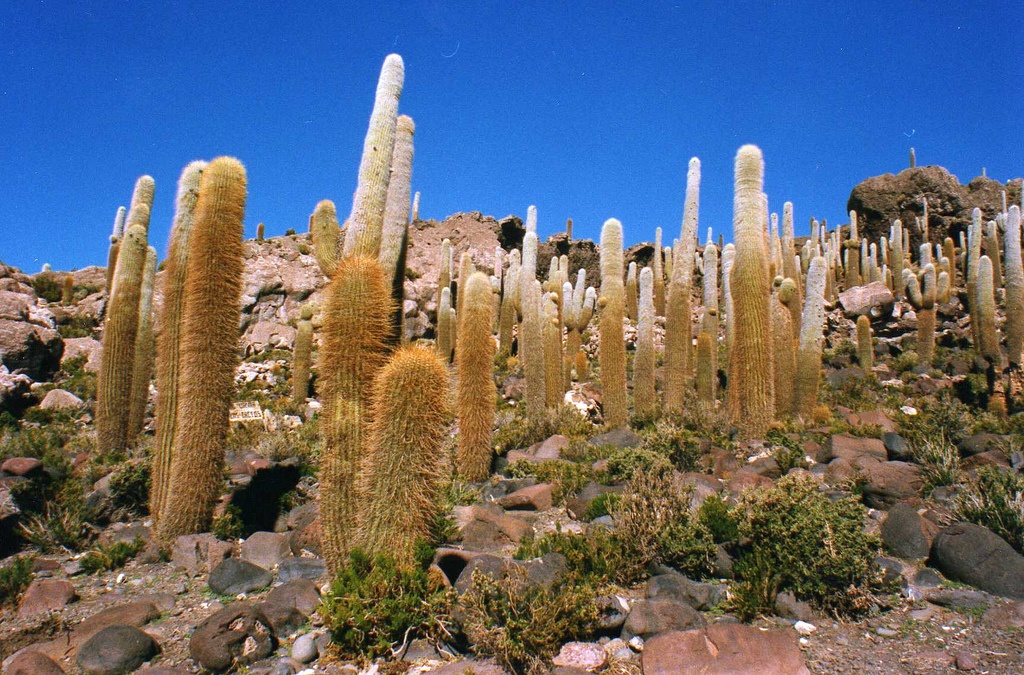
(Photograph: Trichocereus pascana, Lleonora Enking)
Introduction
In modern treatments, the tall, columnar South American cacti long known as Trichocereus are placed within a broader Echinopsis. That change reflects evidence that the “hedgehog” and “torch” types intergrade more than old books suggested. For everyday use, this means plants labeled Trichocereus pachanoi, T. peruvianus, or T. bridgesii are correctly Echinopsis pachanoi, E. peruviana, and E. lageniformis—and so on.
Why the change
Earlier authors split “globose Echinopsis” from “columnar Trichocereus” based on form, ribbing, and flowers. However, broader comparisons showed those characters overlap, and many species are closely allied. Bringing the columnar species into Echinopsis keeps related plants together and avoids artificial boundaries.
What “Trichocereus” still tells you
Although Trichocereus is no longer the accepted genus, the word remains useful shorthand in horticulture:
-
It points to the columnar, tree-forming members of Echinopsis.
-
It hints at large, often nocturnal, white to pale flowers with strong tubes and heavy floral bristles.
-
It reminds growers that these are fast, hardy, high-light plants compared with many small, globose Echinopsis.
Because the trade, older labels, and many websites still use Trichocereus, keeping both names in mind helps with searches and plant records.
Practical labeling
For tags, articles, and databases, a simple compromise works well:
-
Use the accepted name first: Echinopsis pachanoi
-
Optionally add the legacy name in parentheses for clarity: (Trichocereus pachanoi)
That approach respects current taxonomy while staying readable for gardeners and collectors who learned the plants under the older genus.
Final notes
Names change as we learn more. In this case, Echinopsis simply covers a wider, more natural group that includes the familiar torch cacti. For growers, care is unchanged: give bright light, excellent drainage, and room to grow; expect dramatic flowers and steady column growth once established.
Additional reading: Molecular Phylogenetics of Echinopsis