
Aloe capitata, Amante Darmanin
Introduction
Aloe capitata is a Madagascan aloe of the Central Highlands. The epithet capitata (“head-like”) refers to the dense, spherical flower heads, which typically open from the top downward. In cultivation, the most frequently encountered taxon is Aloe capitata var. quartziticola.
The Details
This species forms a stemless to short-stemmed, usually solitary rosette. In mature plants, 10–25 fleshy leaves radiate to about 50–70 cm long and 5–6 cm wide at the base. Leaf color ranges from gray-green to blue-green and often blushes pink to maroon in strong light; margins bear firm, evenly spaced teeth. The surface is typically glaucous, a waxy bloom that reduces water loss and limits sun scorch.
Inflorescences arise in the cool season on stout stalks and branch sparingly. Each branch carries a rounded, capitate raceme; buds are often orange and open to yellow, with many heads showing the characteristic top-down sequence. Abundant nectar draws pollinators, and, in habitat, birds and insects visit the flowers.
In nature, A. capitata occupies rocky sites of the Central Highlands of Madagascar, frequently on quartzitic substrates and other well-drained, mineral soils. Plants experience a pronounced dry season, high light, and significant diurnal temperature swings. The rosette habit, glaucous cuticle, and thick leaf mesophyll are all consistent with adaptation to seasonally dry, exposed slopes.
Recognized infraspecific taxa include var. capitata, var. quartziticola, var. angavoana, and var. silvicola; the quartziticola variety is comparatively widespread in cultivation and is noted for occurring on quartzite in the southern half of the highlands. In cultivation, plants tolerate full sun and drought once established and, when kept dry, can withstand light frost; var. quartziticola is generally considered the most cold-tolerant of the group.
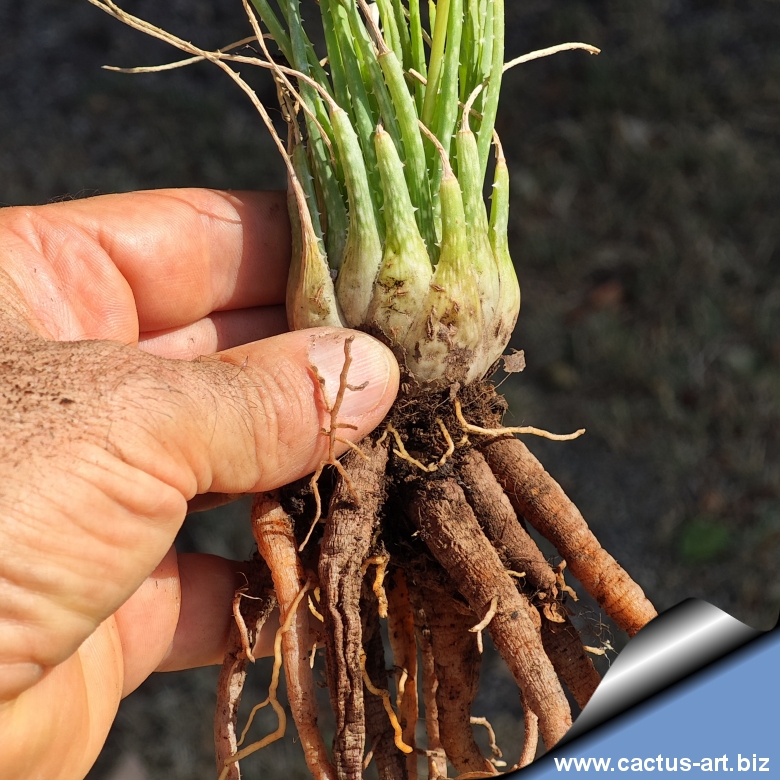
These photos were taken by Amante Darmanin.
Additional Reading: Madagascar Aloes


Where can I buy a few Aloe Capitata var Quartzitiola plants in South Africa?
Hi,
I don’t know. But you may be able to find seeds at Silverhill Seeds in South Africa (https://silverhillseeds.co.za/). Not sure.
Joe