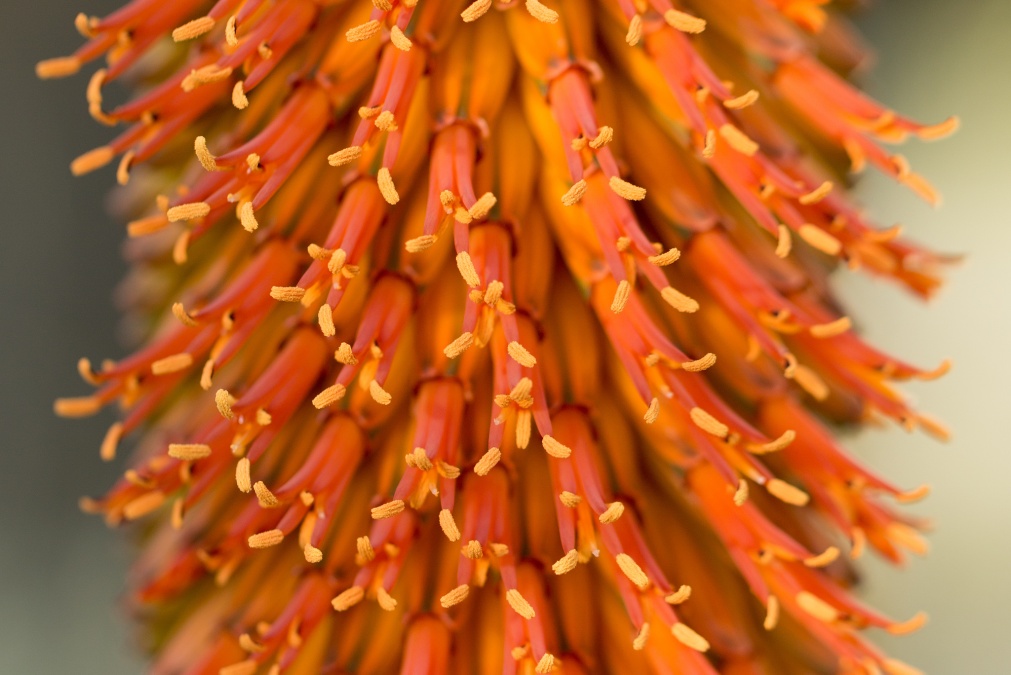
(Photograph = Aloe ferox flowers, Dogtooth)
Introduction
Aloe is a large, mostly African genus ranging from small stemless rosettes to tall, single-stem “tree aloes.” Several branching species are now placed in the related genus Aloidendron, but Aloe ferox remains in Aloe. In many wild populations, adults carry a skirt of dead leaves below the green crown. At first glance, that skirt looks like extra fuel for fires; in practice, it often works the opposite way.
The Details
Across parts of the Eastern and Western Cape, Aloe ferox grows on rocky hills and grassy shrublands that burn from time to time. During quick, passing flames, the tightly layered dead leaves act as insulation. They trap air, slow heat transfer, and shield the living stem and the growing tip. Plants that retain full skirts generally survive ordinary range fires better than those with bare trunks. After burns, crowns that were protected by the skirt can push new leaves and resume growth, while scorched, skirt-less stems are more likely to be girdled or killed.
There is a practical takeaway for land managers and gardeners in fire-prone areas: stripping dead leaves for appearance or harvest may reduce that natural protection. Leaving the skirt in place helps the plant withstand the next burn. Very intense or long-duration fires can still cause damage, but under the short, fast fires typical of these habitats, the leaf skirt functions more like armor than kindling.
Additional Reading: Dead Leaves and Aloe Survival


Hi Joe,
I’m having trouble getting today’s post, Cliffs and Canyons, to open. It keeps going to the new moving header, but I can’t get it to open for the rest of the info. Couldn’t get the comment section to open on that field either, so I’m using the Aloe ferox field, which is fine.
The new website format looks nice, but there seems to be a bit of a glitch.
Best,
Carol