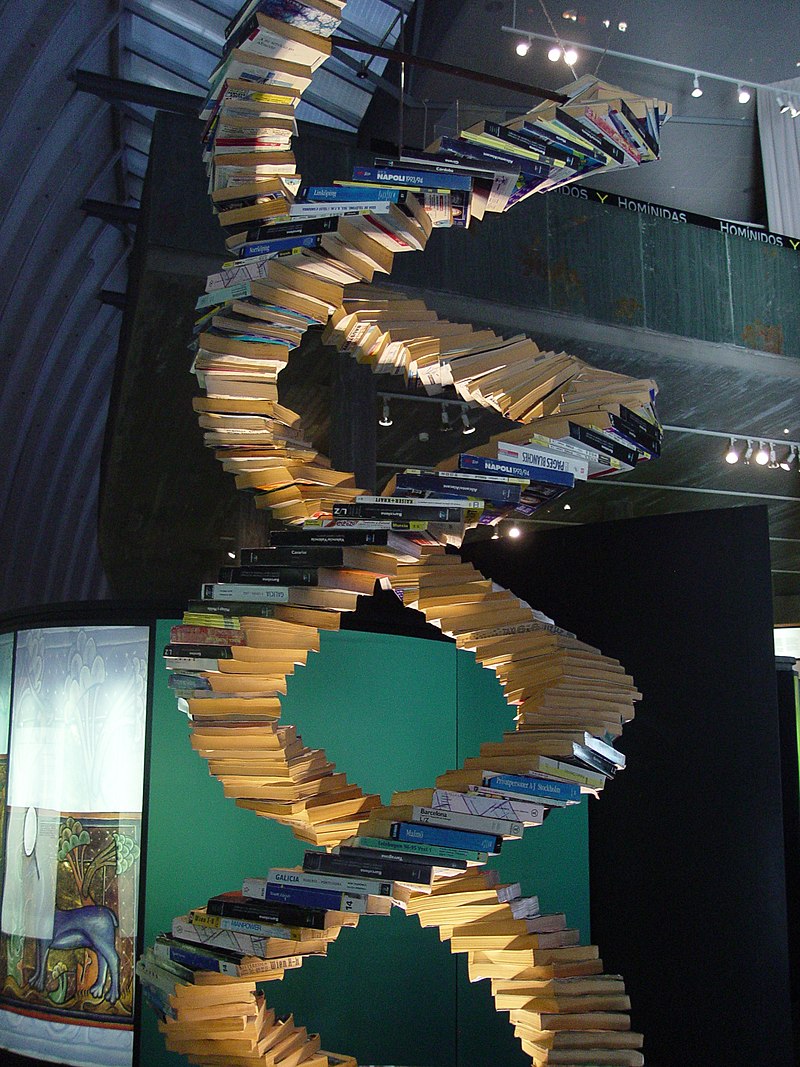
(Photograph = DNA strand)
Introduction
All cacti are related, but not equally so. DNA is the record of those relationships, a ledger of tiny changes that add up over time. When we read that record across many species, we can test long-standing hunches, spot cases of look-alike convergence, and sort genuine kin from superficial resemblance. Genetics doesn’t replace fieldwork or the herbarium, but it gives us a second, independent map. When both maps agree, confidence rises; when they diverge, we know where to look more closely.
The Details
What scientists read. Plant genetic work pulls from three libraries at once: the nuclear genome (huge and inherited from both parents), the chloroplast genome (small, usually passed down the maternal line), and the mitochondrial genome (even larger but slower-changing). Chloroplast sequences are handy for family-tree scaffolding, while nuclear data capture the more tangled stories of hybridization, introgression, and polyploidy that are so common in cacti.
Why barcoding cacti is tricky. Classic “barcode” regions in plants, like rbcL or matK, can help, but in Cactaceae they often don’t vary enough from species to species. That’s partly because many cactus radiations are geologically young, and partly because lineages have swapped genes through repeated hybridization. Result: a single short marker may group near-neighbors but struggle to cleanly separate species across the whole family.
Signals written into cactus plastids. Chloroplast genomes in cacti are famous for their quirks: they show notable rearrangements and, in some groups, losses of certain photosynthetic genes. Those structural signatures act like watermarks—useful for spotting major clades and testing whether similar growth forms in distant places share ancestry or evolved in parallel.
Modern data sets change the scale. Instead of one or two loci, current studies harvest thousands of markers at once. Target-capture “Hyb-Seq” panels, RAD-seq, genome skimming, and now full genome assemblies all provide dense signal. With that much information, researchers can estimate divergence times, detect cryptic species, and untangle the branches where hybridization stitched two lineages together.
Hybridization and polyploidy are the rule, not the exception. Prickly pears, chollas, and several columnar groups repeatedly exchange genes. Whole-genome duplication—polyploidy—adds another layer, creating instant leaps in chromosome number and sometimes new, stable lineages. Nuclear data are essential here because chloroplasts trace only the maternal line; hybrids often “borrow” a chloroplast from one parent while carrying a mixed nuclear genome.
What whole genomes add. It’s no longer hypothetical—several cactus genomes have been assembled to high quality, including a major fruit crop and emblematic desert species. Whole-genome views reveal how much of a cactus genome is repetitive DNA, where bursts of gene duplication map onto drought-tolerance traits, and how pigment and stress-response pathways cluster along chromosomes. They also let researchers pinpoint genes involved in CAM photosynthesis, the nighttime CO₂-fixing strategy that underpins cactus water economy.
How this helps on the ground.
-
Taxonomy: Dense genetic data clarify whether a name covers several lineages or just one, and whether two named “species” are, in fact, the same thing wearing different regional clothes.
-
Conservation: Population-level markers show which stands are genetically unique, which are naturally connected, and where a restoration seed source will fit—or clash.
-
Biogeography: DNA pinpoints when and how lineages crossed deserts, mountains, or coastlines, and whether similar pads, ribs, and spines arose once or many times.
-
Curation and horticulture: Barcodes may be imperfect for species-level IDs, but genome-scale fingerprints make it possible to verify breeding lines, track hybrids, and keep collections true to name.
A balanced view. DNA doesn’t get the last word by itself. Herbarium types, original descriptions, field photographs, and live plants still set the standard. But when morphology, geography, and genetics point the same way, we gain a sharper, more durable picture of cactus diversity. When they disagree, the mismatch is a gift—it marks the exact knot that deserves the next careful look.
Related reading: Epiphytic Cactus Phylogeny



Very Interesting Joe! I’d Love to see this done with the many different “Forms” of O. humifusa on the East Coast. I’m sure someone’s checked DNA on many of them.
Yes, very interesting . Perhaps re the photos : would it be too much to show both species as comparison. I.e. Flower of each species, cladode of each etc ?
Is there a database repository of all cactus dna?… where can i find it?