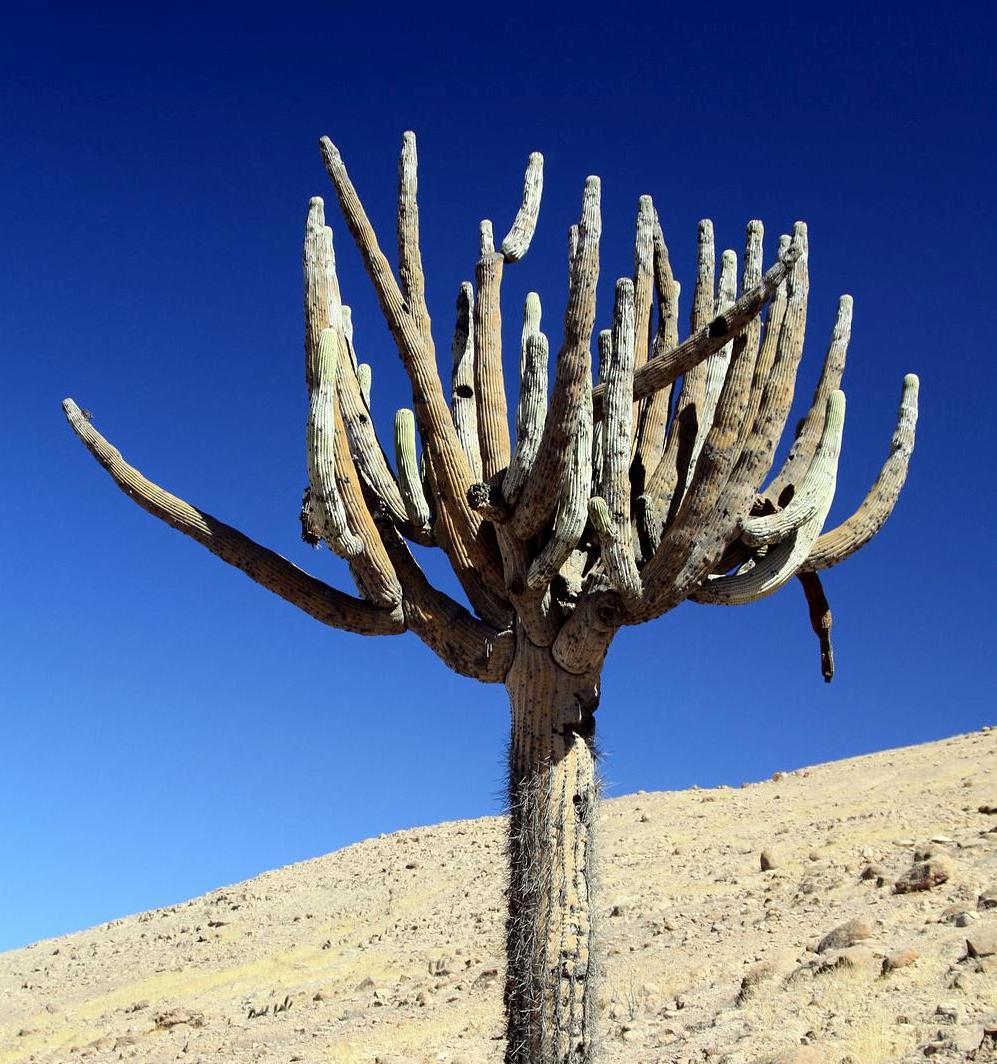
(Photograph = Cleistocactus winteri, Peter Mansfeld)
Introduction
Cacti come in a few basic shapes that repeat across the family: columnar “candles,” barrel or globose forms, pad-forming prickly pears, and climbing or epiphytic types with flattened stems. Those shapes are not just for looks—they help plants manage heat, light, and water in tough habitats.
The Details
Key features behind the shapes
Cacti grow from areoles—small pads of tissue on the stem that produce spines, hairs, and flowers. Many species have ribs or tubercles that let stems expand after rain and contract during drought. In prickly pears (Opuntia), the flattened segments (“pads” or cladodes) are stems doing the work that leaves do in other plants.
Common cactus shapes (quick tour)
-
Columnar (cereoid) cacti: Tall, upright stems with ribs; branching can form candelabra-like crowns. The vertical form reduces midday sun exposure and lifts flowers and fruits for animal visitors.
-
Barrel/globose cacti: Spherical to short-cylindrical bodies with heavy ribs (e.g., many Echinopsis and Ferocactus). The compact shape stores water and keeps surface area low.
-
Pad-forming cacti: Prickly pears and relatives build chains or mats of pads. Pads root where they touch soil, letting plants spread and quickly recover from damage. Tiny barbed bristles (glochids) occur in many of these species.
-
Climbing/epiphytic cacti: Forest species (e.g., Epiphyllum and close relatives) have flattened, often leaf-like stems and use trees or rocks for support. Large, night-blooming flowers are common.
Why shape matters
Form follows environment. Tall columns tolerate open, sunny slopes and deliver flowers above surrounding shrubs. Barrels sit low where heat and wind are intense. Pad-formers sprawl, capturing space and light, and reroot easily after breakage. Epiphytes trade bulk for reach, spreading along branches where debris and moisture collect.
A simple field tip
When you’re unsure what you’re looking at, find an areole and ask: is it on a rib, on a nipple-like tubercle, or on a flat pad? That one clue usually narrows the shape—and the likely group—right away.
Related Reading: The Cactus Explorer No. 11