
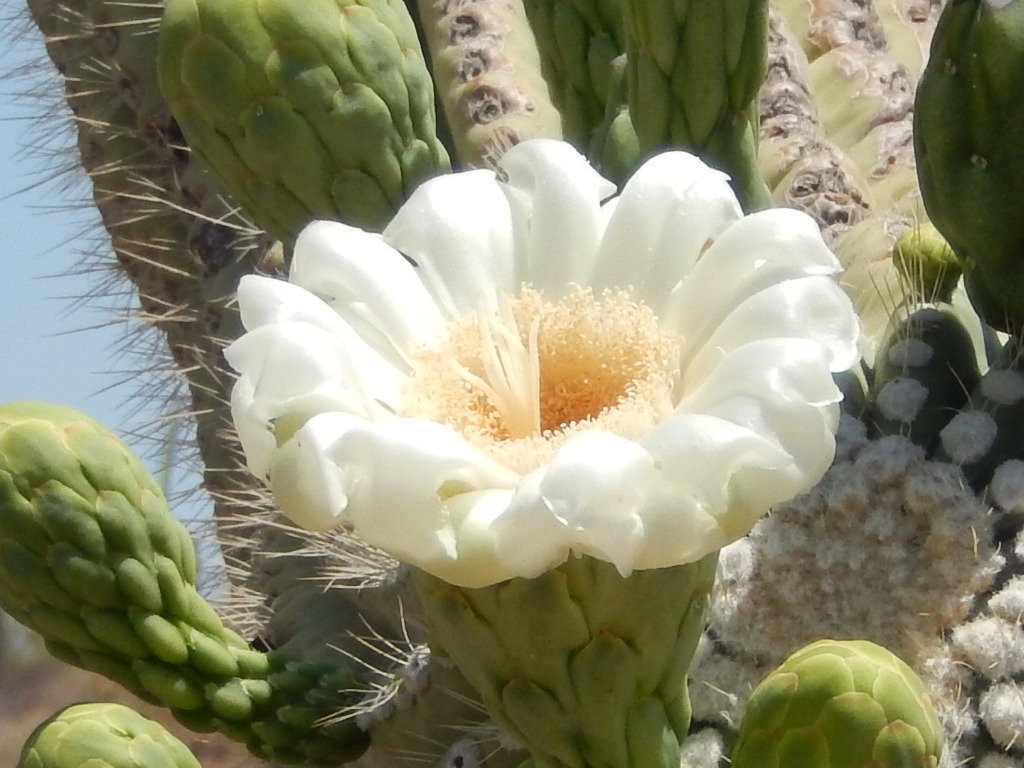
(Photograph: Cleistocactus smaragdiflorus flower, Peter A Mansfeld)
Introduction
Cleistocactus is a group of slender, columnar cacti best known for their narrow, tubular flowers that stick out sideways from the stems. Many species carry dense, hair-fine spines that give the plant a silvery or golden look in strong light. In gardens and in habitat, these cacti often form clumps of upright stems that flower reliably once they reach good light and size.
The Details
Habit and identification
Stems are typically upright, pencil-thick to arm-thick, with many shallow ribs and closely spaced areoles. Spines can be bristly or hairlike and may hide the green surface beneath. With age, plants form clusters as new shoots emerge from the base.
Flowers and pollination
Flowers are long, narrow tubes that project horizontally from the stems. Colors range from red and orange to yellow or greenish. In their native ranges, the shape and timing suit fast, hovering visitors—especially hummingbirds—though bees and other insects also visit.
Range and habitat
Most species are Andean or pre-Andean, growing from low foothills to higher, cooler slopes with excellent drainage and high light. In exposed sites, stems stay shorter and thicker; in slightly sheltered spots, they stretch taller and flower more freely.
Cultivation notes
Provide very bright light and a coarse, fast-draining mix. Water deeply during warm growth, then allow the mix to dry before watering again. In winter, keep plants cool and on the dry side to set buds. Brief light frosts are sometimes tolerated if the soil is dry, but prolonged cold is damaging. If stems lean, rotate the pot for even light or stake taller shoots.
Additional Information: Flower Density on Cleistocactus




Thanks for all of the posts. I really appreciate your blog, even though I limit my cacti to about twenty, and many are the less thorny ones.
Hi Carol,
Thanks for your nice words. And thanks for visiting the blog.
Joe