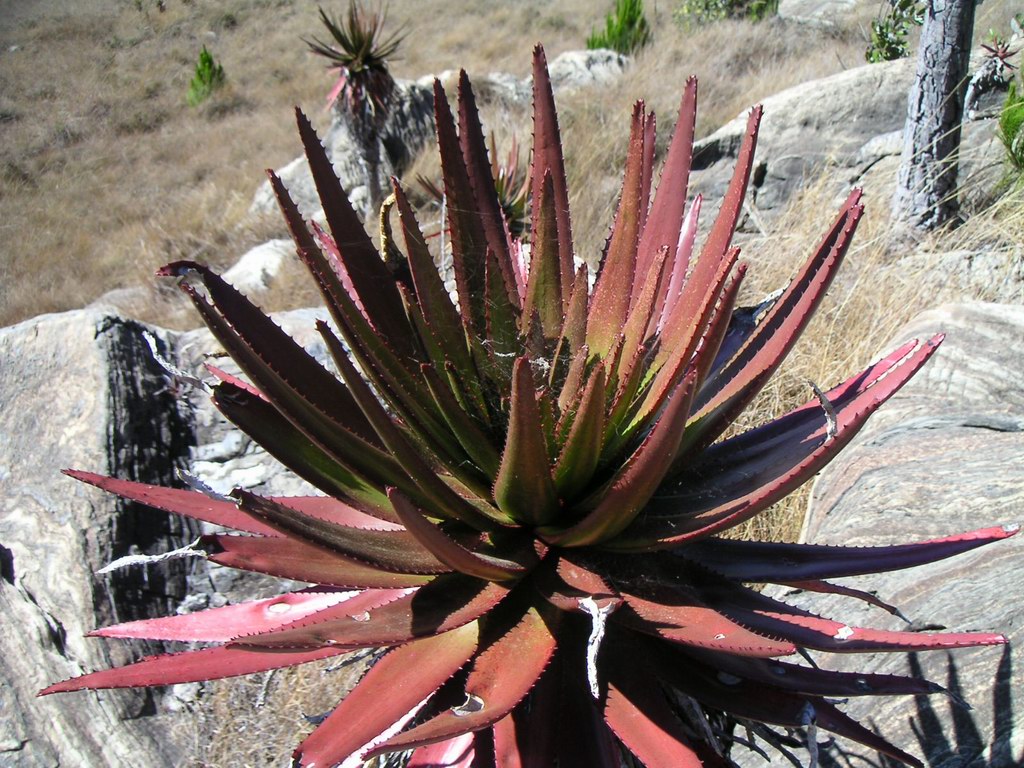
(photo = Hilaria rigida, CalPhotos)
Introduction
Nurse plants are plants that protect and otherwise help seedlings of another species grow until they can survive on their own. Nurse plants can provide shade, reduce wind and heat, and enrich the soil.
The Details
Hilaria rigida (now often treated as Pleuraphis rigida, big galleta) is a common bunchgrass of the western deserts. It forms persistent clumps in deserts, scrublands, and even sand dunes—places where seedlings of any species have difficulty establishing. In full sun, desert soil-surface temperatures can exceed 150°F. Clumps of H. rigida shade the ground and keep those temperatures much lower. H. rigida is a nurse plant for Agave deserti and other succulent plants.
In addition to providing shade and cooler microsites, soils beneath H. rigida tend to have more nitrogen than nearby open ground. There is a trade-off, however: the grass and the seedling overlap in shallow soil and compete for water, and the shade reduces available light. Field measurements and modeling show that a seedling at the center of a clump can take up much less water than an exposed seedling, and light (PAR) beneath the canopy can be sharply reduced. Even so, the cooler, nutrient-richer microsite often makes the difference between survival and lethal heat for tiny seedlings.
In time, the agaves grow large and compete more effectively for water.
Much in nature is a trade-off as various species compete for precious resources. What H. rigida “gets” is indirect: its clumps trap litter and sediment, creating small fertility islands that shape which plants establish there.
Additional reading: Agave deserti and nurseplant, Hilaria ridiga