Introduction.
Dudleya is a small genus of rosette-forming succulents in the stonecrop family (Crassulaceae), native mainly to California and Baja California, with a few species reaching coastal Oregon and Arizona. Often called “live-forevers,” they anchor themselves to sea bluffs, chaparral slopes, and sun-blasted cliffs where few other plants persist. Their chalky, gray-green leaves store water, and many species wear a conspicuous white bloom (farina) that reflects sunlight and limits water loss. In spring, tall, branching stalks rise with star-shaped flowers that can be white, yellow, or red. The genus honors botanist William R. Dudley. Although modest in size—about 40–50 species—the group shows striking diversity, local endemism, and frequent hybridization, which makes identification both challenging and rewarding.
The Details.
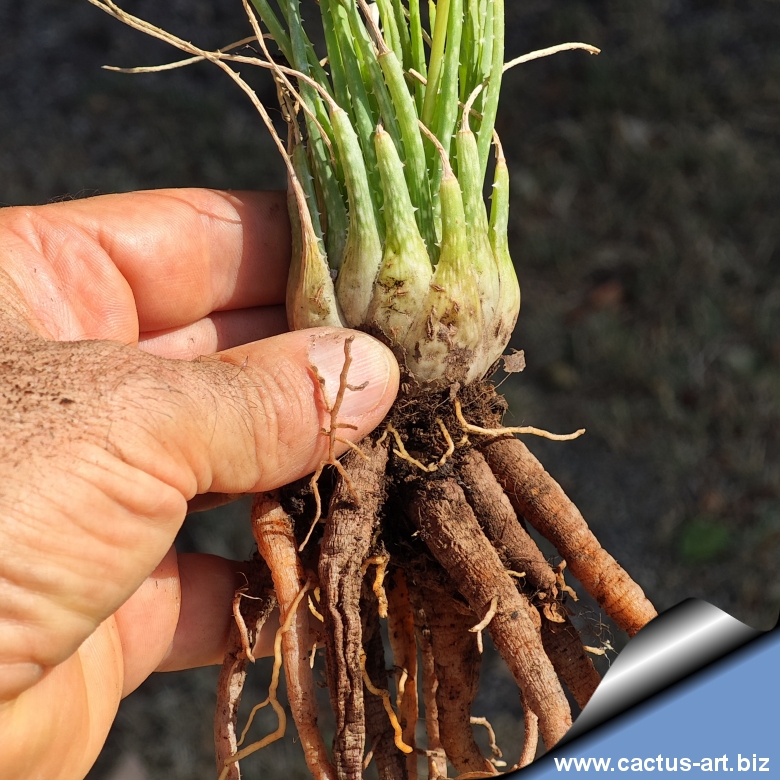
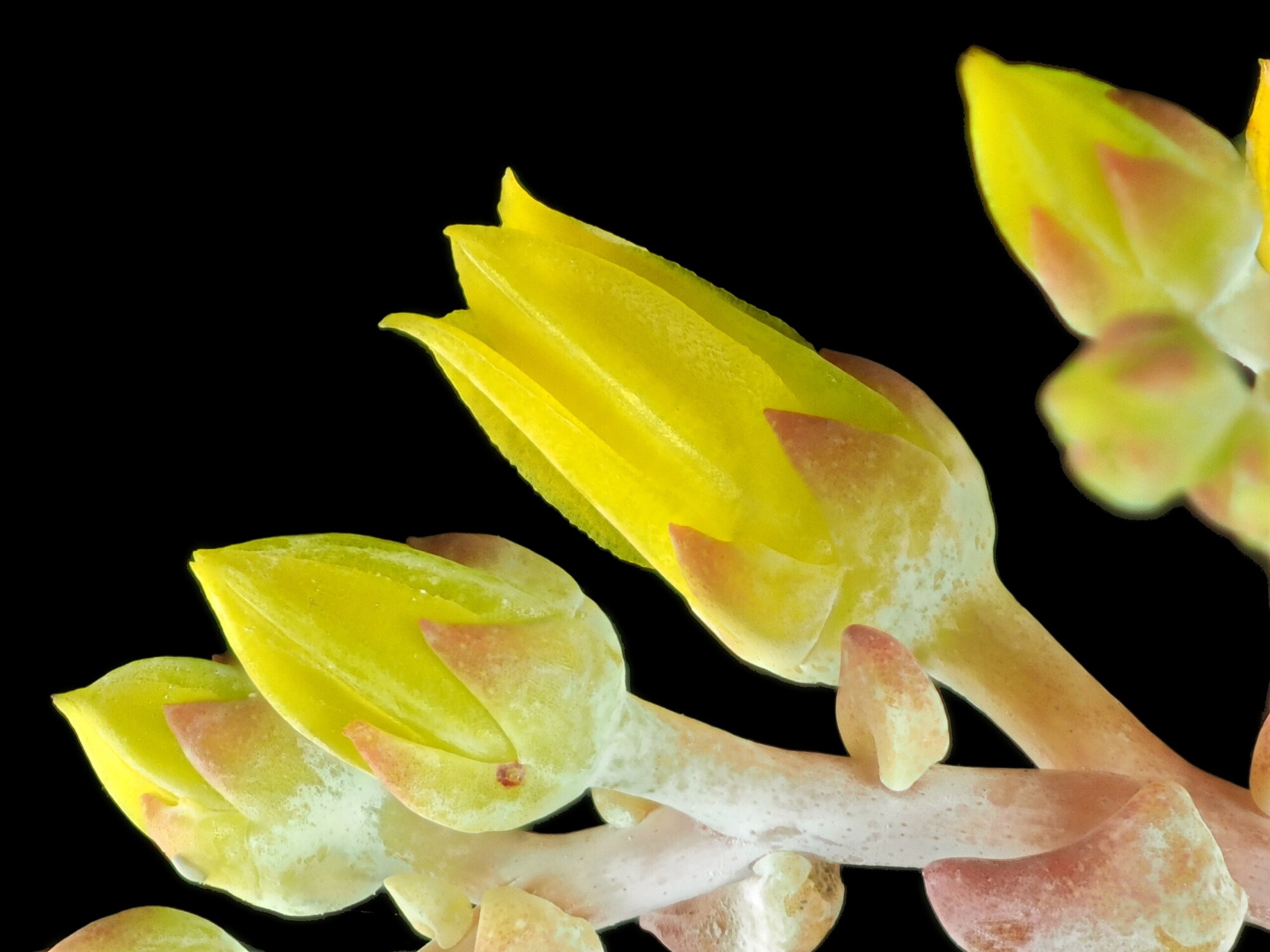
Dudleyas are perennial succulents with compact rosettes borne on a short, often woody stem (caudex) that may branch into small clusters over time. Leaves are thick, smooth, and usually lanceolate to spatulate; in many species they are coated with a fragile wax that rubs off easily. The inflorescence is a branched cyme arising in late spring to early summer, with bracts along the stalk and five-merous flowers. Petals are typically fused at the base into a short tube and flare at the tips; ten stamens stand in two whorls, and five carpels mature into dry follicles that split to release numerous dust-fine seeds, readily carried by wind.
Geographically, the genus is centered in Mediterranean-climate California and northwestern Mexico. Coastal species such as D. farinosa cling to sea cliffs and fog-bathed bluffs, while inland taxa occupy rocky outcrops in chaparral, oak woodland, and desert margins. Island endemics on the California Channel Islands (e.g., forms within the D. virens complex) illustrate how isolation and microhabitat produce narrow, distinctive lineages. On the Baja California peninsula, large and spectacular species like D. brittonii display broad, chalk-white leaves and tall, showy inflorescences. In southern California’s interior, the variable D. lanceolata and the D. cymosa complex inhabit steep, well-drained slopes and serpentine or volcanic substrates.
Pollination biology tracks flower color and shape. Red to orange, tubular flowers are frequently visited by hummingbirds, which move efficiently along the branched cymes. Pale or yellow flowers tend to attract native bees, flies, and beetles. After flowering, the plant’s spent rosette often retains a thatch of dry leaves around the caudex, buffering heat and reducing moisture loss at the base.
Taxonomically, Dudleya is notorious for local forms, clines, and natural hybrids where species ranges meet, especially on complex coastlines and islands. Polyploidy occurs in the genus, and morphological plasticity (changes in leaf width, thickness, and farina with exposure) can blur species boundaries. As a result, careful attention to habitat, geography, flower characters, and inflorescence architecture is essential for accurate identification.
Conservation concerns now accompany the genus’s popularity and endemism. Many populations are small and restricted to single cliff systems or islands, making them vulnerable to disturbance, poaching, and coastal erosion. Protection of wild habitats, responsible scientific collecting, and documentation through vouchers and photographs help ensure these resilient, cliff-dwelling succulents persist on the rugged edges of western North America.
Additional Reading: Dudleya