Introduction
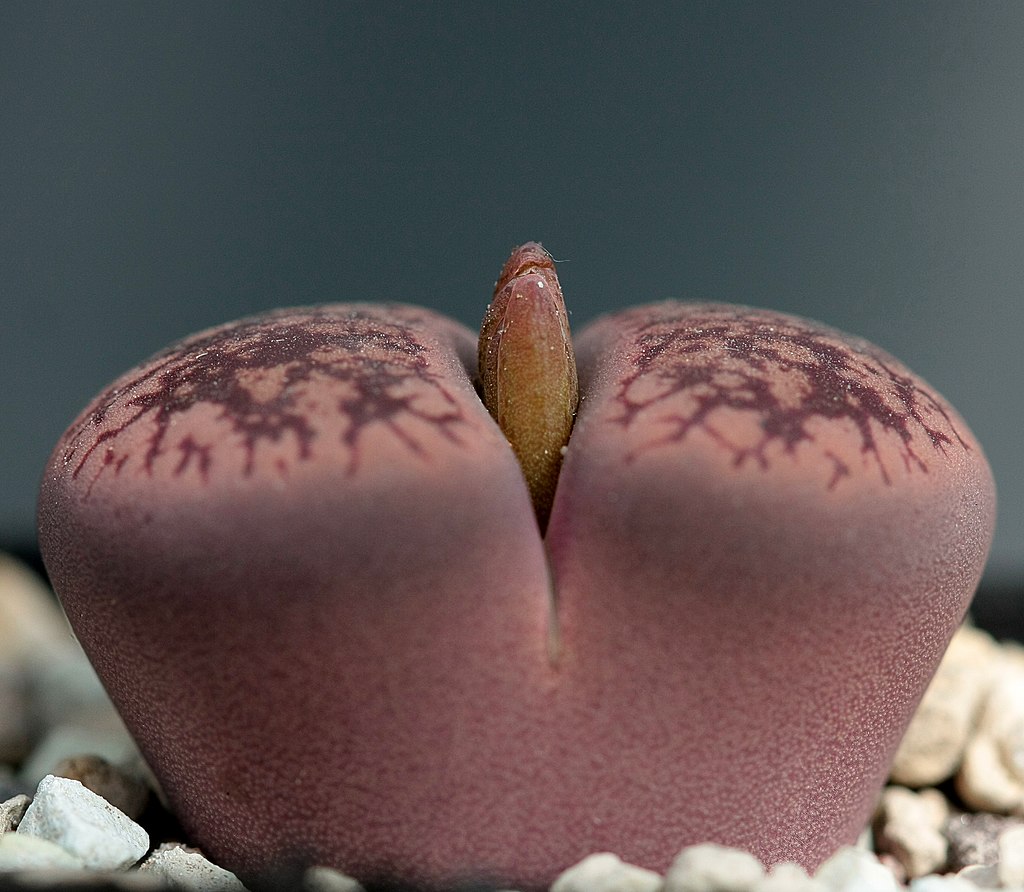
Lithops—often called “living stones”—are small succulents from arid parts of southern Africa that imitate the pebbles around them. Each plant is basically a thick pair of leaves fused into a single body with a slit at the top; from this slit the flower and new leaves emerge. Most of the plant sits below the soil surface, exposing only the windowed top. These windows let light reach inner tissues while keeping water loss low. Their camouflage reduces attention from grazers and heat. With slow growth, long lifespans, and tight control over water use, Lithops are champions of survival by disguise.
The Details
A Lithops body looks simple, but it is finely tuned to its habitat. The two leaves are swollen with water-storing tissue and capped by a translucent window. Beneath the window, clear cells guide light into the photosynthetic layers, allowing the plant to “hide” in the ground while still making sugar. The top surface carries intricate patterns—dots, islands, and fissures—colored by pigments that scatter light and break up the outline, helping the plant resemble quartz, granite, or iron-stained stones at its site.
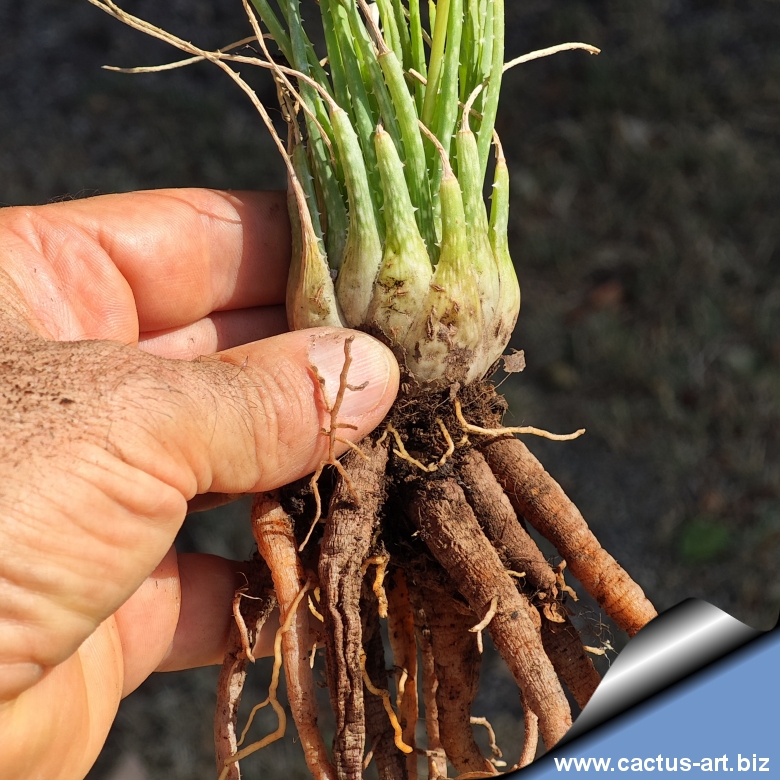
The annual rhythm is distinctive. After blooming, the plant slowly reallocates stored water from the old leaf pair into a new pair developing inside. Eventually the old leaves dry into a papery shell while the fresh pair takes over. This internal recycling conserves precious moisture and nutrients and keeps the above-ground profile low. A deep taproot anchors the plant and accesses brief pulses of moisture that slip below the surface after rare rains.
Lithops flowers are showy and daisy-like, typically white or yellow, with many narrow petals and a sweet scent noticeable on warm afternoons. They usually open in bright light and close toward evening. Pollinators—often small bees and flies—follow the signal of color and scent to the flower, which rises just above the leaf surface. After pollination, the ovary matures into a dry, multi-valved capsule. These fruits are hygrochastic: they open when wet. Raindrops strike the cup and splash out the tiny seeds, distributing them into nearby crevices where moisture lingers and competition is low.
Geographically, Lithops occupy a broad swath from Namibia through South Africa into parts of Botswana. Even within this range, each species is tied to a specific geology and microclimate—quartz fields, shale flats, or iron-rich gravels. This tight fit to local conditions drives diversity: different populations evolve different patterns and colors that mirror the stones underfoot. Their mats can be sparse, with individual plants spaced like pebbles across the ground, or denser where soils and rock fragments concentrate water.
Ecologically, Lithops are small actors with outsized roles. By holding soil between their bodies and surrounding stones, they reduce erosion and create micro-pockets where other tiny organisms—mosses, lichens, insects—can persist. Their seeds, though minute, form a reserve in the soil that waits for the right combination of rain and temperature. Threats include habitat disturbance, overgrazing, and illegal collection, especially for rare, localized species. Still, their chief defense remains the same strategy that shaped them: blend in so completely with the landscape that you are simply part of the stones themselves.