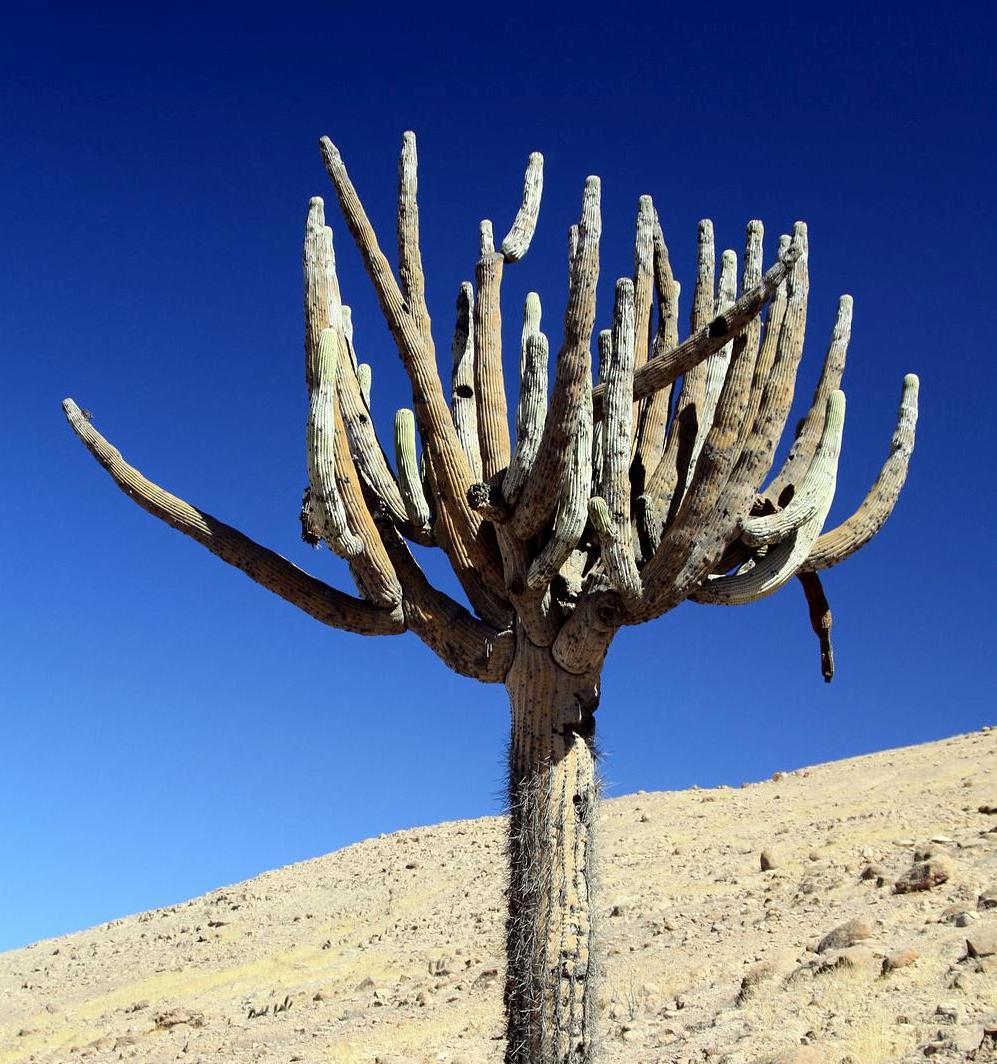
(Photograph = Echinocereus coccineus, Andrey Zharkikh)
Introduction
Echinocereus is a genus of generally small, ribbed cacti native to North America, with roughly 70 species. The group is common in the American Southwest and is often grown by hobbyists for its relative ease of culture and showy flowers. See the Flora of North America description (keep your existing link).
The Details
E. coccineus—the claret cup or scarlet hedgehog cactus—forms low clumps. The common names refer to the vivid flower color and the “hedgehog-like” look of the spiny stems. Spines may be white, yellow, reddish, or nearly black. Plants can have just a few stems or, in older clumps, well over a hundred. The large, showy flowers are typically scarlet to crimson, sometimes orange-red, and only rarely rose-pink.
This species thrives in varied settings: grasslands, pinyon–juniper woodlands, rocky slopes, and substrates derived from volcanic rocks or limestone. Plants from higher elevations (above roughly 4,000–5,000 ft) tend to be notably cold-hardy. Across its range, plants may be densely spined (more typical of the classical form) or relatively open-spined (notably in parts of West Texas).
Distribution note. In broader treatments of the “claret cup” complex, the group extends widely across the Southwest. In narrower treatments, E. coccineus sensu stricto is centered in Arizona, New Mexico, Colorado, and Texas, and in adjacent northern Mexico (Chihuahua, Coahuila, Sonora). California plants usually belong to other members of the claret-cup complex rather than to E. coccineus s.s.
Taxonomy note
Over the past ~20 years, authors have revised the claret-cup complex. Some plants once included within a broad E. coccineus have been split and are now treated as separate species (for example, regional taxa aligned with E. triglochidiatus, E. mojavensis, and related forms). As a result, names and ranges in older sources may not match more recent treatments.
Additional Reading: Phylogeny in Echinocereus
Additional Reading: Dioecy in Echinocereus
Additional Reading: Echinocereus coccineus var rosei


(images from Wikepedia)