Introduction
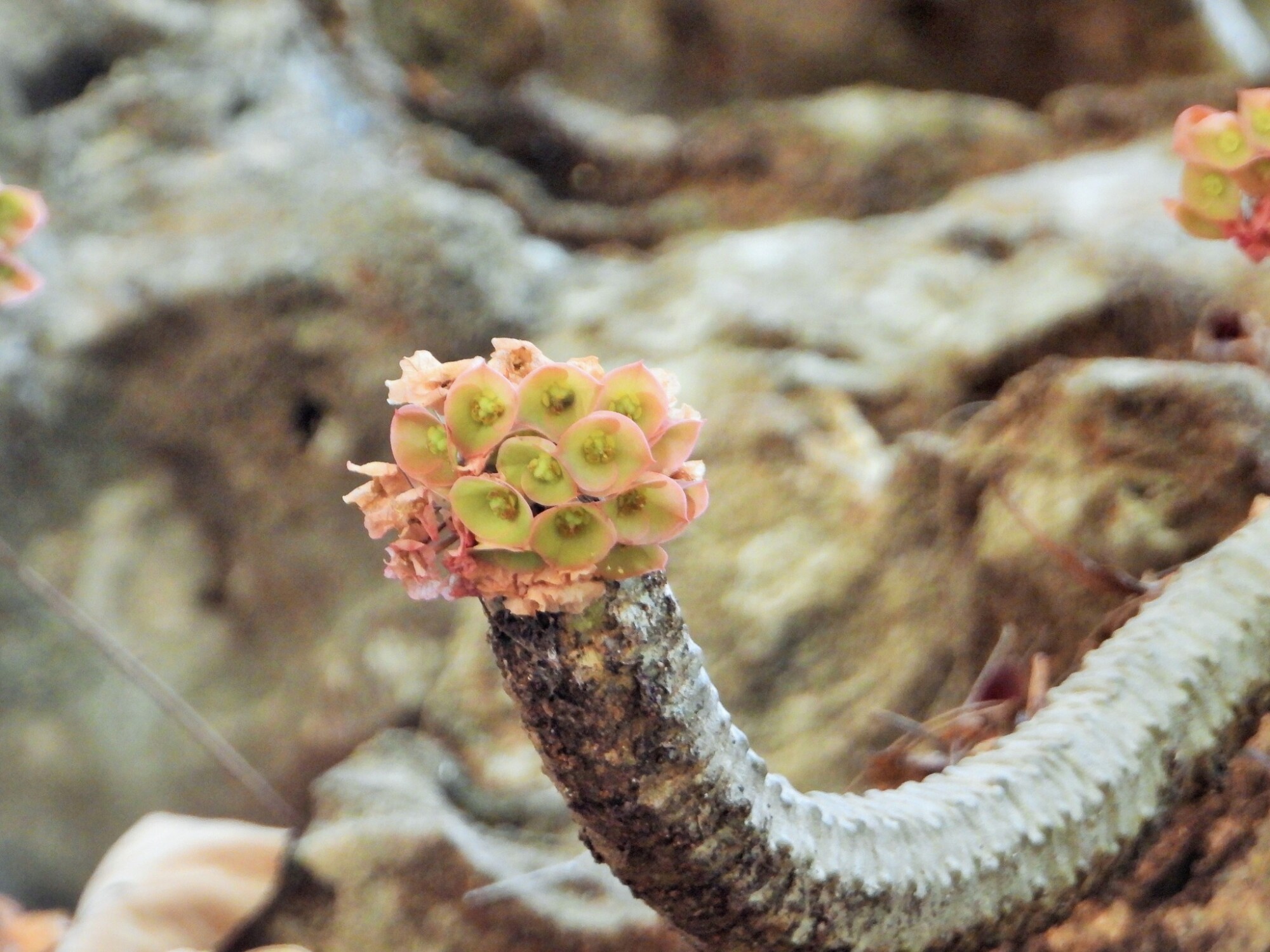
Euphorbia denisiana is a Malagasy spurge confined to rocky inselbergs and granitic outcrops of Madagascar’s interior. First described in 1929, it typifies the island’s narrow endemism: small, localized populations tied to specialized microhabitats. Plants form compact shrubs with leaves clustered toward the shoot tips and bear the genus’s hallmark cup-like inflorescences (cyathia). Because its range is limited and habitats are fragmented, the species is vulnerable to land-use change. Quarrying, fire, and expansion of human activities can quickly erode suitable sites, making targeted surveys and habitat safeguards central to its long-term outlook.
The details
Taxonomy. A member of Euphorbiaceae, the species is accepted under the name Euphorbia denisiana Guillaumin. Within Malagasy Euphorbia, it belongs to a group of rocky-habitat shrubs that often show local differentiation.
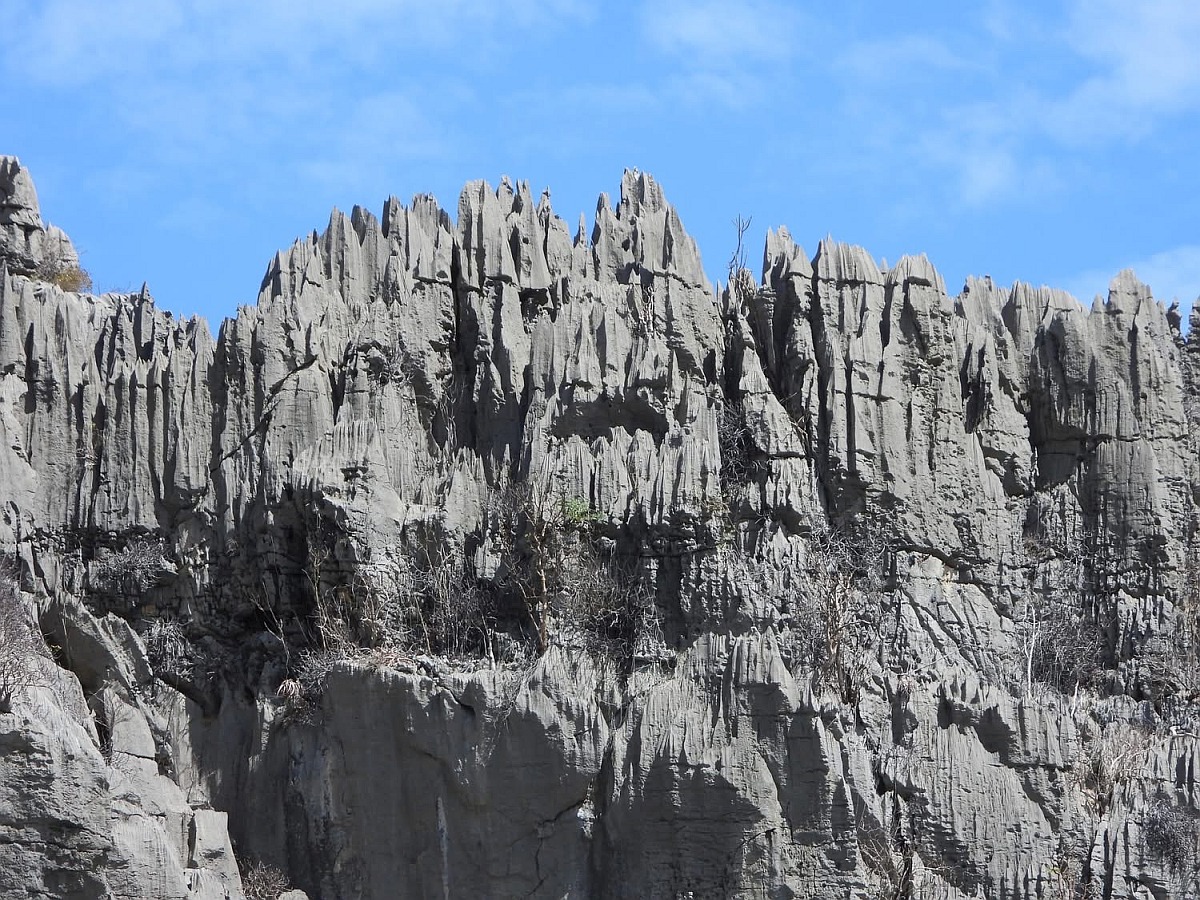
Distribution and habitat. The plant occurs on isolated rock domes and cliffs where thin soils, full sun, and episodic moisture create stress-tolerant plant communities. Such inselbergs act as ecological islands, explaining the species’ scattered, patchy occurrence.
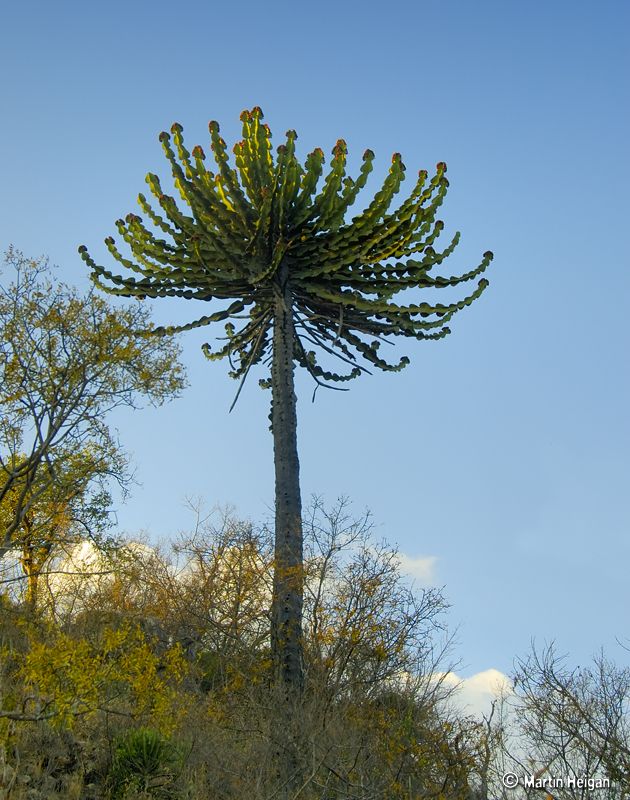
Morphology. E. denisiana is a compact, many-branched shrub to roughly a meter in height and width. Leaves are primarily apical; cyathia are small, typically yellow to greenish, with conspicuous nectar glands and associated bracts that aid in display.
Conservation notes. Localized range, small population sizes, and exposure to quarrying, uncontrolled burning, and encroachment are the chief risks. Even modest disturbance can eliminate a large fraction of available microhabitat on a single outcrop.
Variation and study needs. Populations on separate rock systems may differ subtly in form, raising questions about infraspecific variation. Priority information gaps include a refined distribution map, population trends, pollination and seed dispersal biology, and sensitivity to disturbance—data needed to guide future assessments and site-level protection.
Photos by Amante Darmanin
Additional Reading: Growing Euphorbias Successfully