Introduction
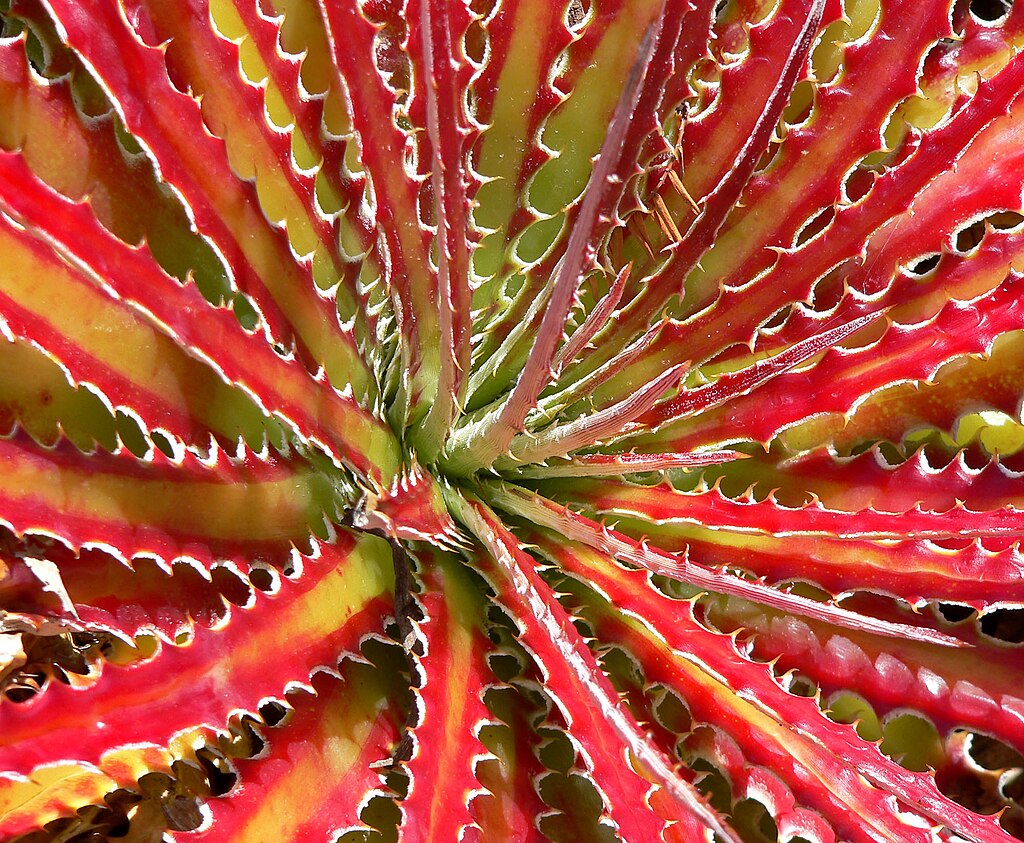
Hechtia is a genus of terrestrial bromeliads native primarily to Mexico and parts of Central America. Unlike most bromeliads that are epiphytic and adapted to humid tropical forests, Hechtia species are ground-dwelling and well-adapted to arid and semi-arid environments. The genus includes more than 70 described species. Plants form rosettes of stiff, often spiny leaves that resemble those of agaves or yuccas, making them distinctive within the bromeliad family. The leaves are typically narrow, sharply serrated, and frequently covered in a whitish bloom or scales that help reduce water loss in dry habitats.
The Details
Hechtia species are notable for their ability to survive in harsh, sun-exposed conditions where water is scarce. They are commonly found on rocky hillsides, slopes, and desert grasslands, sometimes growing directly on cliffs or limestone outcrops. Their rosettes funnel rainwater toward the roots, while their thick cuticles and spines minimize herbivory and water loss. These plants are dioecious, meaning male and female flowers occur on separate plants—a relatively unusual trait among bromeliads. The flowers are borne on tall inflorescences and are often small and not especially showy compared to those of many epiphytic bromeliads, but they are adapted to pollination by insects.
Hechtia species, despite being less well-known in cultivation, are popular for xerophytic plants and succulents due to their drought tolerance and striking rosettes. They represent an ecological departure within Bromeliaceae, revealing plant adaptation and evolutionary diversity.
Additional Reading: Hectia Taxonomy