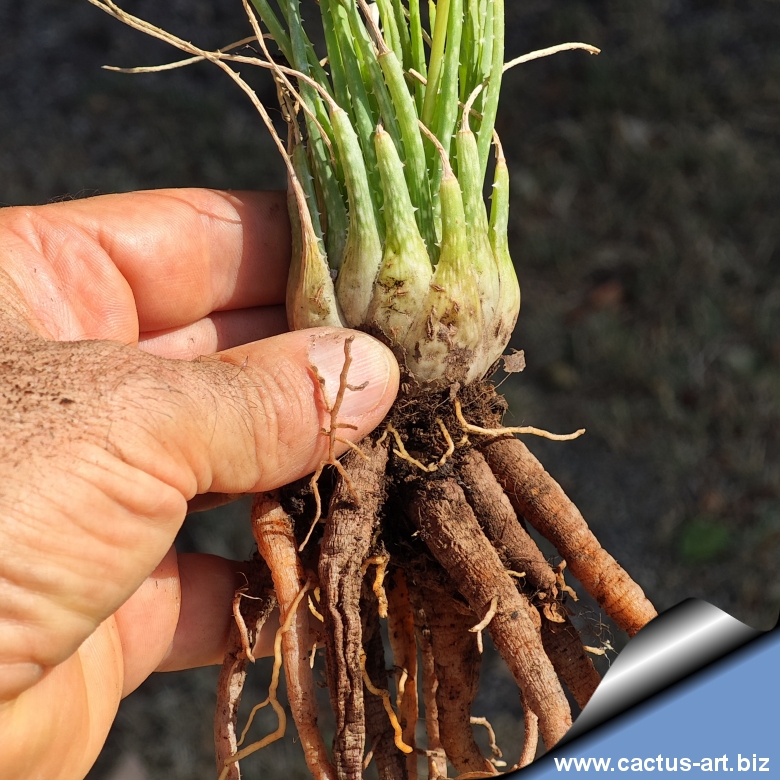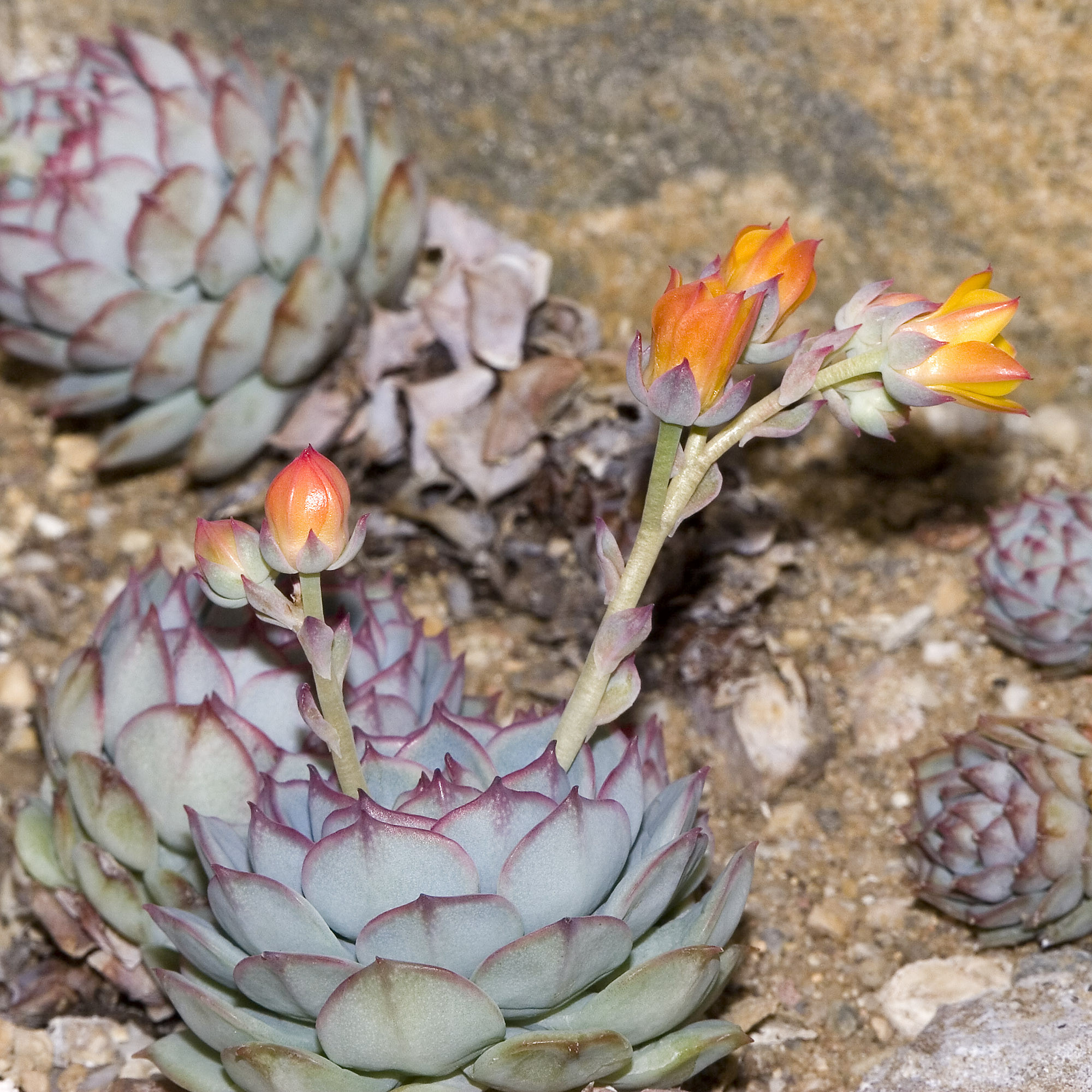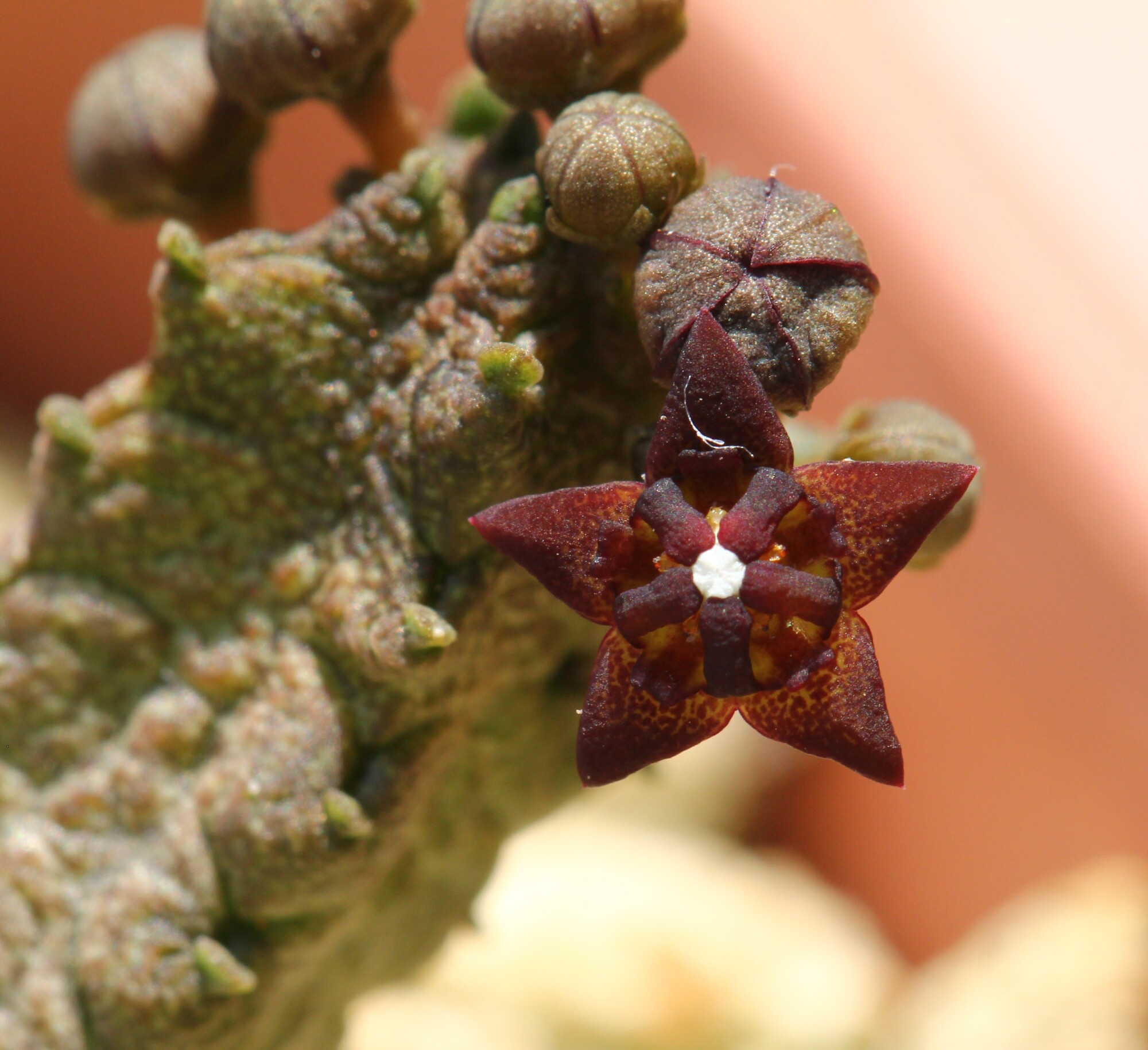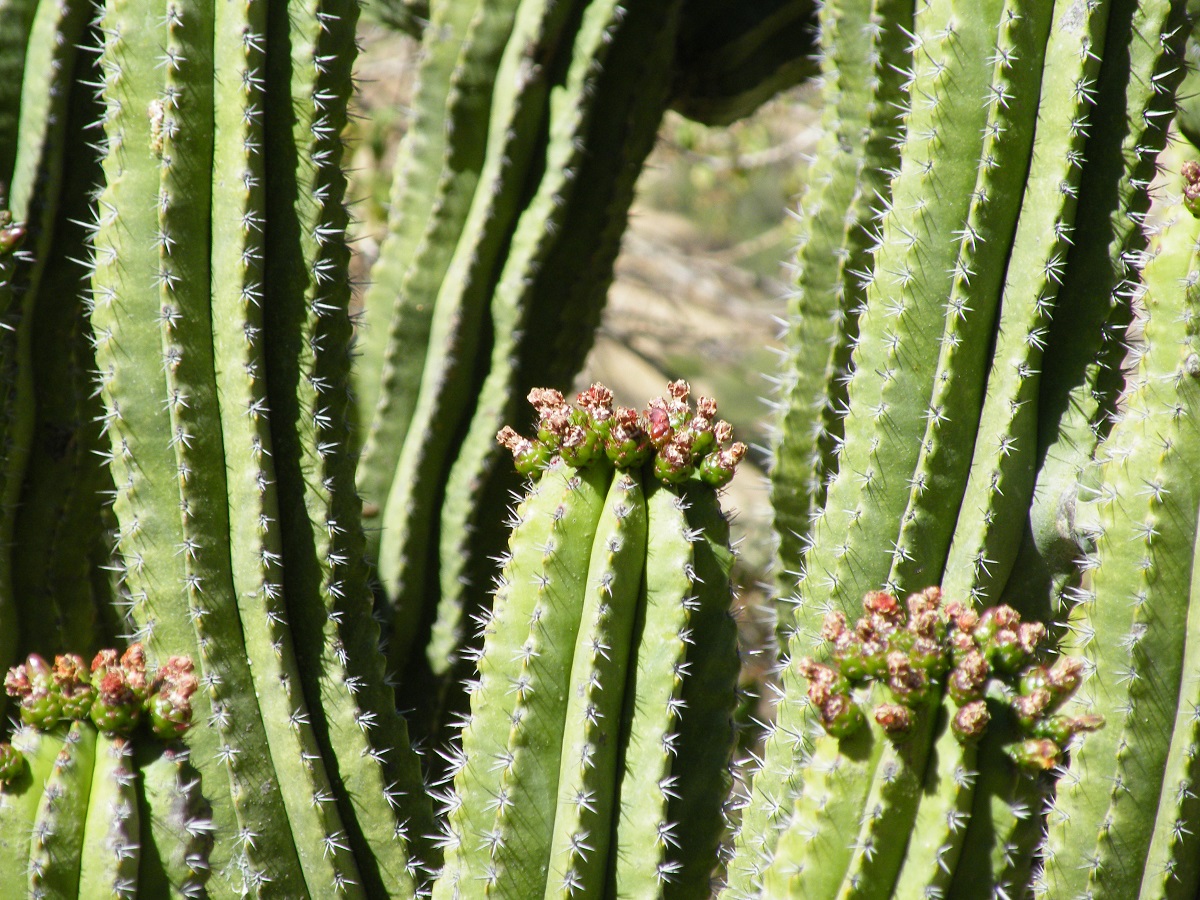
(Photograph = Polaskia chende, Amante Darmanin)
Introduction
Polaskia chende is a columnar cactus from dry, rocky country in south-central Mexico. It grows as a single trunk that branches high, forming a tidy candelabra. Flowers are pale and set near the stem tips, and the fleshy fruits are sweet and seedy—used by wildlife and, locally, by people. The species often occurs with its close relative P. chichipe, but it keeps a distinct look and habit.
The Details
Form and habitat. On stony slopes and alluvial fans, young plants grow as straight columns; with age, they fork into several upright arms. Ribs are well defined, with closely spaced areoles and short to moderate spines. Good drainage and full sun are the rule.
Flowers and fruit. Buds emerge from upper areoles. Blossoms are pale, tubular to slightly funnel-shaped, and open when conditions are warm and dry. After pollination, green fruits swell and ripen to soft berries packed with small black seeds. Birds and small mammals disperse the seeds to shrub bases and rock crevices.
Similar species. P. chichipe shares the general silhouette and range. When comparing plants, look at arm thickness, rib expression, and spine posture near the crown, and compare several flowers or fruits rather than a single stem.
Cultivation notes. Give full sun, heat, and sharp drainage. Water deeply in active growth, then allow the mix to dry; keep much drier in cool weather. Protect from hard frost and prolonged winter wet. In mild climates, a raised bed or slope helps keep the root zone airy.
Additional Reading: Polaskia chende