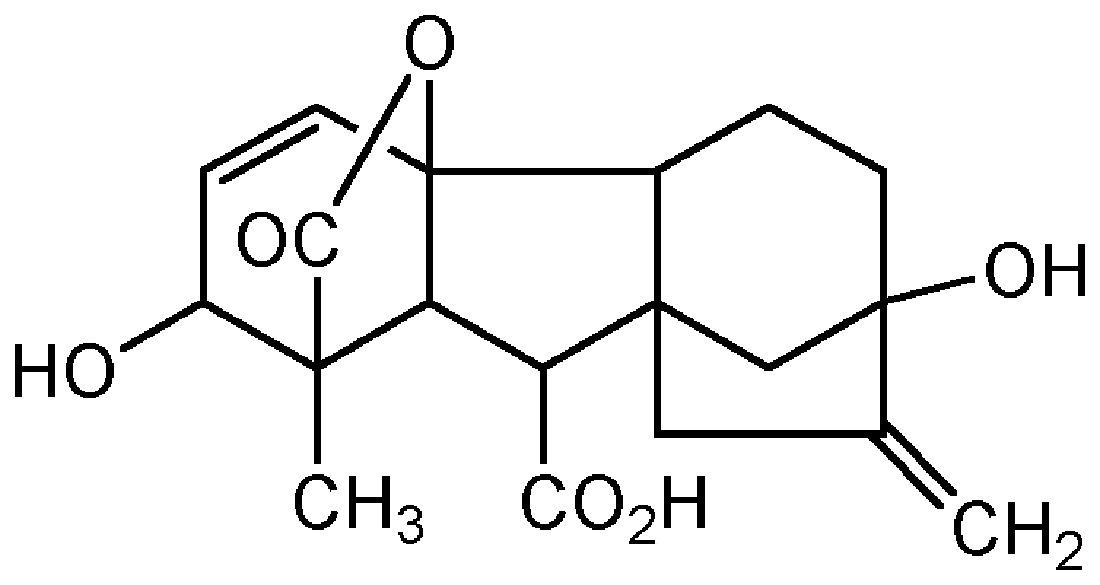
(Photograph = Gibberellic Acid Molecule)
Introduction
Gibberellic acid (GA) is a plant hormone involved in growth, flowering, fruit development, dormancy, and seed germination. In cacti—especially in the Opuntioideae—its effects on germination are mixed. Some species show little benefit, and very high doses can even restrict germination.
The Details
What was tested
GA was evaluated in five Opuntioideae: Cylindropuntia imbricata, C. leptocaulis, Opuntia rastrera, O. microdasys, and O. macrocentra. Seeds were tried at several GA levels (for example, 500, 1,000, and 1,500 ppm) to see whether germination improved.
Main findings
Responses were species-dependent and rarely better than untreated controls. At the highest level tested (1,500 ppm), GA tended to restrict germination. In one case, a lower dose produced a modest increase, but overall there was no consistent advantage to using GA across these species.
Light matters
All five species germinated better with light. For O. macrocentra, light was required, and GA could not substitute for it. This is a practical point for growers: provide bright conditions for germination rather than trying to “force” seeds with hormones.
Dormancy and seed age
The seeds did not appear to have hard, physical dormancy. Instead, they likely have a mild physiological dormancy that eases with dry storage (“afterripening”). In other words, properly stored seeds can remain viable for years and may germinate better after some time on the shelf.
Practical takeaways
If you are sowing opuntioid seeds, focus on even warmth, light, and patience. Use a clean medium, keep it just moist, and give seeds time—especially if they are freshly harvested. GA is not a cure-all here, and high concentrations can be counterproductive.
Additional Reading: Gibberellic Acid and Cactus Seed Germination