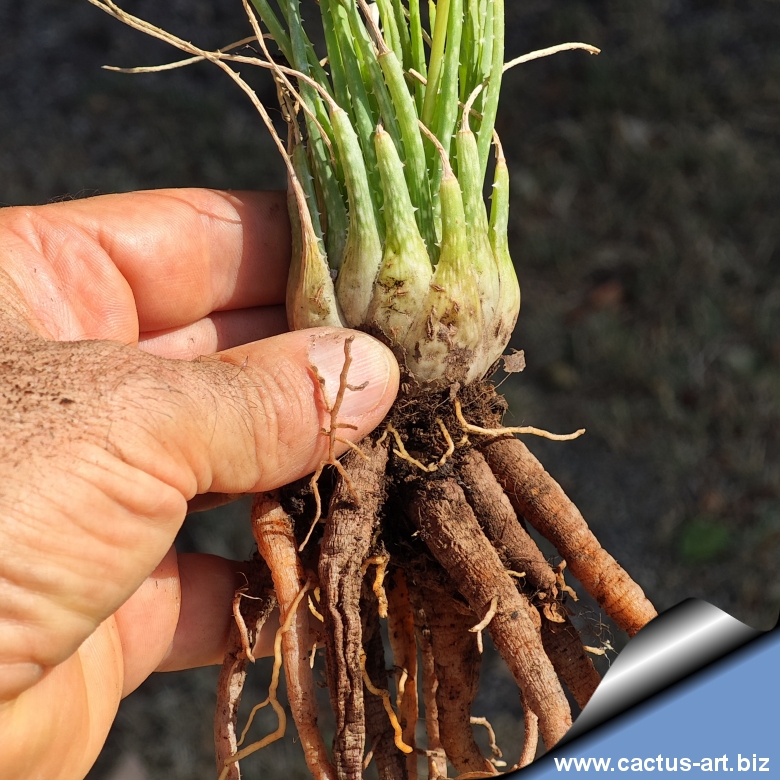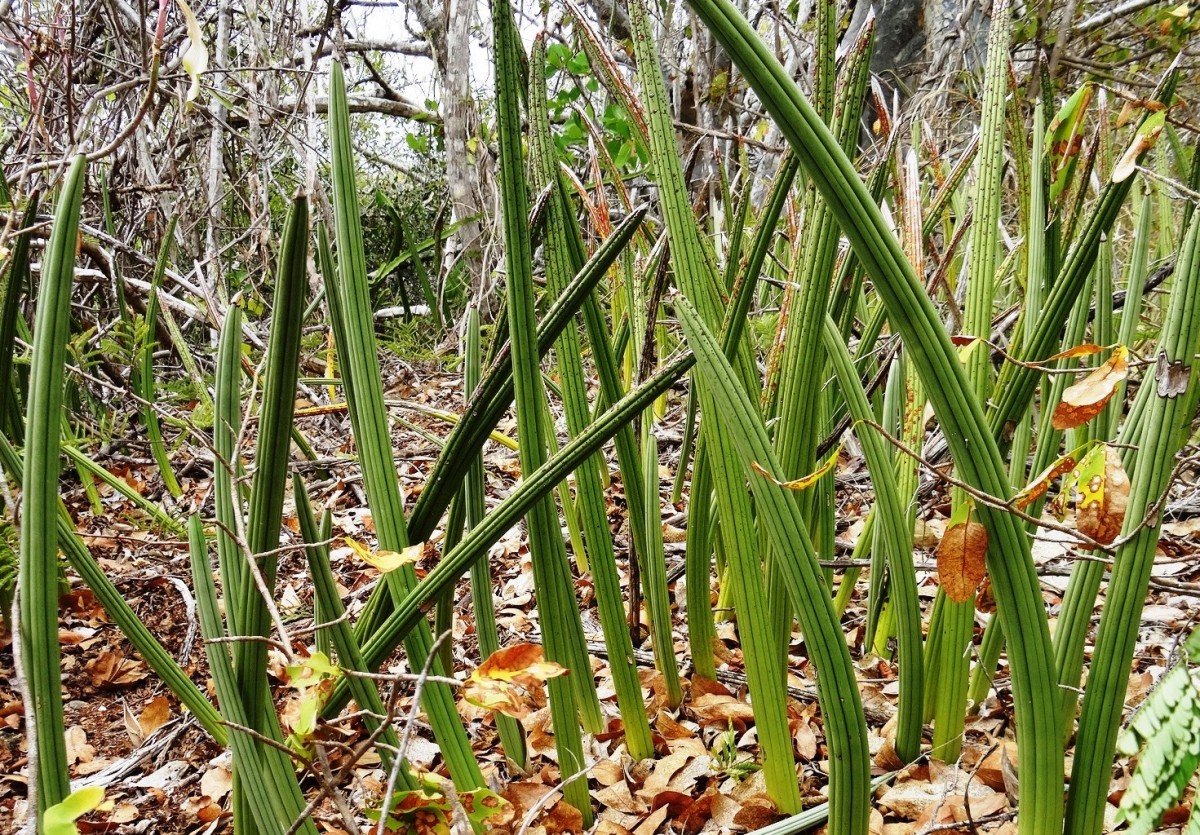
(Photograph = Sansevieria canaliculata growing on coral, Ton Rulkens)
Introduction
Sansevieria is a genus of tough, nearly indestructible succulents. The best-known species is S. trifasciata (mother-in-law’s tongue or snake plant). Across Africa, different species grow in settings from dry barrens to seasonal woodlands and tropical forests.
The Details
Drought and shade tolerance
Sansevierias are exceptionally drought-resistant and remarkably shade-tolerant, which is why they are so easy to grow. Even in forested habitats, they are not necessarily rain-forest plants; many endure months with little or no rain.
Form and growth
Leaves are leathery and fibrous, often banded or mottled, and many species spread by underground rhizomes to form clumps. These traits help the plants store water, resist breakage, and persist through long dry spells.
Flowers and fruit (new, concise add)
On many species the flower spike can persist two to three weeks, with blooms opening from the bottom upward. The fruit is a small orange to reddish berry that typically carries one to three hard, round seeds.
Weedy tendencies
Although native to Africa, S. trifasciata has escaped cultivation and become a weed in several warm regions. S. hyacinthoides is invasive in parts of southern Florida. Both spread readily via tough, creeping rhizomes; outdoors in frost-free climates, keep plants contained to prevent patches from taking over.
Traditional uses
People have used sansevierias to make a tea for coughs, and the tough leaf fibers have long served in cordage and other practical uses.
Additional Reading: Sansevieria Species (Snake plants)