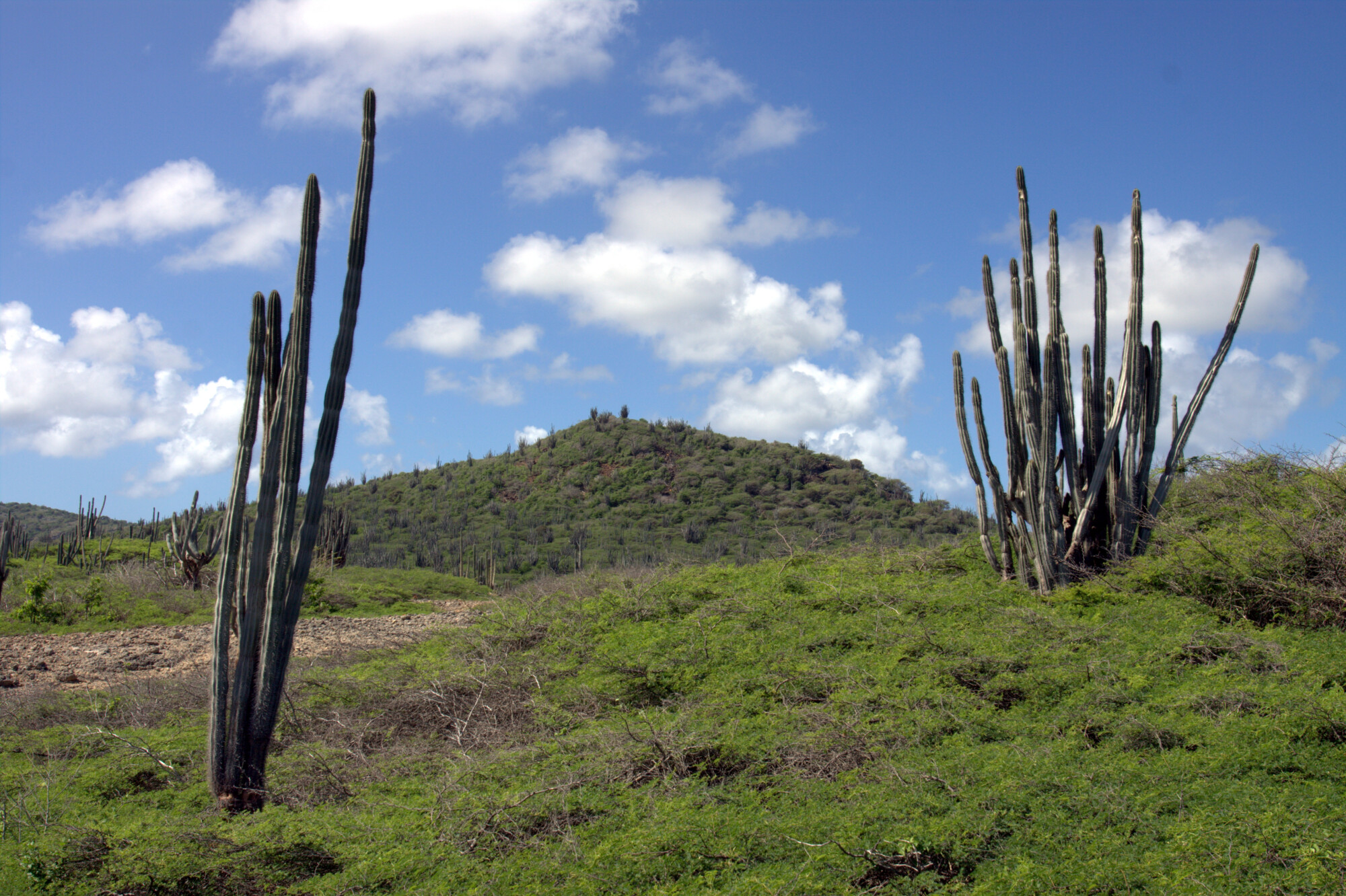
Introduction
Tall, clean columns, a blue-green sheen, and assertive spines—Subpilocereus horrispinus looks composed even in hard light. In habitat it holds the skyline; in cultivation it reads as sculpture. Give it warmth, bright sun, and fast drainage, and it rewards you with steady growth and pale, night-scented flowers near the crown.
The Details
Habit and stem. Plants are columnar and usually solitary, though older specimens may branch. Stems are straight, finely ribbed, and glaucous to blue-green in bright exposure. Growth is quick in warm weather, slower when nights cool.
Ribs and areoles. Ribs are even, not overly deep, which lets the stem expand after a good soak and tighten during drought. Areoles sit in a neat line along each rib, producing both spines and the season’s flowers on upper segments.
Spines. The name tells the story—spines are bristly and forward, with younger growth showing a lighter tone that weathers deeper with age. From a few steps back, bands of fresh and older spines can give the column a two-colored look.
Flowers and fruit. Buds form near the top and open in the evening or early morning. Flowers sit clear of the spines, making them easy to see and, later, making fruit easy to spot. Ripe fruit persists longer than you expect, a handy marker when the plant is out of bloom.
Where it grows. Think dry, rocky slopes and open scrub, where water moves away quickly and sun is a daily constant. Young plants often shelter beside shrubs; with time they emerge and carry their own shade.
How to grow it.
-
Light. Full sun to very bright light; in hot, inland summers, a touch of afternoon protection keeps the color even.
-
Soil. Mineral-lean and gritty, in a pot with a generous drainage hole. Plant a little high so the crown stays dry.
-
Water. Deep, infrequent drinks during warm months; let the mix dry almost completely before you water again. In winter, go light—cool, bright, and mostly dry is the safe path.
-
Cold. Brief, mild chills are usually tolerated if the plant is dry and the air is moving; hard freezes are trouble.
-
Repotting. Step up one size only, and stake tall stems until the new root run braces the plant.
Propagation. Cuttings root well in heat. Take a clean section, let the wound callus for several days, then set it on barely moist mix and leave it alone for a week. Seed is straightforward, given warmth, light, and patience.
Identification notes. In mixed company it can resemble some blue-green Pilosocereus. Take a context shot, then a close view of ribs, areoles, spine posture, and the upper stem where flowers form. Labels with date, light level, and watering notes will save you later.
Design and display. In frost-free gardens, a single column makes a calm anchor near stone or gravel. In containers, keep the pot simple so the stem reads cleanly, and resist crowding. A thin top dressing of rock keeps splash off the base and sets off the color.
Seen up close, Subpilocereus horrispinus is exactly what its name promises—handsome stems, brisk spines, and a crown that comes alive on warm nights. Give it light, air, and a bit of restraint, and it will look good in every season.


