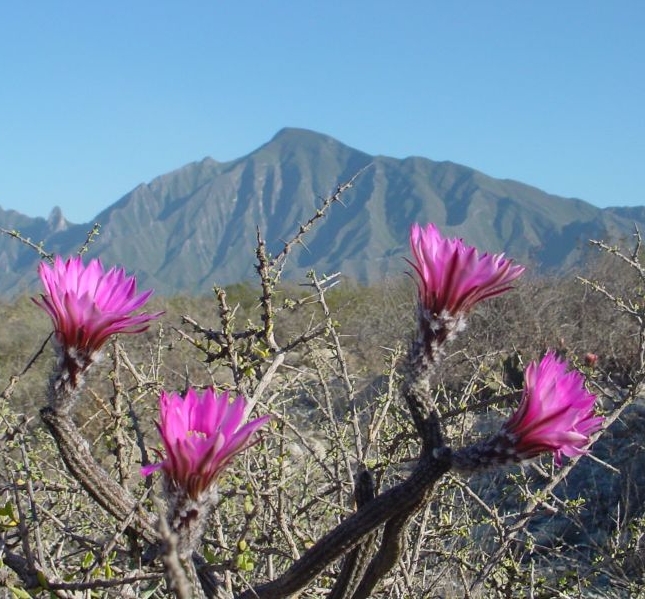
(Photograph = Wilcoxia poselgeri, Arturo de la Garza)
Introduction
Wilcoxia poselgeri has worn several name tags over the years. You’ll see it in older books as Echinocereus poselgeri, sometimes even tucked into Cereus or briefly treated as Peniocereus. Modern work keeps the “wilcoxias” inside Echinocereus, based on their flowers, fruits, and seeds—but for this note, we’ll keep the familiar Wilcoxia handle.
The specific epithet honors Heinrich Poselger, a nineteenth-century collector whose cactus gatherings helped seed the classic literature. It’s a neat historical footnote for a plant that looks delicate at a glance yet persists in rough country.
The Details
In the field, W. poselgeri threads through the Tamaulipan thornscrub of South Texas and adjacent northeastern Mexico. Think deep, loose sands and alluvial soils where a pencil-thin cactus can hide in mesquite and acacia, then suddenly show off when the season turns. In Texas, it is most typical of the Rio Grande plains. If you’ve ever walked sandy fencerows or brushy draws in late spring and spotted magenta flowers hovering at shoulder height, you may have been looking right at it.
Below ground, a dahlia-like tuber anchors the plant and stores the good times for the lean ones. That storage organ is the reason stems can seem impossibly slight: often about a centimeter across, sometimes less, yet able to stretch and clamber through twigs for support. A single stem usually emerges, then divides into several branches; the whole plant blends into its background until bloom. Those blossoms open wide by day and can do so for several days in a row, closing at night—an on-again, off-again show that makes timing your visit worthwhile. A light fragrance has been reported. Fruits follow later, and the seeds and other floral parts line up squarely with Echinocereus traits noted by taxonomists.
A few practical field clues help. Look where windblown sand collects along shrub edges, especially under mesquite, where stems can lean and disappear among the thorns. The plant’s ribs are low and the spines typically appressed, so backlighting can help you see the outline rather than the texture. Flowering in spring is the sweet spot for detection, with fruits ripening weeks after; outside of bloom you’ll need a slower, more patient scan.
For gardeners, this species rewards restraint. Use a deep container or a planting pocket that allows the tuber to develop; a very coarse, sandy mix and bright light suit it well. Water sparingly during active growth, then give a dry winter rest. Provide a light stake or let the stems weave through a companion shrub—just avoid crowding that traps moisture. Protect from hard freezes, especially if the soil is damp. These are general care notes, but they mirror the plant’s native strategy: store below, tread lightly above.
Finally, a small plea: most South Texas populations sit on private land or sensitive habitat. Enjoy the flowers, take a photo, and leave the plant where it belongs. The lace-thin stems and that hidden tuber have already solved the puzzle of living here; our job is not to make it harder.


Good morning!
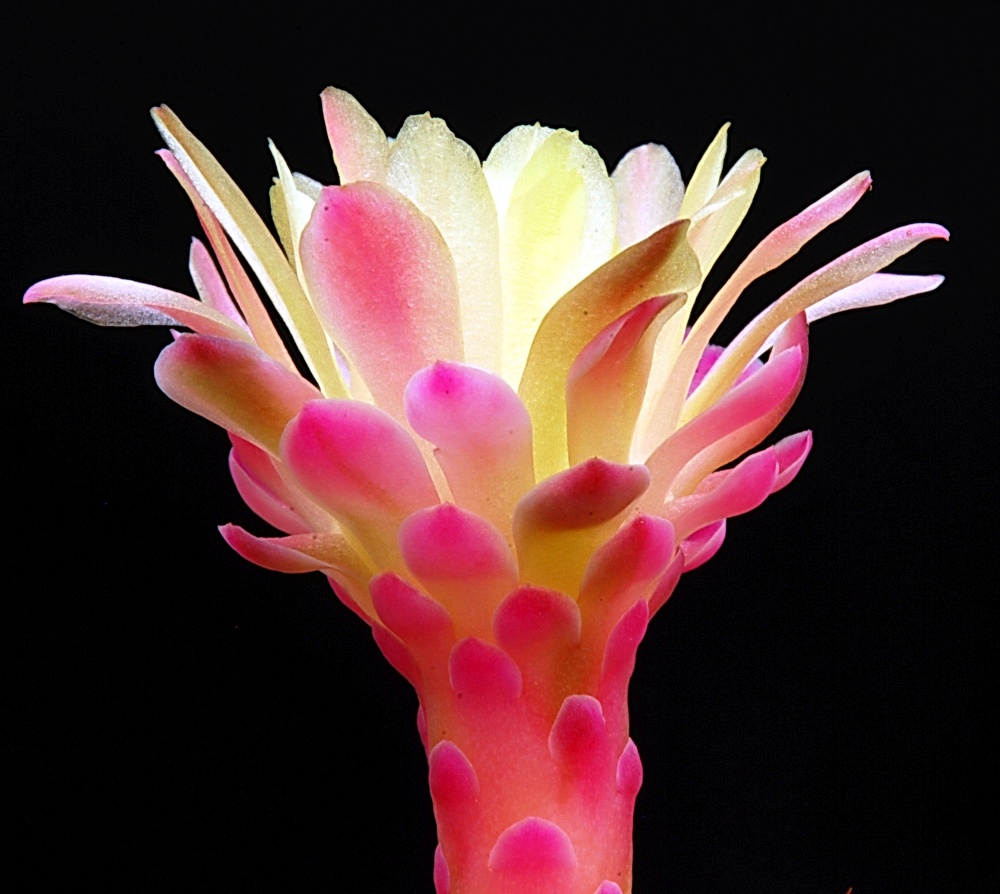
Nice plant with these flowers!
¿Where took this picture? place?
Best Regards!