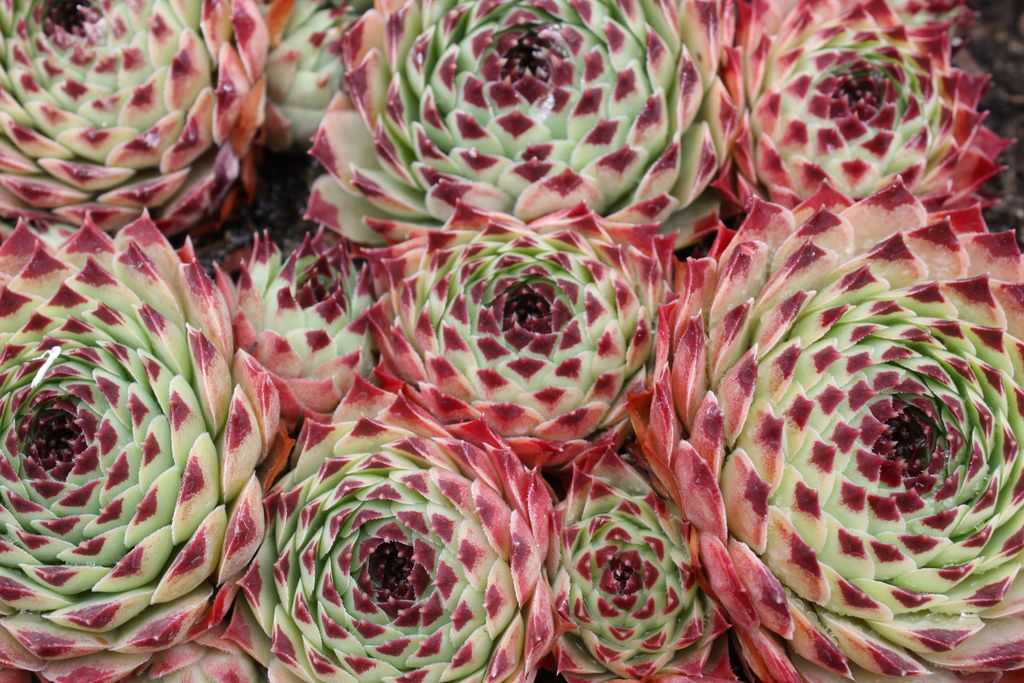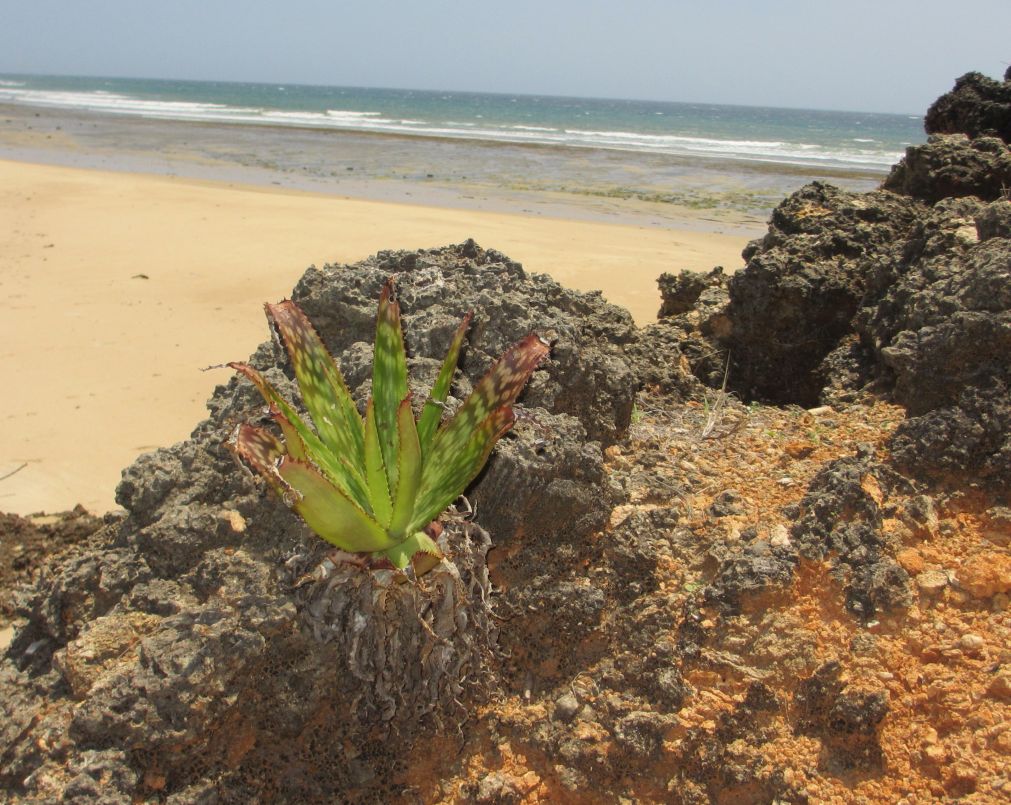
(photograph = Aloe menyharthii, Ton Rulkens)
Introduction
Africa holds a remarkable share of the world’s succulents, and Mozambique is a fine place to see that breadth in one country. From lime-white coastal “coral rag” to granite inselbergs in the interior, aloes wedge themselves into rock pockets, cling to ledges, and colonize sandy slopes. The genus ranges widely across the continent—including Madagascar—and spills into the Arabian Peninsula, but the Mozambique roster feels especially varied: tree-forming species, shrubby hedges, and fine-leaved “grass aloes” can occur within a day’s drive of one another. Coastal plants lean into salt and wind; upland species cope with mist, fire, and thin soils. Together, they make a living mosaic that shifts with rainfall and elevation.
The Details
From PlantZAfrica.com:
“The swollen and succulent leaves of aloes are more or less lance- or sword-shaped in outline and boat-shaped in cross-section. Leaves are arranged in terminal clusters (rosettes) and are armed along their margins with usually sharp, but sometimes soft, teeth. Most are evergreen, but the grass aloes are deciduous.”
That family resemblance is easy to spot, yet variation is the rule. Some species stay ankle-high; others lift candelabras several meters above the brush. Flowers can be upright or angled, densely packed or open-spaced, and they arrive on their own schedules—often tied to altitude and recent rain. Sunbirds, bees, and other visitors handle the pollination, and where species overlap, you sometimes see intriguing “look-alike” forms that tempt the field botanist to linger.
A landscape sampler.
Mozambique reads like a field guide to habitats:
-
Coast and coral rag. Fossil reef and coral limestone run close to the surface in the north. Aloes here root in knife-thin crevices with a finger’s depth of grit, taking the glare straight off the water. Leaves often harden and take on a steely cast after windy, salt-sprayed weeks.
-
Granite domes and quartz ridges. Inland domes heat quickly by day and shed warmth at night. Thin soils and fast runoff favor rosettes built to store water. Look for plants keyed to cracks and feldspar seams where a few teaspoons of sand have settled.
-
Miombo and rocky hills. On stony shoulders and koppies you’ll meet the classic tree aloes—trunks armored with old leaf bases, heads flaring like candles above the woodland.
-
Southern sands and dunes. Shrubby species ride out wind and periodic fire, resprouting from protected crowns and using tough, fibrous leaves to shed heat.
-
Eastern highlands. Cool mists and seasonal burns select for narrow-leaved, cliff-dwelling aloes with wiry silhouettes. Many tuck into seepage lines on vertical faces, safe from grazing and ground fire.
A short species tour—tied to places in the photo set.
-
Aloe menyharthii — Coastal, often clumping on coral rock. Rosettes can show banding when young; flower spikes lift well above the foliage.
-
Aloe decurva — Mount Zembe specialty. Compact plants on rock, with inflorescences that “bow” as the name hints—handy when you’re picking them out against lichen-blotched stone.
-
Aloe excelsa — A classic interior candelabra. Trunked and architectural, it holds its head above the brush on rocky hills such as Mount Muruwere.
-
Aloe arborescens — The familiar hedge aloe in a wilder setting. Along the Chimanimani range it forms broad clumps that light up cool-season slopes.
-
Aloe mawii — Slender, upright rosettes on stony slopes—often solitary—flowering in bold orange-red.
-
Aloe inyangensis — A grass aloe of cliffs and misty ledges; narrow leaves, wiry presence, and a knack for rooting in cracks you’d swear were too small to hold a plant.
-
Aloe marlothii — Big, armored leaves with toothy margins. In Maputo Province, it stands like a sentry on ridges, inflorescences sweeping outward almost horizontally.
Field rhythm and fire.
Many Mozambican aloes time growth to short, generous windows—often after early rains or in cooler dry seasons when nights are kind. Fire is part of that rhythm. In dune scrub and upland grassland, fast fires race past; older plants shrug off scorch with thick leaf bases, while cliff dwellers escape entirely. After a burn, the flush of nutrients and light can synchronise flowering across a hillside—spectacular for people and birds alike.
Companions and look-alikes.
On coral rock, you may see aloes sharing cracks with Euphorbia, figs, and salt-tolerant shrubs. On the domes, rosettes alternate with lichens and cushiony sedges in the faintest pockets of soil. Confusion with agave relatives is rare here—leaf teeth and the flower structure give aloes away—but some shrubby species can masquerade as each other outside of bloom. If you’re unsure, step back and read the site: altitude, geology, and nearby plants usually point you in the right direction.
Notes for visitors.
Names from field captions—Chimanimani, Mount Zembe, Muruwere, Yokolo, Monte Gurungue, Maputo Province—flag the kinds of places where rock meets weather and aloes do their best work. Plan for heat, glare, and abrupt footing. Early mornings are kindest for both photography and plants; by midday, leaf surfaces are hot and rosettes close ranks against the sun. Bring more water than you think you need and tread lightly on thin soils that slough away under a careless step.
Conservation and good manners.
Wild populations occupy narrow niches: a specific ledge, a favored seam, a dune shoulder with just the right wind shadow. Photograph generously, but leave plants and offsets in place. Share stories, not GPS points. If you garden with these aloes back home, favor nursery-grown material. Provenance matters; a properly labeled, seed-raised plant tells a better story on the bench than any anonymous cutting with a blurry past.
Cultivation—briefly.
If you must try one or two, give them sun, air, and a mineral-rich, fast-draining mix. Water deeply, then let the pot dry; ease off in winter. Cold and wet is the combination to avoid. That’s the short version—and enough for most situations.
Aloes, whether tree-sized or pocket-sized, succeed by timing: store water in the good months, idle in the lean ones, then spend lavishly on flowers when conditions line up. Mozambique’s landscapes give them the stage; the rest is all design.