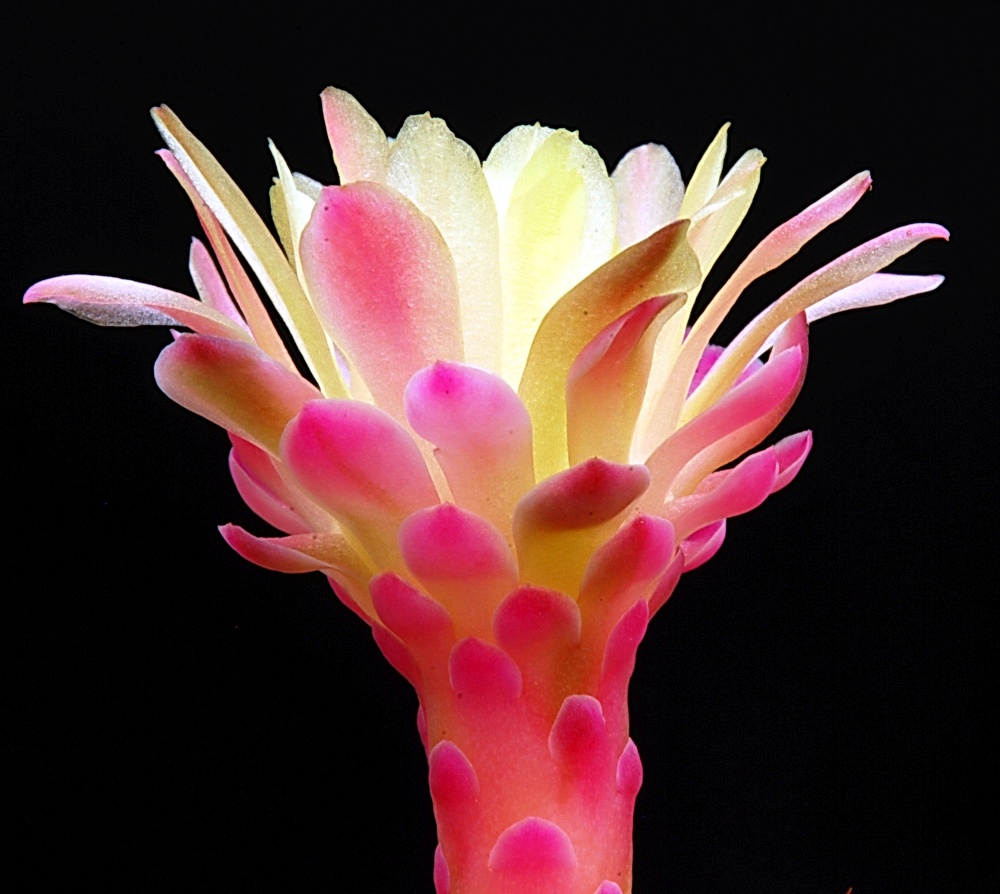
(Photo = Gymoncalycium mihanovichii flower, Mike Keeling)
Introduction
In many botany texts, you’ll see the word tepals used for cactus “petals.” In older books and in casual speech, people often say petals and sepals, but that split isn’t quite right for cacti. In most cactus flowers, the outer, more scale-like segments grade gradually into the inner, showier ones; because there is no sharp break between sepals and petals, botanists wrap them together under one term—tepals. In practical terms, that means the blood-red “petals” of an Echinocereus and the greenish, papery outer segments of a Selenicereus bloom are part of the same continuous series.
In the background, the idea is simple. When floral parts are clearly in two kinds—firm, protective sepals outside and colorful, delicate petals inside—we use those names. When they blur into one another so you can’t draw a clean line, we use tepals. With cacti, that blur is the rule rather than the exception. If you peel the flower back, segment by segment, you’ll see the transition: tough, scale-like pieces on the outside; broader, more translucent, and more colorful pieces toward the throat. The gradient is why “tepal” earns its keep.
The Details
In the typical cactus flower, the ovary sits low—“inferior” in botanical terms—and the flower rises from a tube that looks like a stem. Along that tube, which is really a swollen stretch of stem tissue, areoles and little scales appear just as they do on normal shoots. Farther along that same axis, the scales broaden into outer tepals and then grade into inner tepals. Because everything is on a continuum, the whole perianth is best described as a ring of tepals that shift in color, thickness, and texture from outside to inside.
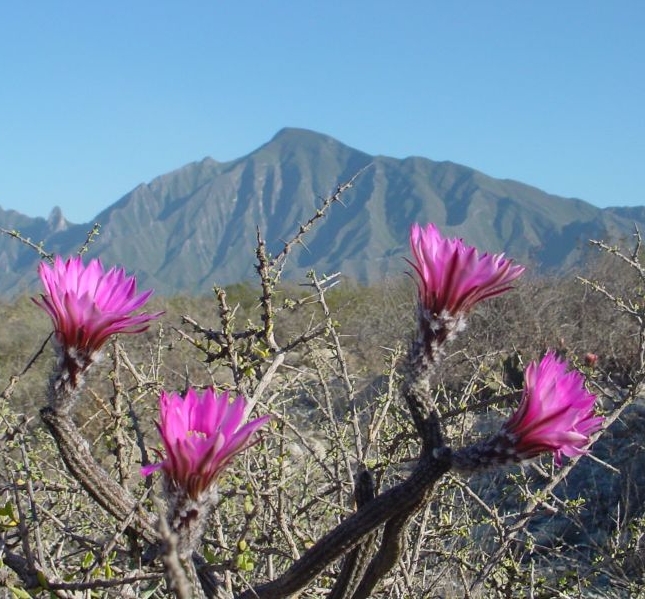
In everyday field work, that continuity is easy to spot. On a night-blooming Selenicereus or Hylocereus, the outermost pieces are parchment-thin, often greenish or buff; step inward, and they become longer, whiter, and more reflective—perfect for catching moonlight. On a day-blooming Echinocereus or Coryphantha, the outer segments can be leathery and slightly dull; the inner ones flip to saturated magenta, yellow, or orange, with a satin sheen and a softer texture. On Opuntia, the outside may be olive or straw-colored, while the interior turns clear yellow or orange; again, there’s no hard boundary, just a steady shift across the series.
For writers and gardeners, the term matters because it keeps descriptions honest. When we say “tepals,” we signal that cactus flowers don’t fit a strict sepal-versus-petal model. In identification keys, that precision avoids awkward phrasing like “outer petals are sepal-like.” In horticulture notes, it prevents overpromising—no one expects thick, protective sepals in a cactus flower that evolved to open quickly, shed heat, and invite a rush of pollinators.
In the lab or under a dissecting scope, you can follow a few reliable landmarks. Starting from the outside, you first meet the floral tube with its scales and occasional hairs or bristles at the areoles. Moving inward, those scales broaden and soften into outer tepals—often narrow and pointed, sometimes faintly pigmented. Keep going, and you reach inner tepals that are broader, thinner, and brightly colored. Below the anther ring, nectary tissue may line a groove or chamber, and the style rises from the ovary through a forest of stamens to a multi-lobed stigma. All of those pieces together make the show, but the perianth—the tepal series—is what our eyes read first.
In descriptions, a few habits help. When you mean the whole series, say tepals. When you want to point to position or texture, say outer tepals or inner tepals. If you must use “petal” for readability in a general-audience piece, you can do it with a quiet nod to accuracy—for example, “inner tepals (petal-like segments).” On Opuntia Web and Oblog, we generally stick with tepals, then add color notes and shapes: “inner tepals broad, rounded, glossy yellow; outer tepals narrow, green-tinged, tips acute.” That phrasing lets a reader picture the flower without any confusion over what counts as a petal.
In the field, knowing you’re looking at tepals can also help with trickier comparisons. When two species differ mostly by the “petal” tips, you’ll often find that the distinction is strongest on the inner third of the series. If a key says “inner tepals truncate to emarginate,” you’ll know to ignore the skinny, outermost pieces and examine the broader, true “petal-like” ones near the throat. In many Echinocereus and Mammillaria, the inner tips can be pointed, rounded, or slightly notched; that tiny geometry can decide a name when everything else overlaps.
In photographs, lighting makes the gradient clearer. In backlit shots, outer tepals look opaque, casting a thin shadow, while inner tepals glow. In front-lit images, the outer segments can go dull or gray, while the inner ones hold color and show their texture—silky in Echinocereus, papery in night bloomers, glassy in some Opuntia. For field documentation, it’s worth taking one photo into the light and one with the light behind you; together, they record both ends of the series.
In the bigger evolutionary picture, the cactus plan favors a durable bud that opens fast when conditions are right. The outer tepals, being tougher, help shield the developing parts from heat, grit, and herbivores. The inner tepals, being broad and reflective, help regulate temperature and advertise to pollinators. Because those jobs shift gradually as you move inward, the flower never needed a hard sepal-to-petal boundary. Evolution kept the slider, not the switch.
In short, cactus flowers have tepals because their perianth is a spectrum, not a two-box kit. For clear writing, for accurate keys, and for better field notes, using “tepal” pays off. In casual conversation, you can still call them petals and make yourself understood. In careful work—and on a site that tries to thread that needle—you’ll get farther, and cause less confusion, by naming what the flower actually made: a series of tepals that run from tough and protective to bright and beckoning, one continuous design wrapped around a very cactus-specific bloom.
Additional Reading: Flower Parts