Introduction
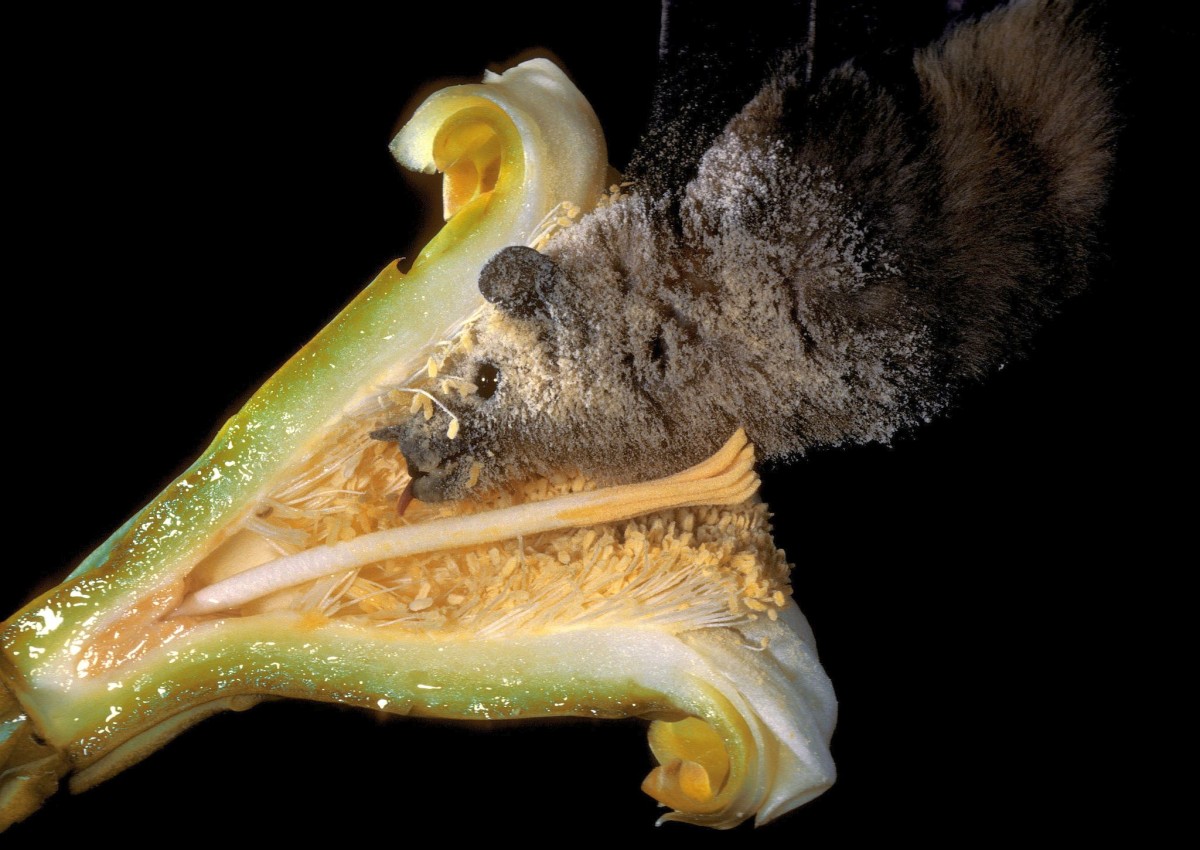
Bat pollination is a nighttime system built around smell, stamina, and timing. Many desert cacti and several agaves open large, pale flowers after dusk, flood them with dilute nectar, and release a strong, musky scent. Nectar-feeding bats arrive on fast wingbeats, push their faces into the blossoms, and leave dusted with pollen that they carry to the next plant.
The Details
At night, flowers that serve bats are sturdy, wide, and easy to access. Petals are pale or greenish, which helps in low light, and stamens are long enough to brush a bat’s muzzle or forehead. Nectar volumes are generous but relatively low in sugar, so bats can drink quickly without clogging their tongues. As bats hover or briefly perch, they contact the stigma, then lift off and travel far—often hundreds to thousands of meters—before the next visit. That distance promotes cross-pollination.
In the Southwest and northern Mexico, tall columnar cacti such as saguaro, organ pipe, and related species rely heavily on bats. Night blooms open in the evening, peak overnight, and usually close by late morning. On a good night, a single flower may be visited repeatedly, which increases the odds of pollen transfer and later fruit set. Night-blooming “cereus” types follow the same general script with fewer, larger flowers that open for just one night.
Agaves use a similar strategy with a different architecture. Their towering stalks hold many flowers that open in waves across several nights. Bats move along the inflorescence like a ladder, lapping nectar and dusting themselves with pollen. By carrying pollen between widely spaced plants, they help maintain genetic diversity in species that may flower only once in a lifetime.
Because bats depend on predictable nectar “tracks,” timing matters. When warm springs advance bloom by several weeks, bats arriving on their usual schedule may find fewer flowers. Roost disturbance and excessive night lighting can also reduce local visitation. In gardens, you can support nocturnal pollinators by minimizing overnight lights during cactus or agave bloom, avoiding pesticide use on opening buds, and leaving some flowers to run their full course. Early the next morning, look for wilted, pollen-rubbed petals and fresh pollen on stigmas—quiet signs that a night shift already did the work.
Additional Reading: Bat pollination of Stenocereus
Additional Reading: Bat/hummingbird pollination of a cactus



Beautiful photos!