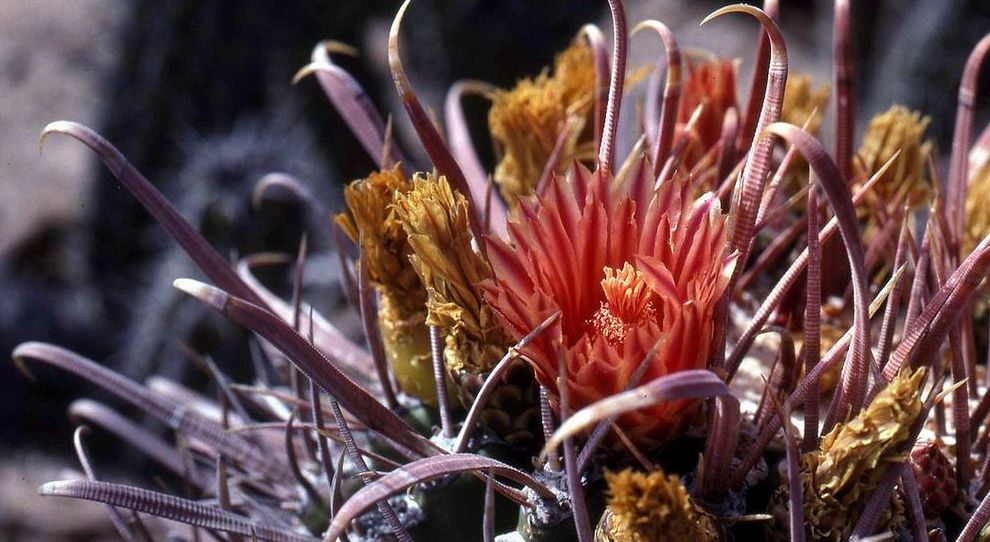
(Photograph: Ferocactus gracilis gatesii, Christian Defferrard)
The Details
Mexico is a country of mountains, steppes, tropical jungles, beaches, and deserts. It stretches from the U.S. border in Texas to California and south to the Yucatán Peninsula. It has the greatest number of cactus and succulent species in the world. Many species occur in small areas and are endangered by over-collecting, uses in gardens and as food, conversion to rangelands, and expanding cities.
The Details
From BBC News, by Duncan Kennedy
The world of smuggling covers a wide range of goods. Botanists warn poaching is threatening Mexico’s floral heritage. Drugs, guns, alcohol, tobacco.
You name it. But in Mexico, organised crime has moved into a different market: cactus plants. It has become a multi-million dollar business, so sought after are some of the species. To understand why, it helps to meet Doctor Leia Sheinvar. An expert in cacti for 40 years, she leads invited guests into her special, locked room in Mexico City. Behind the padlocks and keys is a unique world of cacti, protected because they are so rare and so valuable. The colours range from green to pink to blue; some plants are as tall as a tree while others, like one Dr Sheinvar picks up, are the size of a baby’s finger – Ariocarpus kotschoubeyanus. “Some time ago,” she says, looking at the plant, “this cactus sold in Europe.
Weight for weight, it was more valuable than gold.
Additional Reading: Baja California Map Guide