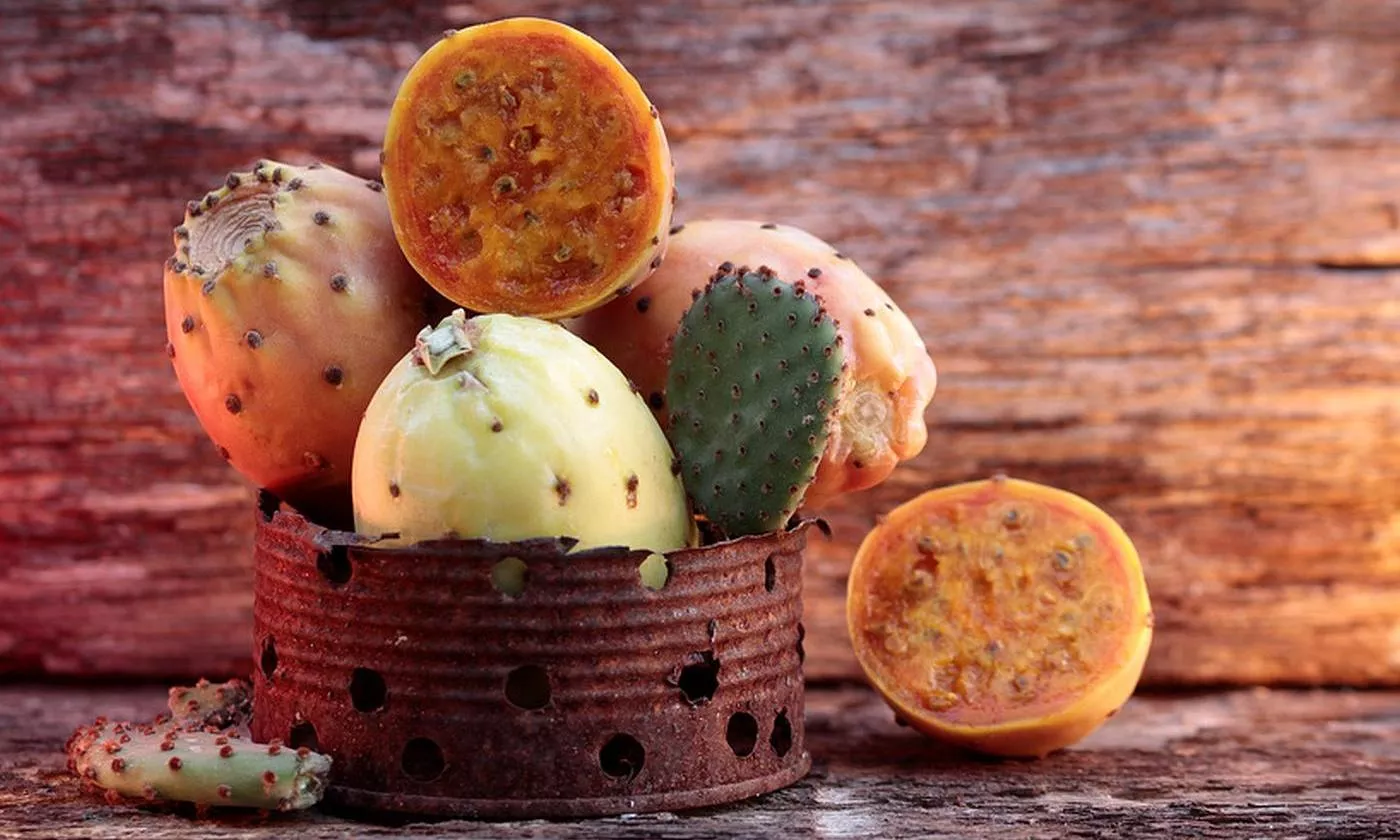
(Photograph, Opuntia ficus-indica fruit with seeds, diet-health.info)
Introduction
In Opuntia, the “aril” around the seed is a hard, bony funicular envelope (often called a funicular aril), not a soft, fleshy food reward. It develops from the funiculus and forms a pale covering around the seed. Its primary role is protection and dormancy control, helping the seed resist water uptake and physical damage until conditions are suitable.
The Details
The true seed coat (testa) is thin; the conspicuous, woody envelope you see is the funicular covering. Its thickness and contour vary by species, but it is characteristically tough and impermeable. That toughness slows water entry and creates physical dormancy, spacing germination over time.
Animals still play a role, but not because the envelope is a food reward. When fruits are eaten, the pulp provides nutrition; seeds are carried incidentally. Passage through a gut, weathering in soil, freeze–thaw, or abrasion in moving sand can crack or thin the funicular envelope, opening a “water gap” that allows imbibition and eventual germination.
For growers. Clean the pulp from seeds before sowing so they dry evenly and store cleanly. Because the envelope is hard, simple soaking rarely removes it. If you choose to speed things up, use very light mechanical scarification (a brief file or nick on the envelope away from the embryo) or plan for a longer after-ripening period. Alternating warm/cool temperatures and patience are often sufficient; many Opuntia seeds germinate irregularly over weeks to months.
In short, Opuntia seeds do have an “aril,” but it is a protective, bony funicular envelope whose job is to safeguard the seed and regulate timing—not to feed dispersers.
More Reading: Seed Germination in Opuntia Streptacantha