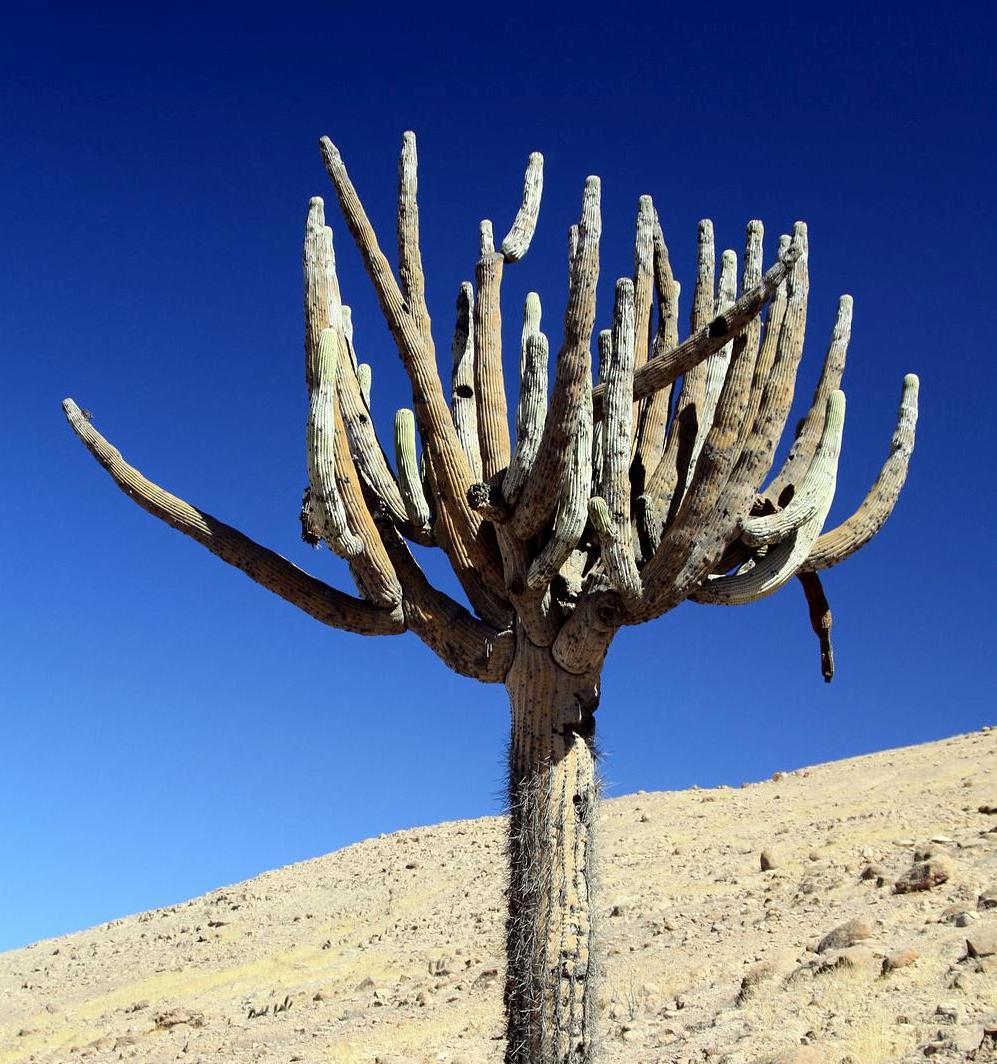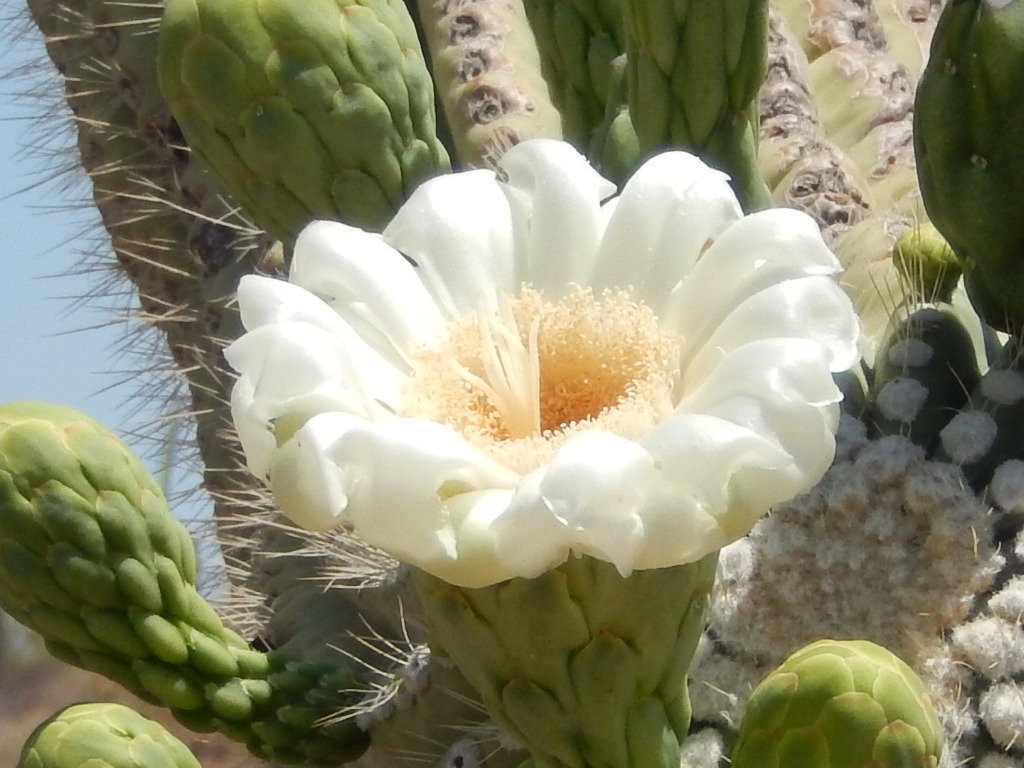
(Photo = Saguaro flowers, Velvetlady0)
Introduction
Saguaro blooms don’t run on a simple calendar. Over ten years of watching the same plants near Tucson, researchers tracked how flowering shifts from year to year and what really sets the clock. The short version: plant size matters a lot, and weather—especially temperature and rainfall—nudges the timing and intensity of the show. The study also flags a common pitfall in field notes: if you only record “first flower,” you can miss how the bulk of flowering actually moves with climate from one season to the next.
The Details
The team followed 151 Carnegiea gigantea and scored six phenology traits for each: onset, peak, end, duration, and two abundance measures. Larger saguaros started earlier, kept flowering longer, and produced more flowers overall—consistent with the idea that bigger plants have more stored resources and meristems to support reproduction. Climate added another layer. Warm springs advanced the start of bloom and were linked to heavier flowering. By contrast, wetter conditions tended to push the first flowers later and were associated with fewer blossoms. In the Sonoran Desert, that means a particularly warm late winter can pull the season forward, while an unusually wet period can do the opposite.
A methodological takeaway is just as useful for community science as it is for research: population-level metrics (e.g., “the first saguaro flower seen anywhere at the site”) can tell a different story than individual-level metrics that track each plant’s onset, peak, and duration. For desert annuals that bloom all at once, the gap is small; for saguaros, it matters.
Looking ahead, models point to warmer conditions with more variable precipitation in the Southwest. If that holds, saguaros will likely flower earlier in many years—and sometimes more intensely—which cascades to nectar and pollen timing for bats, birds, and daytime pollinators.
Additional Reading: American Journal of Botany