(Photo by Nanette Hussey)
Introduction
Northwestern Arizona is classic Mojave Desert country, and three Mojave yuccas anchor that landscape: Yucca brevifolia, Y. schidigera, and Y. baccata. Although each favors certain elevations and microclimates, they overlap where conditions meet in between. In these contact zones, differences in size, form, and leaf texture are easy to see.
The Details
Yucca brevifolia (Joshua tree)
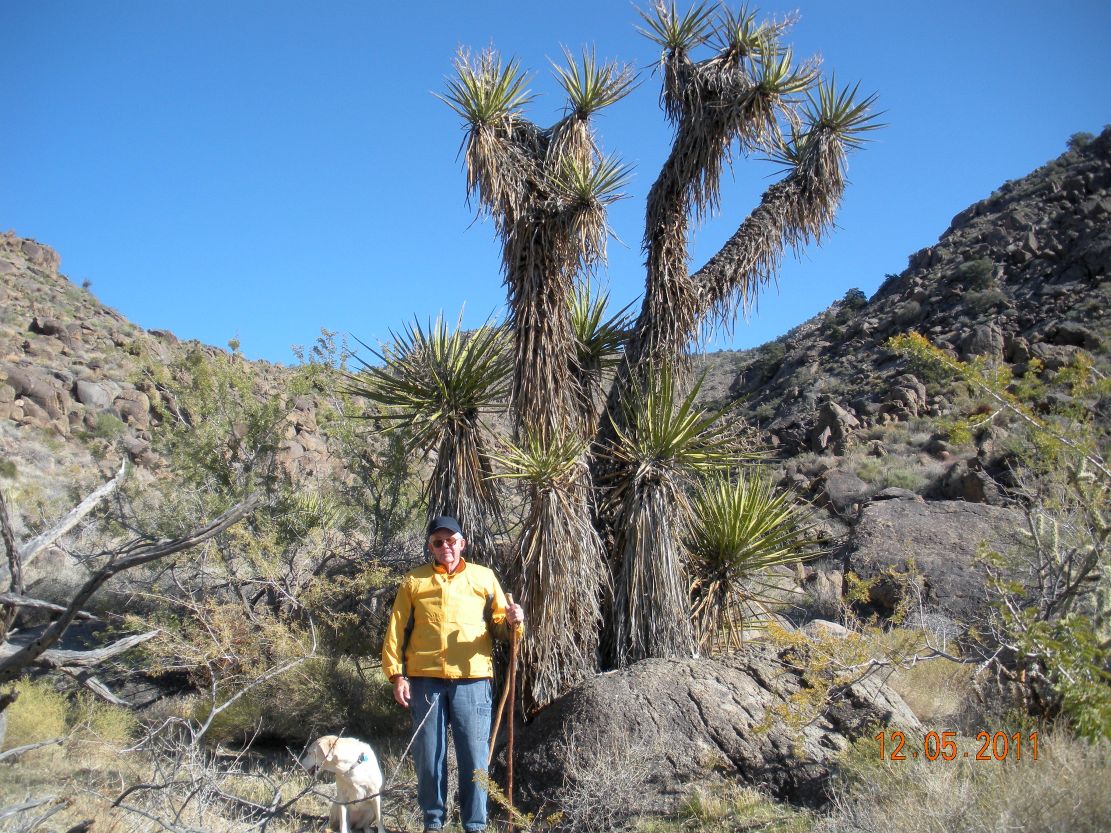
Usually the tallest, Joshua tree reaches about 5–25 feet and is common from roughly 1,600–5,500 feet. It forms multi-branched outlines after first flowering. Leaves are short and rigid compared to those of Y. schidigera, and plants often dot valleys and bajadas in open stands.
Yucca schidigera (Mojave yucca)
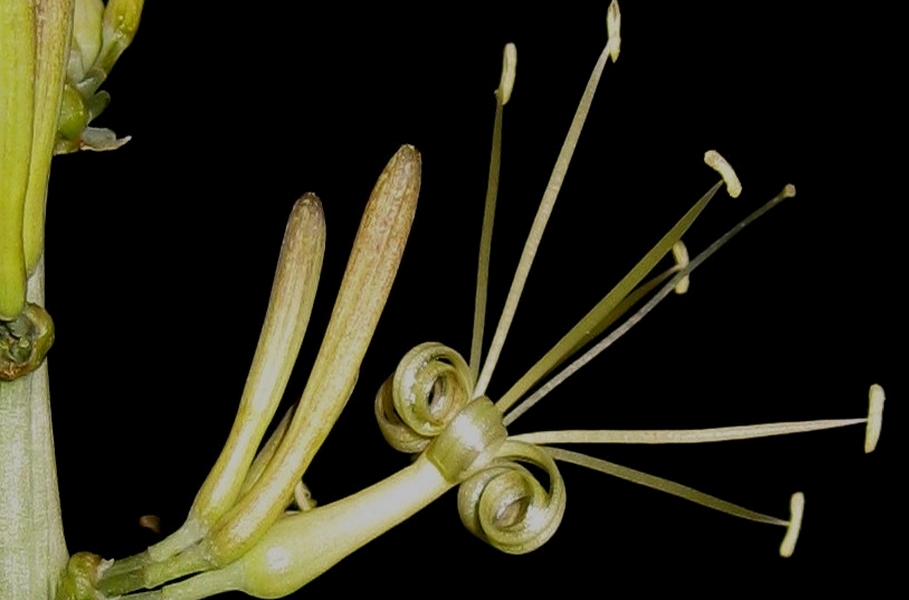
Most frequent between about 2,000 and 4,500 feet, Mojave yucca bears long, stiff leaves—often to two feet—with margins that shred into pale fibers. The obligate yucca-moth mutualism drives seed set; beetles may visit flowers, but they do not pollinate.
Yucca baccata (banana yucca)
Typically above ~4,000 feet and often trunkless, banana yucca has stout, bayonet-like leaves in green or blue-green forms. The thick, fleshy fruits are important to wildlife and, historically, to people. The species extends eastward beyond the Mojave wherever upland conditions suit it.
Where they grow best
In canyons and on protected slopes, all three grow larger and more vigorous where soils hold a bit more moisture. On open flats, plants are smaller, reflecting wind, temperature, and water stress.
Flowering and seed set
In most years, flowering peaks in spring. Seed success depends on timing with active yucca moths and on weather; cold snaps or drought can reduce flowering and maturation across wide areas. This boom-and-bust rhythm is normal for long-lived desert perennials.
Quick ID recap
-
Y. brevifolia: tree-like, many-branched, shorter rigid leaves; mid to higher elevations.
-
Y. schidigera: long, sharp leaves with shredding fibers; lower to mid elevations.
-
Y. baccata: mostly trunkless, stout leaves, fleshy “banana-like” fruits; cooler uplands and canyons.
Additional Reading: Seed Predation Due to the Yucca-Moth Symbiosis
Additional Reading: Yucca Moth and Yucca Pollination