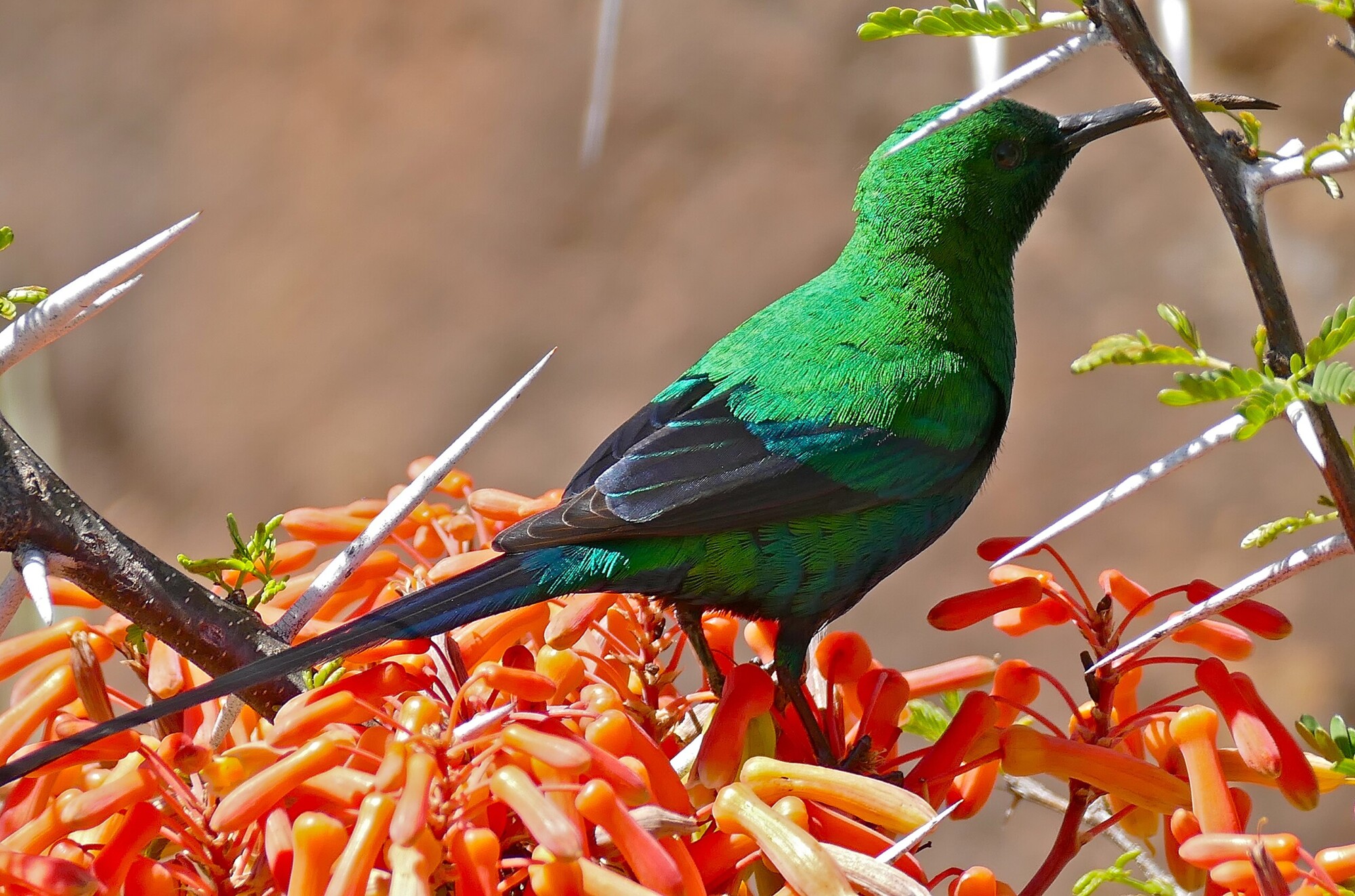
(Malachite Sunbird [Nectarinia famosa], Bernard Dupont)
Introduction
Aloes and birds go together. In Africa and Madagascar, Aloe flowers feed sunbirds and white-eyes; in the Americas, the same blooms pull in hummingbirds wherever aloes are grown. Tubular, high-nectar blossoms rise well above the leaves on sturdy stalks, offering perches for sunbirds and easy hover space for hummingbirds. Photographers love the pairing—Martin Heigan, for one, has captured countless scenes of aloes lit with birds and evening light.
The Details
Aloes signal to birds with classic cues: warm colors (coral, orange, red, and gold), abundant nectar, and flowers grouped along tall, visible inflorescences. Many species open flowers in sequence from the bottom up, so a spike stays productive for weeks. Sunbirds typically perch to feed, brushing pollen onto their foreheads and throat feathers as they probe each tube. Hummingbirds often hover, making quick, precise visits that still move plenty of pollen between plants.
Timing matters. In winter-rainfall regions, Aloe species such as A. ferox and A. marlothii can flower during the leanest months, when nectar is scarce and birds concentrate at reliable sources. In summer-rainfall areas, other aloes take the baton, keeping the nectar calendar filled. The staggered schedule supports resident birds through seasonal gaps and can help migrants along their routes where aloes are widely planted.
Architecture helps the partnership. Aloe rosettes stay low and clean while inflorescences lift flowers into open air—above spines, above leaf shadows, and into clear sightlines. The spacing along each raceme leaves room for a bird’s bill, and the firm, upright stalks make landing easy even in wind. Because many aloes bloom at once in a stand, birds can move efficiently from spike to spike, trading time for calories with minimal effort.
In gardens, the pattern holds. A handful of well-placed aloes can create a reliable nectar station for months, drawing birds first thing in the morning and again in late afternoon. You will see different behaviors by species and season: sunbirds and white-eyes lingering and gleaning insects between sips, hummingbirds strafing the flowers in fast circuits, and opportunistic visitors—like weavers or starlings—checking the crop when it is heavy. Watch the edges where shade meets sun, and scan the tops of the stalks; that is where the action concentrates.
Aloes make the landscape legible for wildlife: bold rosettes at ground level, color and nectar on tall wands, and a predictable rhythm that birds learn and revisit. When the spikes flare against a clear sky and a bird hangs or perches in the bloom, you see the whole design at work—economy, visibility, and just enough sweetness to bring the scene to life.