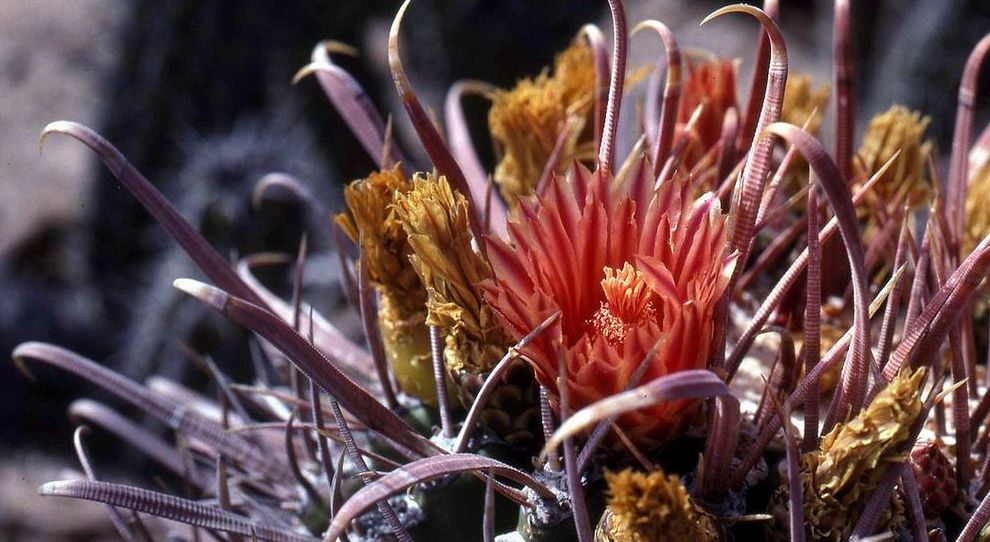
(Photograph = Ferocactus gracilis coloratus, Christian Defferrard)
Introduction
The peninsula of Baja California stretches like a long arm between the Pacific Ocean and the Gulf of California—dry, mountainous, and endlessly varied. From north to south, it runs more than seven hundred miles, crossing multiple deserts and microclimates. It feels both vast and intimate: a land of ridges, washes, and plains that change color with every shift of light.
The Details
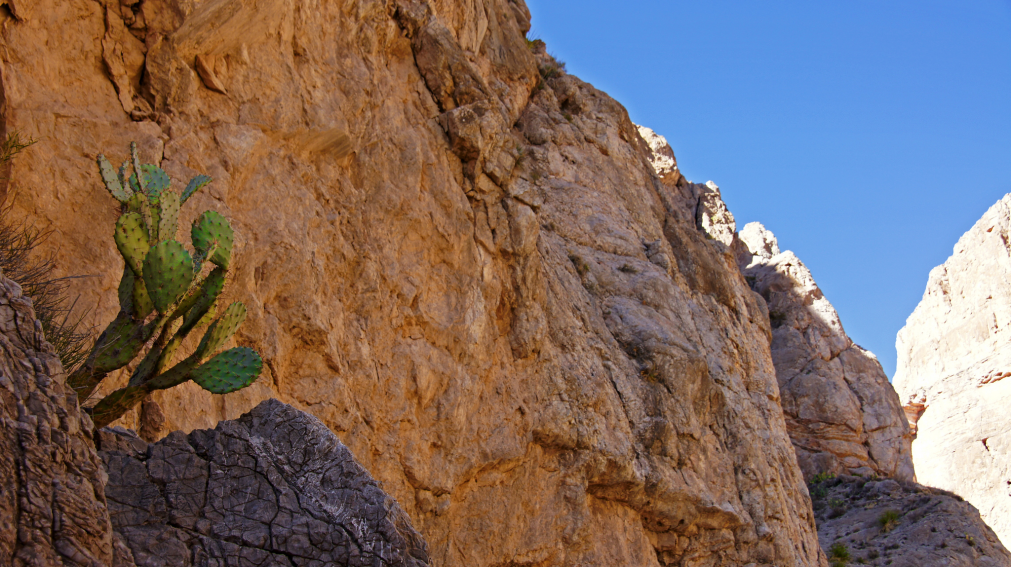
The northern part of the peninsula opens with granite hills and broad valleys dotted with yuccas, agaves, and prickly pears. Southward, the mountains tighten, and volcanic spires mark the skyline. Along the Pacific side, fog rolls in from cool water, bringing brief moisture that softens the desert edge. Toward the gulf, the land tilts warmer and drier, and the vegetation changes again—denser thorn scrub, cardón forests, and sprawling stands of Opuntia and Cylindropuntia.
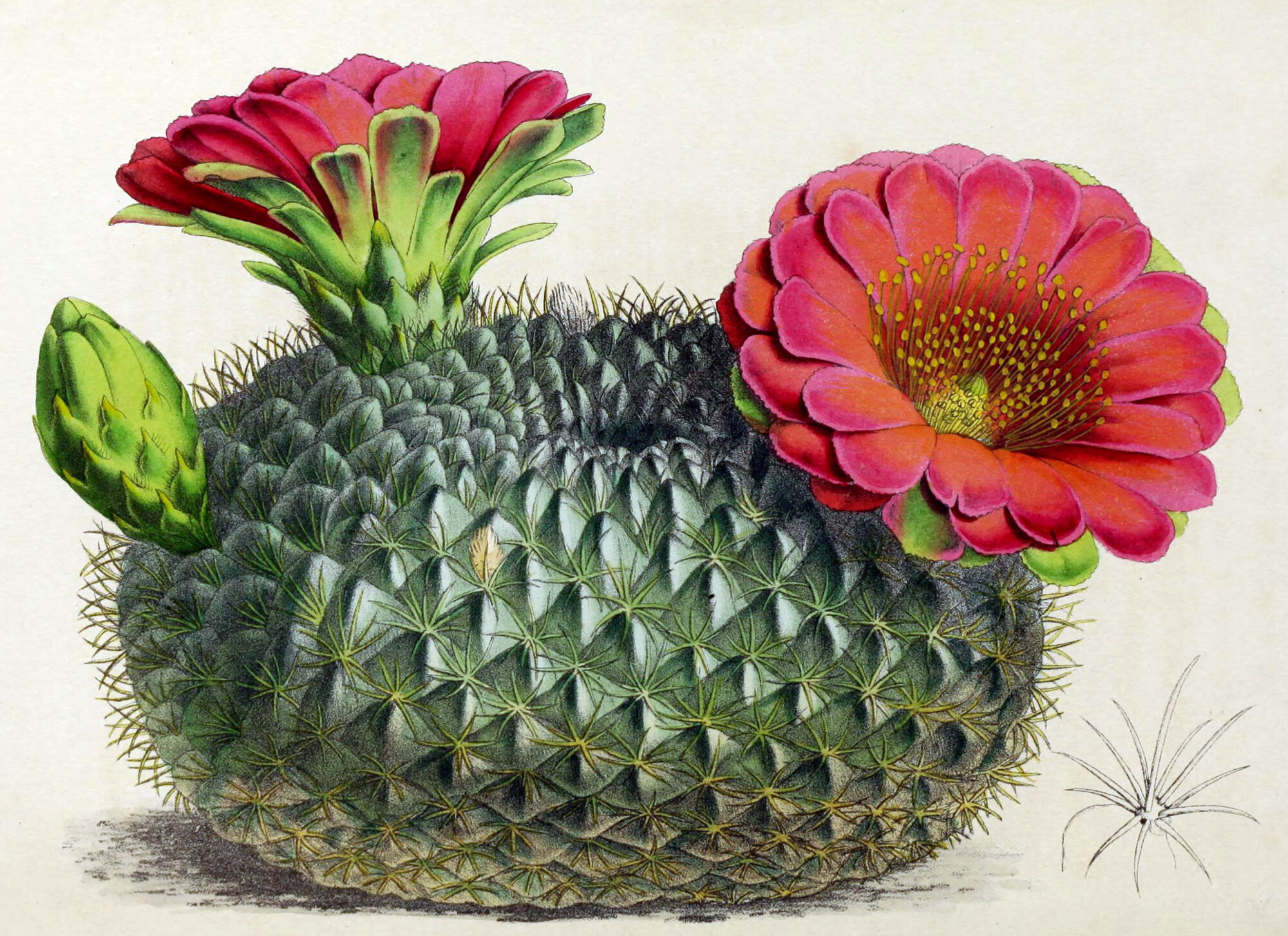
Driving or hiking through Baja, you see how plants sort themselves by slope, soil, and exposure. On high plateaus, Ferocacti and Mammillarias cluster in pockets of rock. In sandy flats, low shrubs and ground cacti take over, blending green, gray, and silver tones. Along arroyos, slender trees form narrow ribbons of shade—proof that water, even scarce water, shapes every part of the desert’s design.
The light is part of the story. Morning brings clear color and sharp outlines; afternoon heat flattens the palette to beige and rose; evening folds the mountains into indigo. You learn to watch the land as it turns through these small daily seasons. What looks dry at noon may glow with life an hour later.
A Peninsula of Xerophytes
Baja is rich in xerophytes—plants built to conserve water and ride out heat, wind, and long gaps between storms. Some are succulent, storing moisture in stems or leaves: columnar cacti, barrel cacti, rosette-forming agaves, and coastal rosettes that cling to rock. Others are xeromorphic rather than truly succulent: ocotillos and boojums that leaf out after rain, elephant trees with swollen trunks, creosote with small, resinous leaves, and shrubs that switch to photosynthetic stems when foliage is scarce.
Across this mix, you see the same playbook: thick cuticles, reflective waxes, tightly spaced areoles, spines or hairs that break wind and shade skin, shallow rain-roots that drink fast, and deep anchors that tap stored moisture. Many open their leaf pores mainly at night, which saves water when daytime heat would waste it. On the Pacific side, fog can tip the balance—dew gathers on spines and leaves, adding small sips to a dry budget.
For plant watchers, the density of xerophytes means every slope is a lesson in strategy. A single hillside can show multiple solutions to the same problem—one plant hides under a nurse shrub, another faces north to spare itself the worst sun, a third grows narrow and tall to cast its own shade.
Baja’s rhythm is slow and deliberate. Rain may not come for months, but when it does, the desert changes overnight—buds swell, flowers open, and the air carries the scent of wet dust. It is a landscape that teaches restraint: take your time, bring water, and keep your eyes open. Every ridge, every arroyo, and every cactus tells a story about light, heat, and endurance.
Additional Reading: Baja California Map Guide