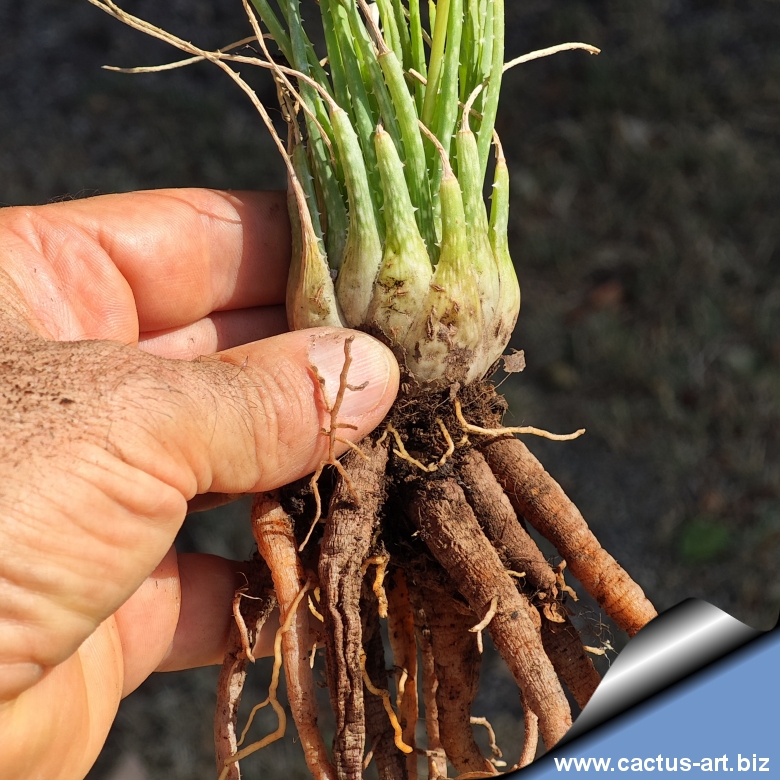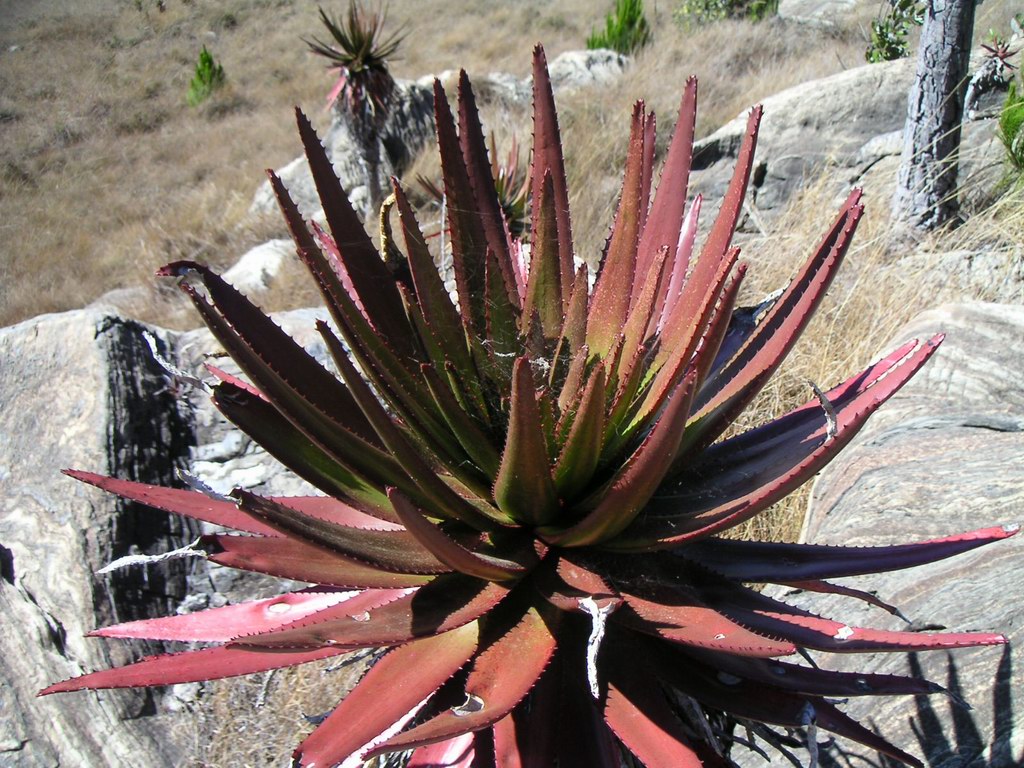
(Photograph = Aloe capitata cipolinicola, Christian Defferrard)
Introduction
Madagascar is rich in aloes—ranging from small, stemless rosettes to tall, single-stem species with branching flower spikes. Many are endemic and show striking color shifts with sun, drought, and season. Alongside these aloes grow the island’s iconic baobabs (Adansonia), which share the same dry, open landscapes and help define Madagascar’s look and feel.
The Details
Forms and identification
Leaves are thick and often toothed, in greens, blue-greens, or bronze tones. Some species stay solitary; others offset to form clumps. In strong light and dry weather, plants become more compact and more intensely colored.
Habitats
Across rocky slopes, sandy flats, and open woodland—including baobab country—aloes favor fast-draining soils and bright exposures. On wind-swept ridges, stems stay shorter and tighter; in slightly sheltered sites, plants grow larger and flower more freely.
Flowering and visitors
Most species bloom in the dry season, sending up tall inflorescences with tubular flowers in orange, red, or yellow. Sunbirds and insects visit the blossoms and move pollen between plants.
Cultivation notes
Give very bright light, a gritty, quick-draining mix, and deep but infrequent watering during warm growth. Let the top of the soil dry before watering again, and keep plants cooler and drier in winter. Avoid oversized pots and heavy, water-retentive soils.
Conservation reminder
Because many Madagascan aloes have small ranges and recover slowly from disturbance, choose nursery-propagated plants. Habitat loss and over-collection remain concerns on the island.
Additional Reading: Aloe Genus at PlantzAfrica