Introduction
Selenicereus is a group of night-blooming, climbing cacti native to tropical America. Several species and hybrids in this group produce the edible pitaya (often sold as “dragon fruit”). The plants open large, fragrant white flowers after dark, and the brightly colored fruits ripen weeks later.
The Details
Habit and stems
These cacti climb by aerial roots and usually have three-angled, green stems. With support, they form dense curtains over rocks, trees, or trellises.
Flowers and pollination
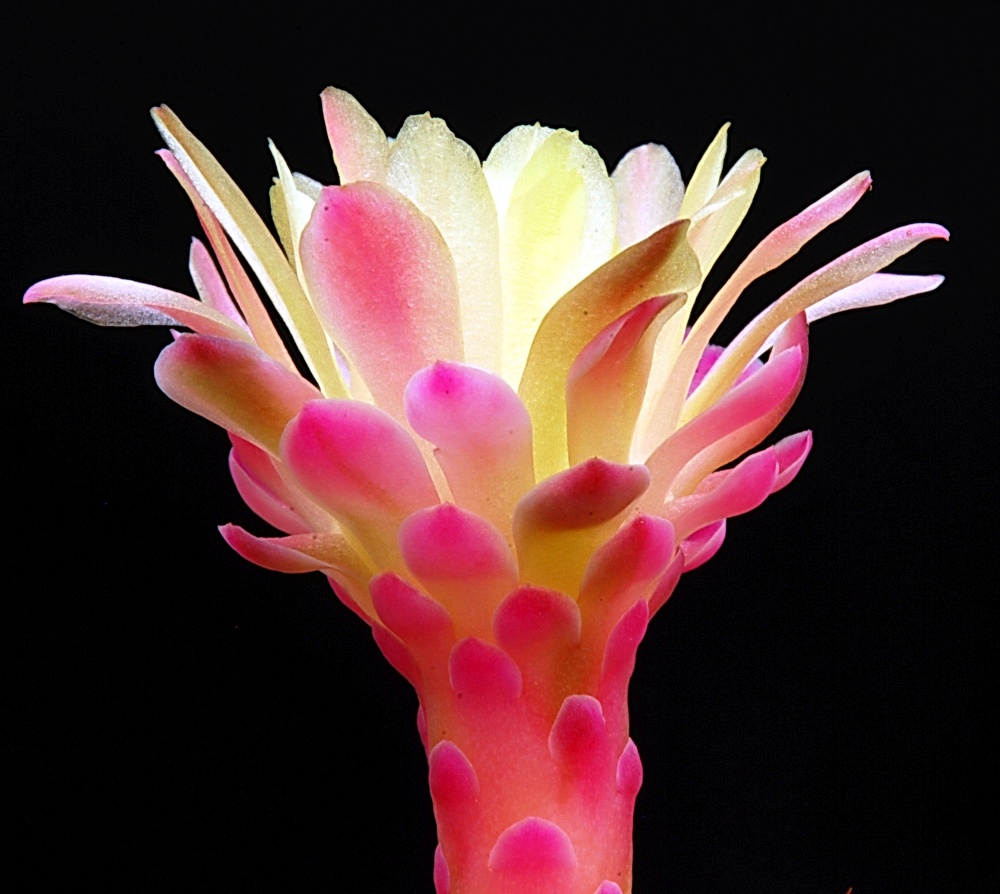
Flowers open at night and close by morning. In nature, they are visited by moths and, in some regions, bats. Many cultivated varieties benefit from cross-pollination between different clones; a few are self-fertile. Hand-pollination at night or very early morning improves fruit set in areas with few nocturnal pollinators.
Fruit
Fruits range from red to yellow on the outside, with white, pink, or red flesh studded with small black seeds. Flavor depends on the clone, growing conditions, and ripeness. Fruits are ready when the skin colors fully and the bracts begin to dry slightly.
Cultivation notes
Provide a sturdy support, strong light, and excellent drainage. Water regularly during warm growth, but let the top of the mix dry between soakings. Protect from frost; cold damage is common below freezing. In containers, use a coarse, airy medium and a tall frame or post to train the stems.
Names and usage
“Pitaya” and “pitahaya” are both used for these fruits. Many plants once labeled Hylocereus are now placed in Selenicereus; nursery tags may show either name.
Additional Reading: Vine Cacti