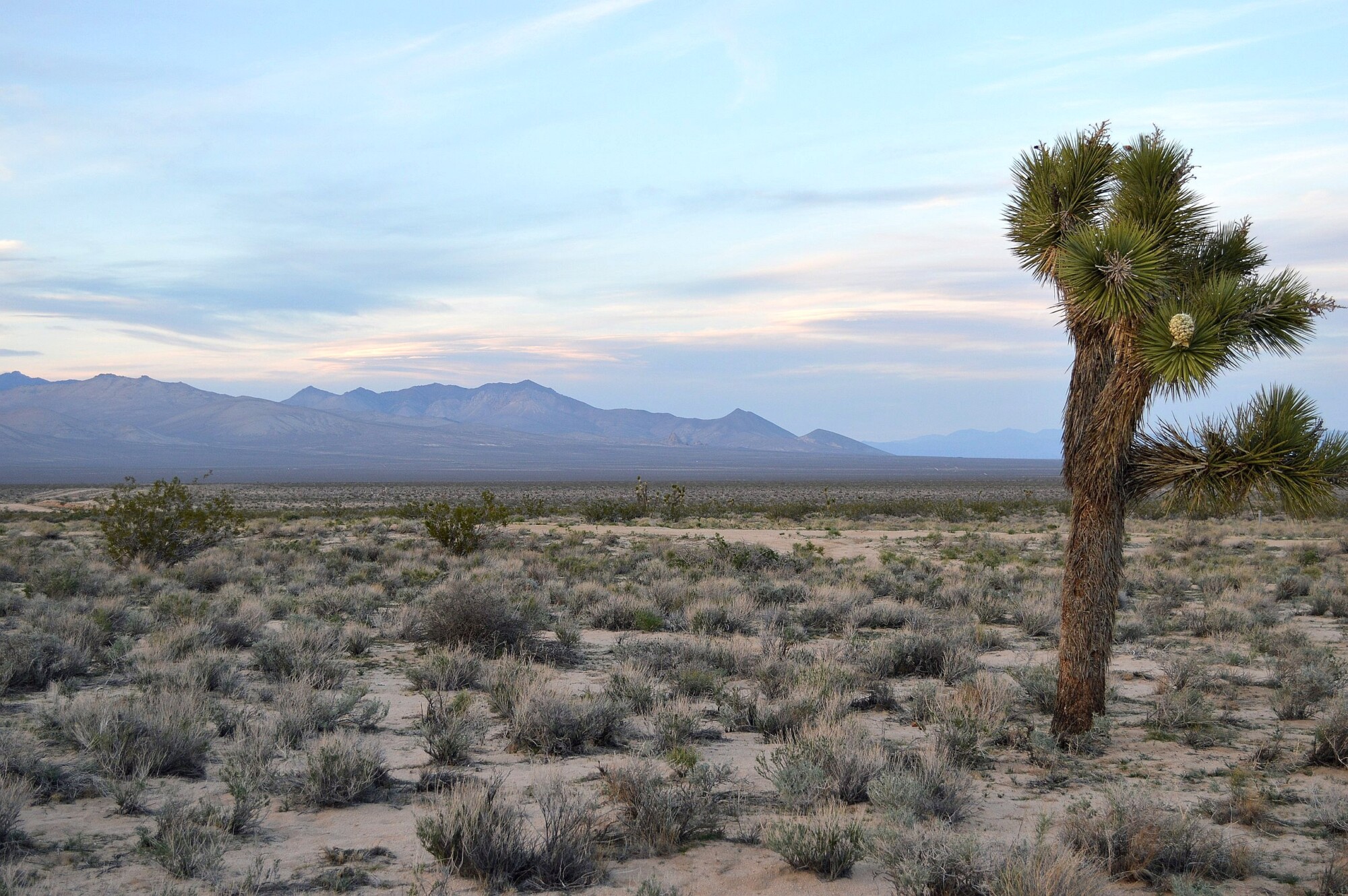
(Photo = Desert landscape, Beachboys5500)
Introduction
The creosote bush is among the most influential structural plants of North American deserts. Beyond its well-known resinous scent and clonal longevity, each shrub organizes soil, water, and microbial life beneath its canopy, creating a ‘resource island. ’ Wind‑blown dust and organic litter collect around the crown; roots and mycorrhizae stabilize soils; and shade reduces thermal and evaporative stress. These physical and biological effects alter where seeds land and germinate, shaping the fine‑scale mosaic of desert vegetation.
The Details
Under a mature Larrea canopy, infiltrating water slows and persists longer, and fine particles accumulate, increasing nutrient availability relative to the open interspaces. Biological soil crusts (biocrusts) develop both under and between shrubs; under‑canopy crusts can be patchier due to litter, but interspace crusts often become well‑developed, stabilizing soil and fixing nitrogen that later moves downslope or into the shrub island. Seed traps form at the shrub base and in small microtopographic berms, concentrating diaspores of annuals and grasses.
Facilitation and competition interplay: seedlings may establish at canopy edges where shade and resources balance, while inner zones can be crowded or allelopathically challenging. Over decades, wind, herbivores, and episodic rains continually restructure these islands, producing shifting ecotones that determine where other xerophytes can persist. The net outcome — a mosaic of fertile ‘islands’ embedded in a sparser matrix — emerges repeatedly across Mojave and Sonoran landscapes. Desert animals and other plants benefit.
Additional Reading: Fertile Islands in Deserts