Introduction
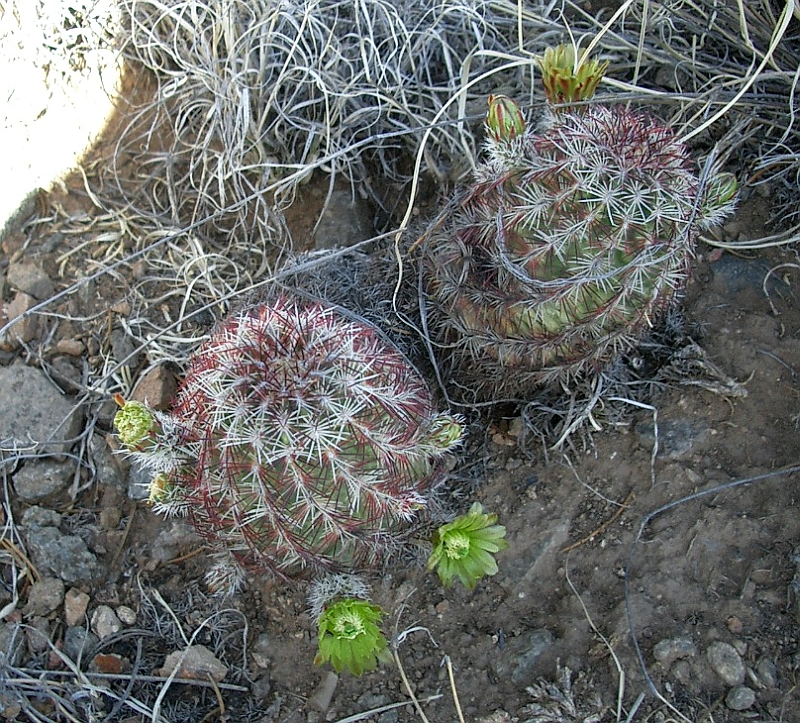
Grass and brush fires occur regularly but sporadically in many western landscapes. They often clear vegetation from a site, exposing mineral soil and creating brief windows for seed germination and seedling establishment. In New Mexico’s Guadalupe Mountains, a natural wildfire in 1992 burned through juniper savanna and desert grassland that supported two small, cylindrical Echinocereus—Kuenzler’s hedgehog cactus (E. fendleri var. kuenzleri) and nylon hedgehog cactus (E. viridiflorus). The event offered a chance to see how such cacti fare during and after fire.
The Details
A careful survey seven years later compared equal areas on both sides of the fire line. In the unburned habitat, both species persisted at much higher densities; in the burned habitat, only scattered plants were present. Most cacti found in the burn were small, relatively young individuals, indicating that they had established after the fire rather than surviving it. Immediate mortality in the blaze was therefore very high, and repopulation proceeded slowly from seed.
The site—rocky limestone ridge top with open juniper savanna and desert grassland—shows typical post-fire dynamics for this vegetation: woody shrubs and trees resprouted from protected crowns, and grasses regained cover, but the low, slow-growing cacti did not rebound quickly. For Echinocereus, recruitment hinges on seed availability, favorable seasons, and safe microsites. The first flush of seedlings after a burn likely draws down the local soil seed bank; after that, recovery depends on many years of flowering, fruiting, and new seedling establishment.
Two points stand out. First, survival through the fire was rare for both species. Only a couple of plants in the burn area showed evidence of having been alive during the 1992 event, and those likely persisted where flames were less intense or fuel was sparse. Second, seven years proved insufficient for densities in the burned area to approach those next door in unburned habitat. Even with successful germination and growth, the pathway from seed to mature, seed-producing adult takes time.
Because recovery is slow, the pattern seen after fire also hints at why other acute disturbances—such as heavy, localized collecting—can depress populations for many years. When mature plants are removed or killed, the replacement of reproductive adults depends on sporadic seedling establishment and long maturation times. In practical terms, Echinocereus populations can be set back for decades by a single, severe event.
Management implications follow. Avoid burning an entire local population in one prescribed fire, because some patches are too small to hold a robust seed bank for recolonization. Allow long intervals between fires, so post-fire recruits can mature, replenish the seed bank, and produce the next generation. Where possible, maintain adjacent unburned refugia that can supply seeds into the recovering habitat.
Additional Reading: Fire and Echinocereus