(Photograph: Ferocactus echidne rhodanthus, Amante Darmanin)
Introduction
Ferocactus is, at heart, a Mexican genus. From Baja California and Sonora across the Mexican Plateau to Tamaulipas and San Luis Potosí, barrels stake out hot, open ground with heavy ribs, fierce spines, and a crown of flowers in season. To the north, a few species cross into the United States—Arizona, New Mexico, California, Nevada, and west Texas—earning names like “fishhook barrel” and “compass barrel.” Names keep changing, and boundaries slide with each treatment, but the pattern holds: most diversity lies in Mexico, with sturdy outliers to the north.
The Details
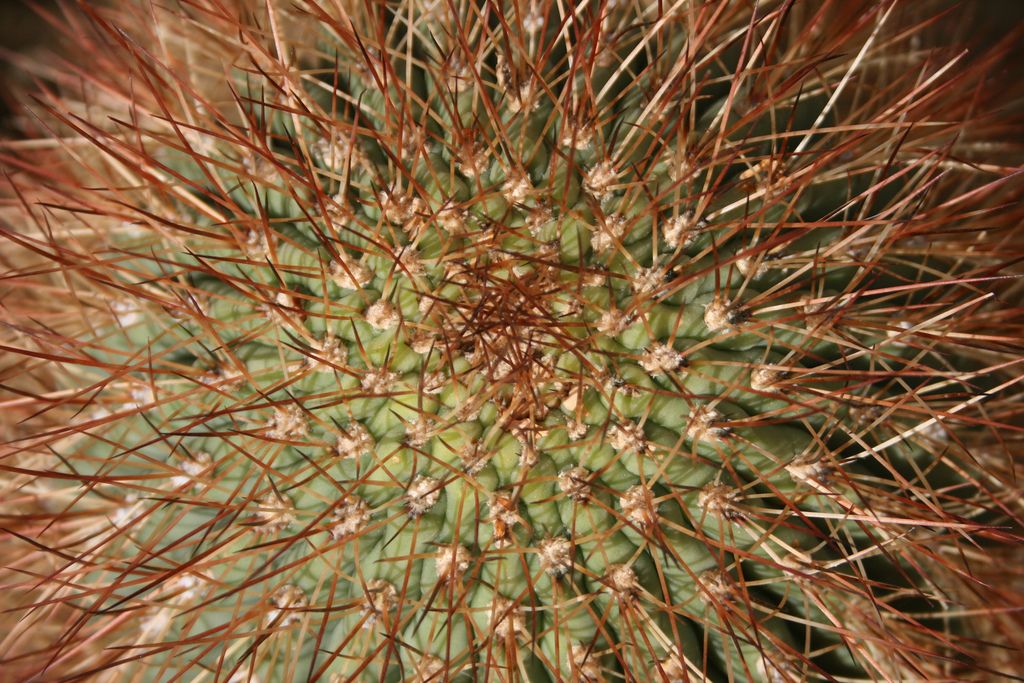
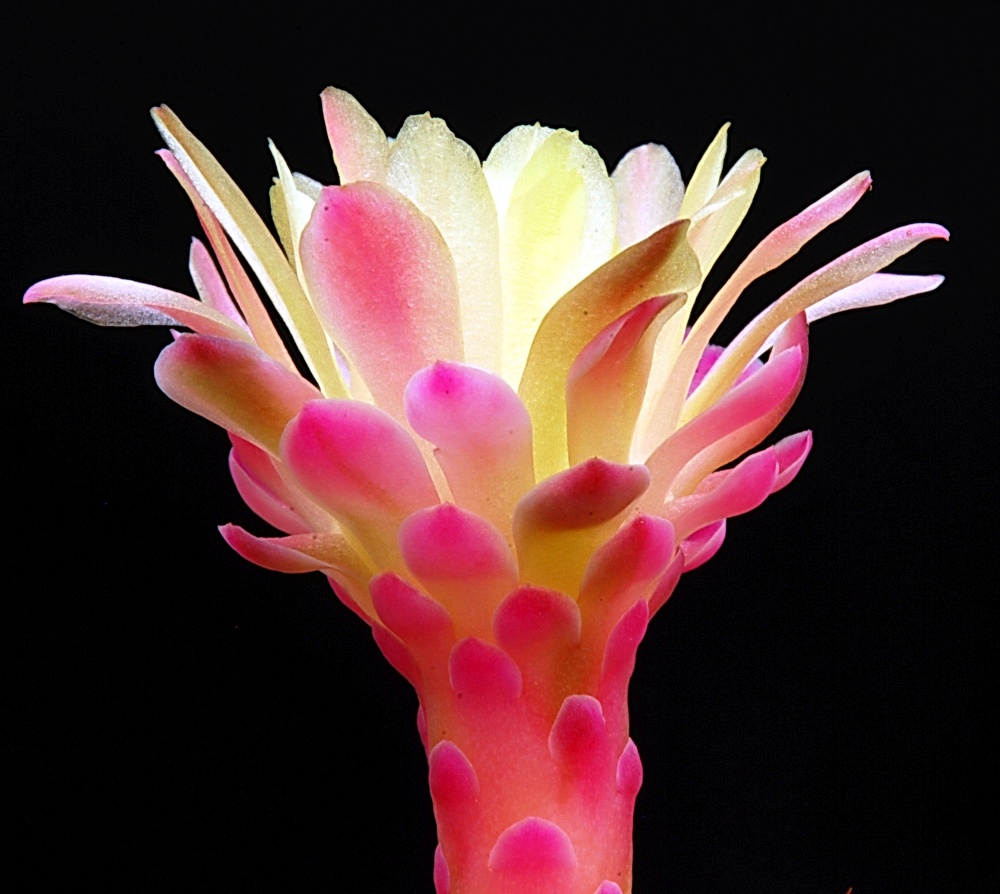
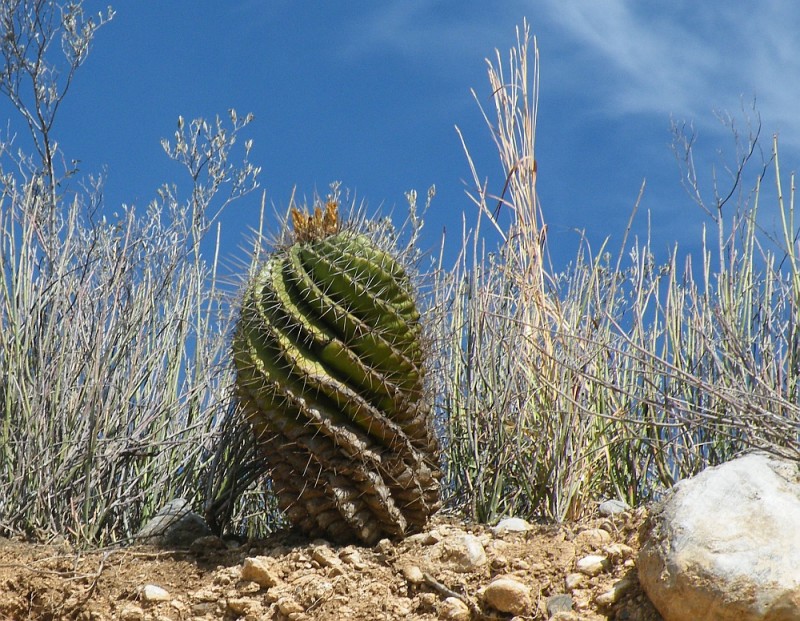
Look and build. In profile, Ferocactus runs from stout cylinders to true barrels. Strong ribs carry close areoles with formidable spines—flat, hooked, or straight. Flowers ring the apex on new growth, typically yellow to orange or red, and scaly fruits often persist.
Range, briefly. In Mexico, the genus spans the peninsula and mainland deserts; northward, F. wislizeni reaches Arizona and New Mexico, F. cylindraceus climbs Mojave and Sonoran slopes into California and Nevada, and F. emoryi tracks lower Sonoran country. On Baja, peninsula forms of F. gracilis and F. peninsulae punctuate coasts and interior benches.
Microhabitat and habit. On bajadas, terraces, and volcanic gravels, barrels sort by texture and exposure. On darker stones, stems stay tighter and more vertical; on pale ground, they may lean. In the Sonoran Desert, older plants often tilt south—hence “compass barrel.” Seedlings shelter under shrubs, then move into full sun with age.
A quick tour.
-
F. wislizeni (fishhook barrel): robust, hooked central spines; yellow to orange flowers; persistent fruit.
-
F. cylindraceus (compass barrel): more slender with age, straw to reddish spines; common on rocky slopes.
-
F. emoryi: massive ribs, heavy armament, strong spine color contrasts.
-
F. latispinus: interior Mexico; broad, ribbon-like central spines, often hooked; cool-season flowering.
-
F. pilosus: north-central Mexico; long red to copper spines that warm whole hillsides.
-
F. gracilis / F. peninsulae: Baja endemics with striking spine colors and local forms.
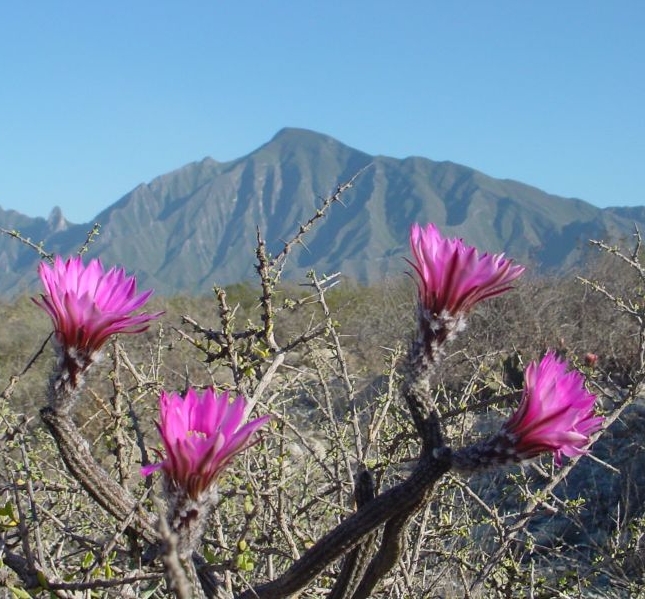
Flowers and fruit. In bright weather, the apex lights with a ring of blossoms that open over days. Bees and day-flying insects do most of the work; fruits swell and sit, then feed birds and mammals as pulp softens late in the season.
On the land. From overlook pullouts, barrels read like punctuation—single plants on ledges, small ranks along fan shoulders, scatterings where fresh mineral soil holds heat. After storms, seeds lodge at the upstream sides of stones; after a run of good years, a small cohort appears exactly where runoff slows.
Names and moving lines. Taxonomy here is a conversation. Older sources may use F. acanthodes where newer ones prefer F. cylindraceus; peninsula plants shuffle among species and subspecies. For now, we use the names at hand, note local usage, and focus on characters that sort plants in the field—rib count, spine shape and color, flower timing, fruit form, and seedling look.
In sum, Ferocactus makes the desert legible—ribs like tally marks, spines like handwriting, a seasonal crown at the apex. Names will continue to evolve, but the barrels remain unmistakable: forthright, architectural, and, across most of their range, proudly Mexican.
Additional Reading: Pollination of Two Species of Ferocactus