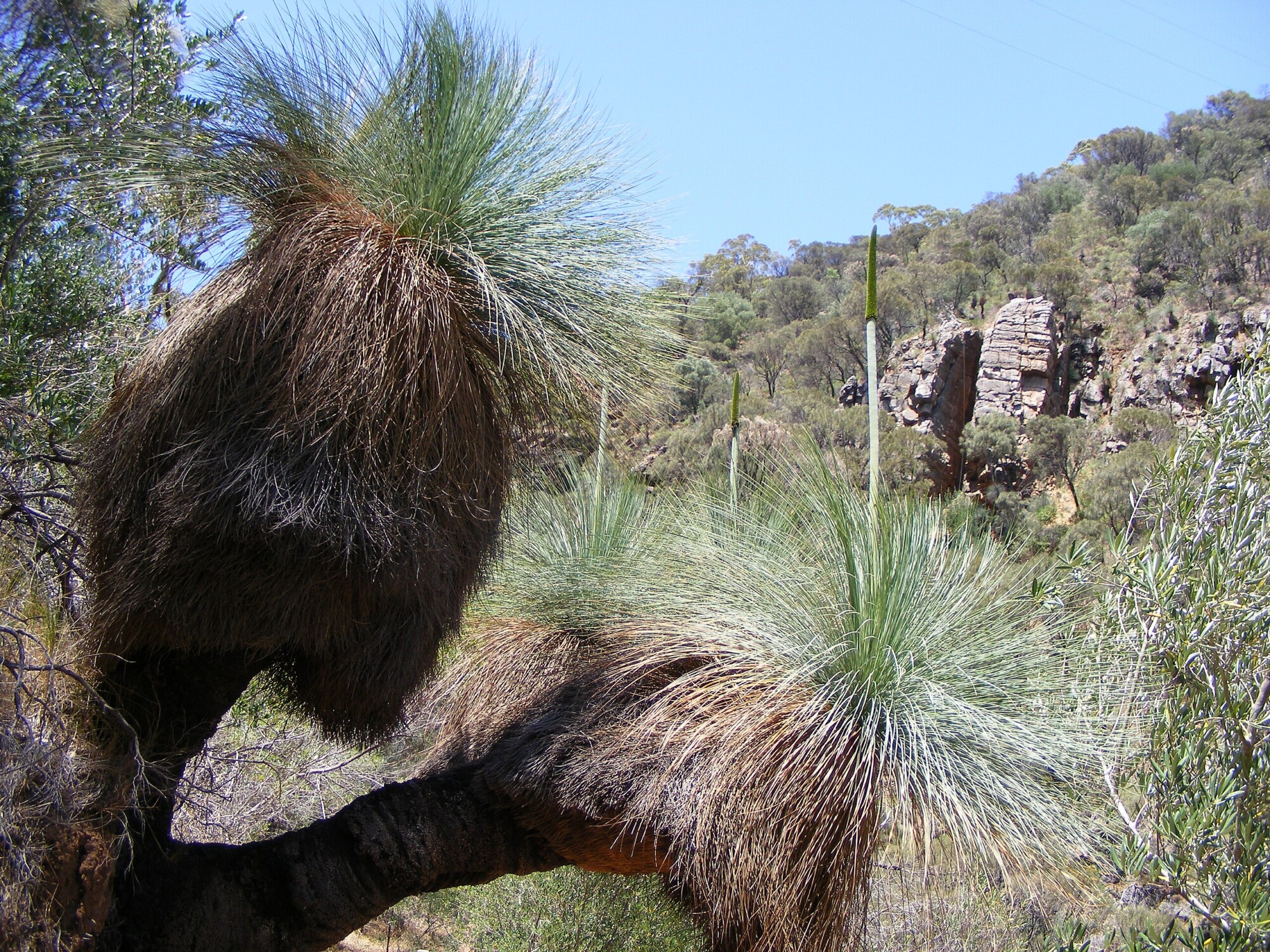
(Photograph = Puya raimondii flowers)
World’s Largest Pineapple Relative
Introduction
In the high Andes, a single plant lifts a tower taller than a house. Meet Puya raimondii, the world’s largest member of the pineapple family—a bromeliad built for thin air, cold nights, dry climate, and wide horizons.
The Details
What it is.
As a bromeliad, Puya raimondii lives as one massive rosette, then spends everything in a single bloom. After seeding, the parent dies. In a hillside stand, seedlings, adolescents, flowering giants, and pale skeletons tell the cycle at a glance.
Form and armor.
At maturity, the rosette spreads broad and low, with long, narrow, spined leaves packed tightly at the base. In hard sun, layered blades shade the core; in gales, the plant shows ribs, not sails, and sheds wind cleanly.
Bloom, seed, and afterlife.
When reserves peak, a many-tiered spike surges from the crown, humming with visitors as tiers open in sequence. Late in the season, green capsules dry and rattle into seed; wind sifts them downslope while the dead rosette remains as a pale mast.
Where it lives.
On high, open ridges in Peru and Bolivia, rosettes dot basalt and broken scree. In morning frost, skirts curl; by noon, air turns dry and bright; by evening, spikes bronze against indigo hills. In lee pockets, young plants cling to stone; on fast-draining shoulders, elders widen and hold ground.
Design and scale.
Everything conserves or concentrates: spines deter grazers, narrow blades vent heat, and layered leaves cool the center. The once-in-a-lifetime bloom converts years of stored energy into height, nectar, and seed—one big gamble that a stand spreads across many seasons.
Reading a stand.
Widely spaced giants with few juveniles signal harsher ground; mixed ages in tighter clusters suggest kinder conditions. On north-facing shoulders, rosettes stay greener; on south-facing fans, skirts run paler and tighter. A ridge with many old masts marks a string of good years.
Why it matters.
As the largest bromeliad, Puya raimondii shows what the family can do in a cold, high, seasonal system—store slowly, bloom big, and seed wide. It is armor without waste, architecture without fuss, and a life tuned to rare, good years.
In the end.
On a wind-broken ridge, the plant waits, spends, and writes its future downslope in seed—an Andean ledger of weather, time, and patience.