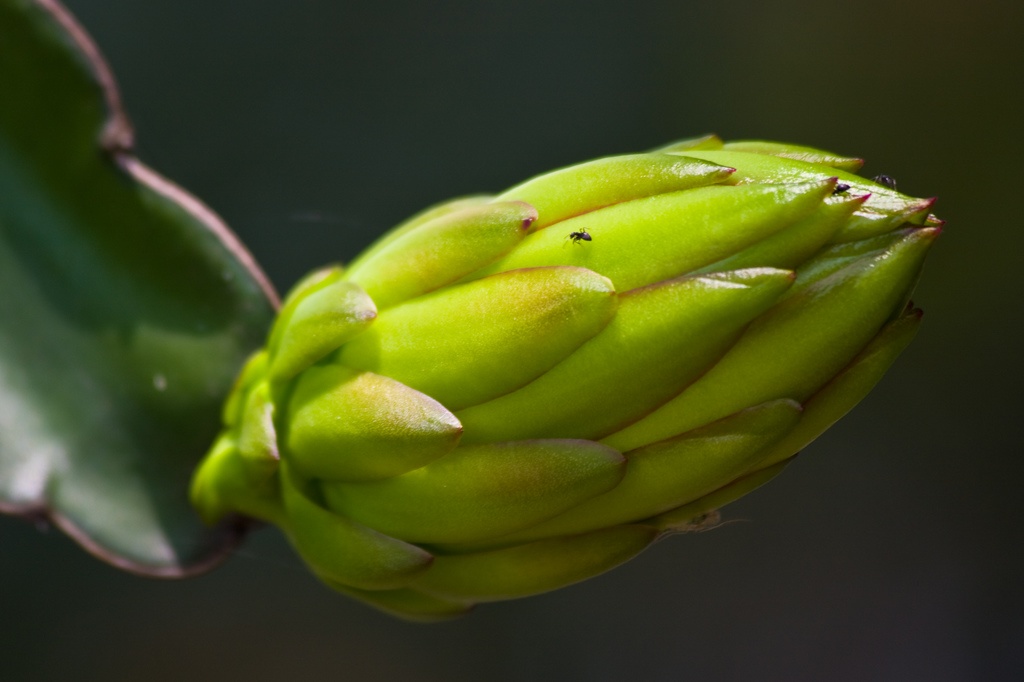
(Photograph = Pitaya flower bud, Shenghung Lin)
Introduction
Pitaya—better known as dragon fruit—is a climbing cactus with glossy, three-ribbed stems and night-blooming flowers the size of a dinner plate. It likes warmth, bright light, and something sturdy to climb. When it’s happy, it grows fast, flowers in bursts, and sets colorful fruit that peels cleanly to reveal speckled, refreshing flesh.
The Details
Names and types. Most red- and pink-skinned dragon fruits belong to Selenicereus (the old Hylocereus group). You’ll see white-fleshed, red-fleshed, and magenta-fleshed forms. The yellow “pitaya” has a different look—smaller plant, thornier fruit—and a sweeter flavor. Clones vary in self-fertility, fruit size, and color, so buy with your end goal in mind.
Flowers and pollination. The blooms open for a single night—fragrant, pale, and packed with pollen. Some varieties set fruit on their own; others need pollen from a second clone. If mornings are your only window, collect fresh pollen the night before, store it cool and dry, and hand-pollinate at first light. A small brush works; a gentle tap helps distribute pollen across the stigma.
Trellising. Start with one strong stem, and train it up a post or trellis. At the top, let it branch and drape—an umbrella shape that carries most of the flowers. Tie loosely as you go. Prune after a flush to remove tangles, thin crowded shoots, and keep light moving through the canopy.
Soil and water. Use a fast, gritty mix in a large, heavy pot, or plant slightly high in the bed so water sheds away from the crown. Water deeply, then let the mix dry most of the way before you water again. In cool weather, ease off; in peak heat, keep the root zone evenly moist without going soggy.
Light and temperature. Full sun to very bright light is best. In hot inland summers, a touch of afternoon shade prevents scorch on young stems. The plant dislikes frost; if you garden on the edge, grow in a container you can move, or wrap the base and protect the crown on cold nights.
Feeding. A light, regular feed during active growth supports flowers and fruit. Go easy—too much nitrogen makes stems at the expense of blooms. A late-season cut on fertilizer helps the plant harden before winter.
Harvest. Fruit color deepens as it ripens, and the scales relax slightly. Pick when the color is full and even, then peel and slice. Handle yellow fruit with care—small spines on the skin can linger—then enjoy the fragrant, tropical flavor.
Propagation. Cuttings root readily. Take a clean section, let the wound callus, then set it in barely moist mix and ignore it for a week. Label clones as you go; self-fertile types simplify fruiting when space allows only one plant.
Troubleshooting. Soft spots near the base point to overwatering. Pale, stretched growth means more light is needed. Ants often signal mealybugs—treat both. Storm damage is common on tall trellises, so anchor posts well, and thin before the windy season.
Grown with a bit of structure and restraint, pitaya is both a show plant and a producer—big flowers, sculptural stems, and fruit that earns its place in the garden, or on a sunny patio.
Related Reading: Vine Cacti, Pitaya


I had a drink in Spain a few years ago made from the fruit od the red pitaya. B very tasty. I’ve seen the fruit in a local grocery occasionally, and it’s rather pricey, but then even opuntia fruit is expensive in Massachusetts.