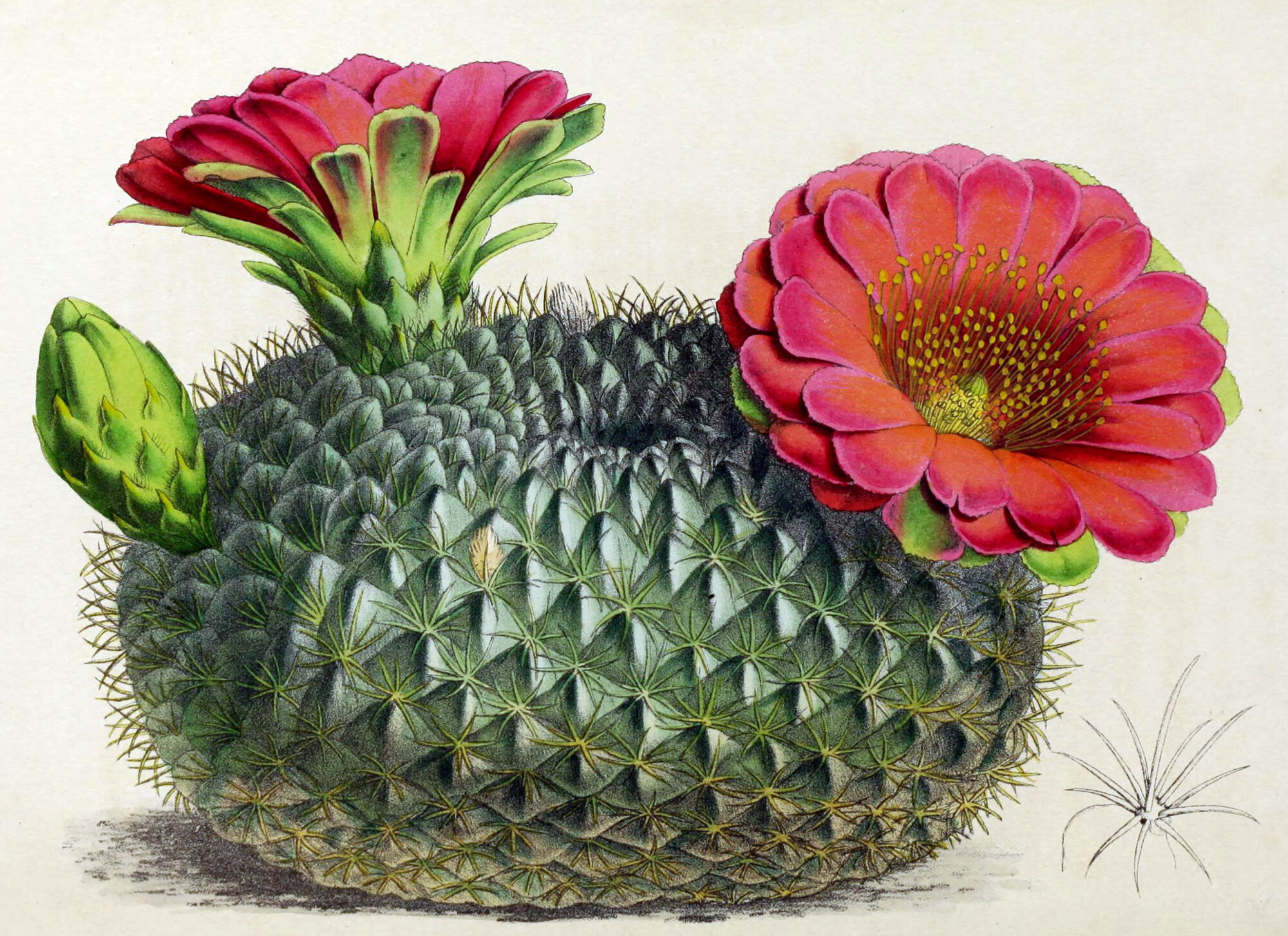
(Photograph = Dictionnaire pittoresque d’histoire naturelle et des phénomènes de la nature, vol. 1: t. 12, fig. 1 [1833-1839])
Introduction
PlantIllustrations.org hosts a trove of botanical art—thousands of plates spanning centuries and styles. Each drawing comes with clean, useful credits that say who made it and where and when it appeared. The photographs do that too, listing the photographer and location, but the drawings and watercolors are the pieces that pull you in. They slow you down. A copperplate engraving with careful stippling or a hand-colored lithograph can show leaf texture, bud scales, or venation in a way a quick snapshot rarely does. And when a plate includes dissected parts—flowers opened, seeds shown at scale—you get a level of documentation that reads like field notes from another century.
The Details
You can wander through orchids, trees, roses, shrubs, grasses, and more at PlantIllustrations.org, but the cacti and succulents feel especially valuable. For many of these species, early herbarium material is sparse or fragile, and photographs from the first wave of exploration simply don’t exist. Those old plates—ribs counted, areoles spaced, spines shaded one by one—often serve as the clearest historical record. A good illustrator caught posture and habit: pads held at a certain angle, a flower tube proportioned just so, fruits drawn beside a ruler. That kind of measured observation helps when you’re trying to reconcile a modern plant with a name that has been tossed around for a century.
There is one hitch: names reflect the moment the plate was published. Taxonomy has moved since then. Synonyms have piled up; types have been lectotypified; families and subfamilies have been shuffled. Matching an 1850s label to a 2020s treatment can take a little work. Sometimes the spelling is archaic; sometimes the basionym hides in small caps. Cross-checking against current floras or databases helps, but even when a name drifts, the image holds. The plates remain what they’ve always been—careful, beautiful witnesses. They fix a plant in time and space and give you enough structure to make sense of it now.
Additional Reading: Wonderland Botanical Illustration Guide


Hello,
I see you posted about plantillustrations.org. I’ve been using that site as a resource, but now it seems to be down. Everything I can find leads to an error message. Do you have any information about who owns/runs the site? I’d love to contact them to see if it’s just a temporary error and if the site will be back up. Thanks in advance for any help.
Yes I am trying to access the site and having issues as well
I too have been having trouble getting into the site. It was up briefly yesterday I think (I have motor neurone disease and it has affected my memory), but other than that I have not been able to access it for a week or so. There were a couple of names on a page on the site to contact to ask about using the images. Since the names were in the public domain on the site and on Google, I’ll reproduce them here in case anyone else has contact information for them. Unfortunately I did not think to write down the contact details, but picked up the names from the first hit of a Google search just now. “If you want to use photographs please ask Max Antheunisse or contact Jan Koeman.”