Introduction
The Cactaceae is the classic doorstop on many cactus shelves—four volumes of bold taxonomy, crisp drawings, and no-nonsense prose. It reads like a field guide written at a desk, and a desk guide written in the field. Open it anywhere, and you get a mix of characters to check, ranges to consider, and plates that still help you tell one spiny column from another.
The Details
What makes the set useful, even now, is how it teaches you to look. Descriptions emphasize structure first—ribs, tubercles, areoles, spines, flowers, fruit—then bring in habit and range. The result is a steady rhythm: read the characters, study the plate, and compare what you saw last week on the trail with what sits in front of you on the page.
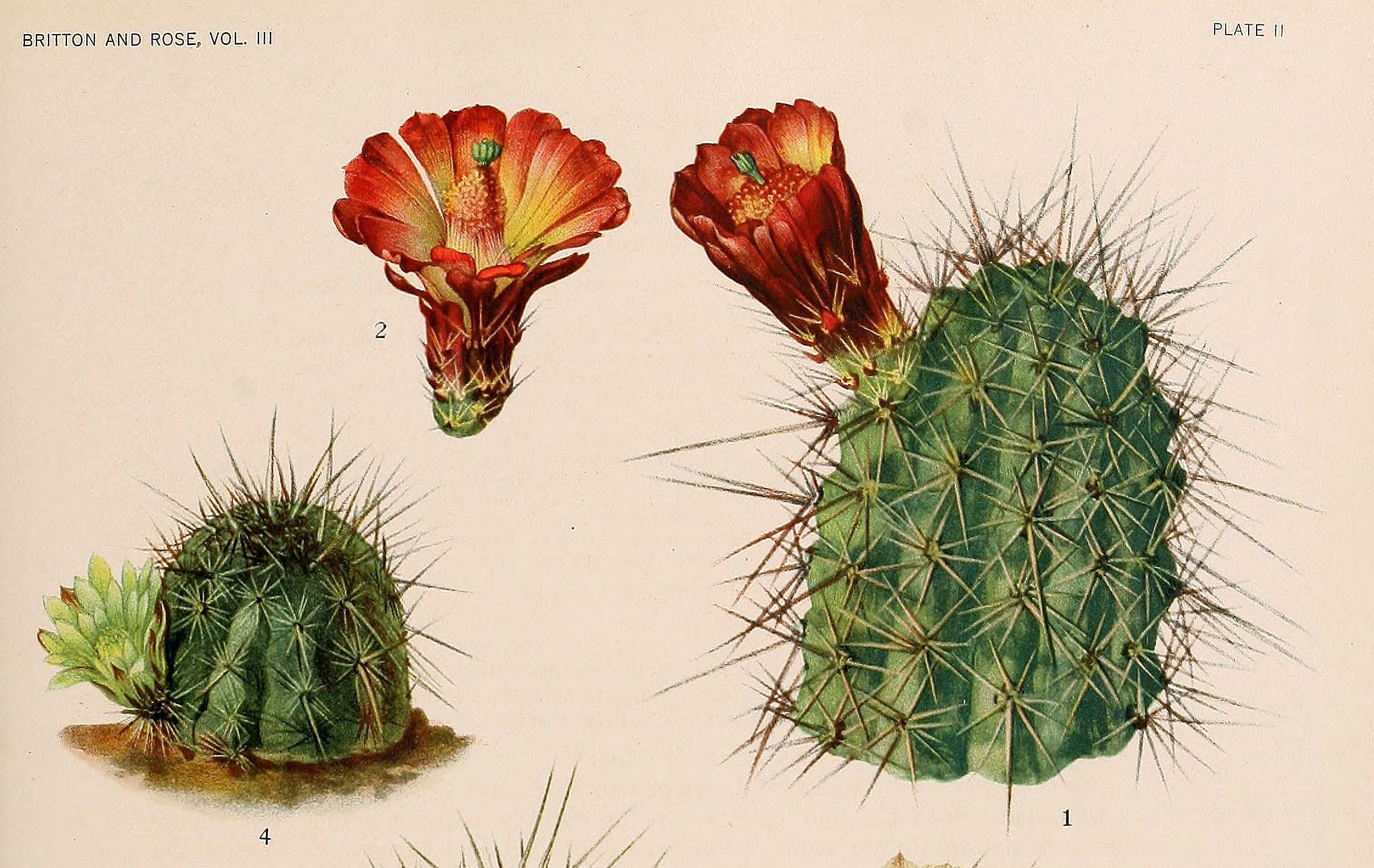
The drawings and color plates do more than decorate. They fix proportions, show where spines actually sit, and capture details—grooves, scales, hairs—that photos sometimes miss. When a plant in hand feels “close, but not quite,” a plate can clarify which trait tipped the scale for the authors, and which traits they considered variable.
A practical way to use the books today is as a baseline. Names shift, and groups get split or combined, but the character sets hold up. Read a description, then check your plant against those same anchor points. If the name you use has changed since the book was printed, the older account still tells you what people saw in the field, what they thought was stable, and what they flagged as “sometimes” or “often.”
A few reading tips help:
-
Start with habit and silhouette, then move to the small things—areole spacing, the texture of the epidermis, the posture of centrals versus radials.
-
Treat measurements as ranges, not absolutes. If your plant sits just outside a number, check the rest of the character list before you toss the match.
-
Use the plates to confirm relationships. If two species read alike in text, the drawings often highlight the one or two differences that matter.
-
Keep a pencil handy. Jot localities, flowering time, and fruit color in the margins, and mark pages you return to. The set becomes more valuable when it holds your notes alongside the authors’ voice.
Why it still matters is simple. The books capture an early, organized snapshot of the family—what people could see, measure, and compare with the tools at hand. You get clarity on core traits, a sense of how the authors thought, and a record of what was growing in gardens and in habitat at the time. That context helps when you stand in front of a plant that belongs to a shifting group and you want a steady place to start.
If you are new to the set, pick a familiar genus and read one account with the plate open beside it. Then, step outside and look at a living plant with the same checklist in mind. After a few passes, the habit sinks in: note the structure, verify the details, and let the picture and the prose settle together.
In the end, the Cactaceae is more than an old taxonomy. It is a way of seeing—patient, orderly, and grounded in characters that hold up under sun and dust. Read it that way, and it becomes a tool you can still carry into the field.
Additional Reading: The Cactaceae I


