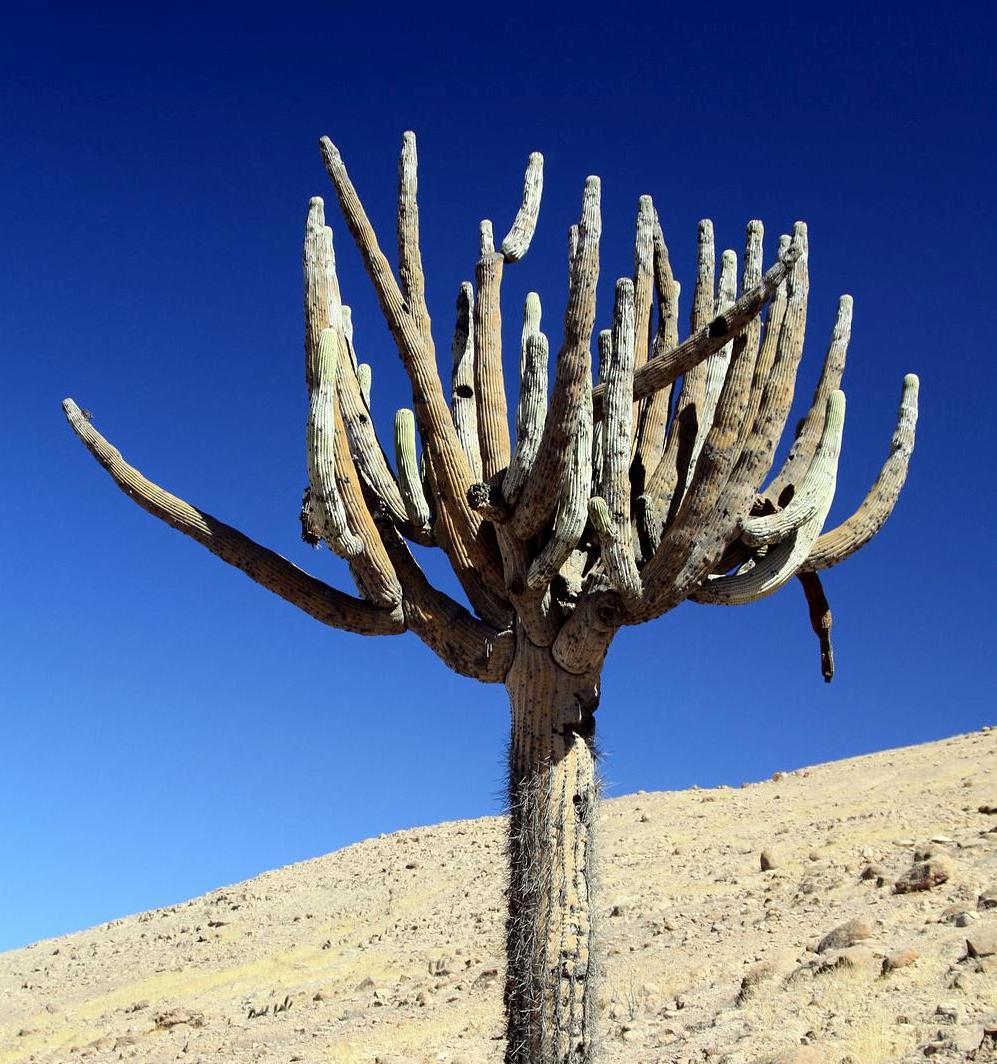
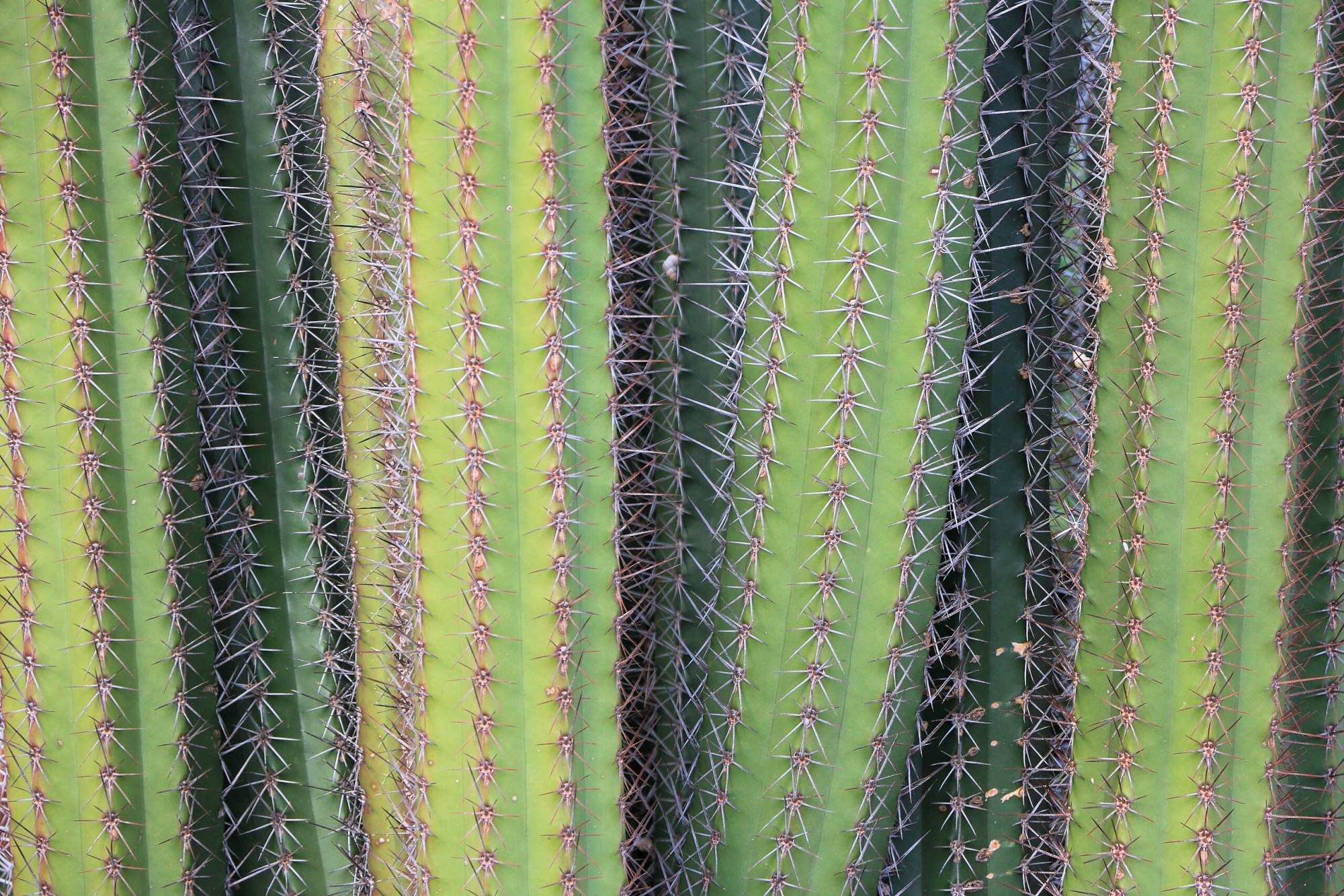
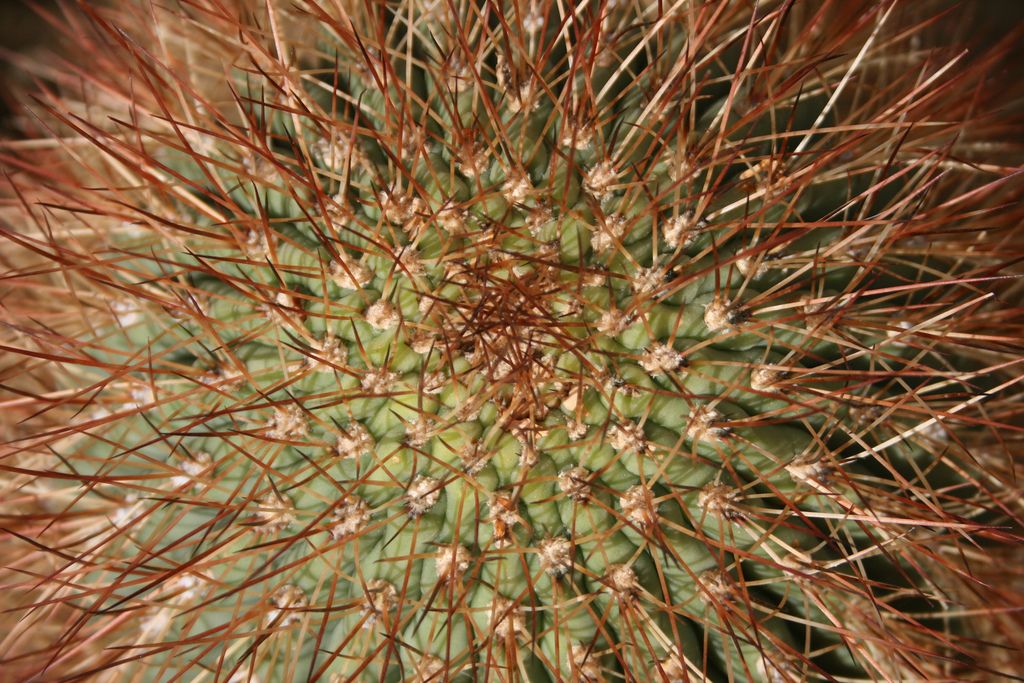
(Photograph = forest of Cephalocereus columna-trajani, Lon and Queta)
Introduction
Cephalocereus columna-trajani is a statuesque, many-ribbed columnar cactus that forms tall, upright stands on sunny, rocky slopes in south-central Mexico. Mature plants read like living pillars—straight, blue-green to gray-green columns with close-set areoles and steady, even ribbing. The species resembles C. senilis in overall build, yet it lacks the shaggy white hair; with age, a narrow, bristly flowering zone develops along one side of the stem.
The Details
Identification. Stems are slender, strongly vertical, and densely ribbed, with small, orderly areoles that carry short to medium spines. On mature plants, a lateral, bristly band—the cephalium—forms and marks where flowers emerge. The contrast between smooth ribs and the brush-like cephalium makes older stems easy to spot at a distance.
Flowers and fruit. Flowers are tubular, pale, and typically open in the evening or at night. They arise from the cephalium near the top of the stem, so the blooming zone creeps upward as the plant grows. Fruits follow as modest, bristly pods that split to release dark seeds.
Habitat and form. In habitat, plants grow on hot, stony ground with rapid runoff—limestone benches, gravelly fans, and open hillsides. Stems occur singly or in loose clusters, and older individuals can tower over surrounding shrubs. Within a valley, you may find plants concentrated on one terrace while the next is empty, a reminder that microhabitat—slope, exposure, and soil texture—sets the rules.
Taxonomy. The species has worn several names in older literature, including placements in Cereus and Pilocereus, before settling in Cephalocereus. The hyphenated epithet—columna-trajani—reflects the original Latin honoring Trajan’s Column. It is closely allied to C. senilis, but differs in lacking the long, shaggy hair and in presenting a narrow, lateral cephalium rather than a woolly cloak.
Cultivation. Think sun, height, and drainage. Give full sun from an early age to keep stems straight and close-ribbed. Use a deep pot with a very mineral, fast-draining mix; water deeply in warm, bright weather, then let the mix dry nearly all the way before watering again. In cool months, keep it much drier. Protect from hard frost, especially when the soil is wet. Stake long stems if wind-exposed, and rotate containers a quarter turn every few weeks to prevent leaning.
Grooming and propagation. Remove spent flowers and fruit carefully—the cephalium bristles catch gloves and tools. Offsets are uncommon, so most propagation is from seed. Seedlings appreciate strong light, warm days with cooler nights, and a gritty substrate that never stays wet.
Handled with sun, space, and restraint at the hose, Cephalocereus columna-trajani grows into an elegant vertical accent—quiet most of the year, then suddenly architectural when the cephalium appears and the columns begin to flower.